Night of May 18 Promises Bright Conjunction
On the evening of May 18, a notable celestial event will grace the sky as the planet Venus and a slender crescent moon appear in close proximity after sunset. This alignment, known as a conjunction, offers skywatchers a visually striking pairing low in the southwestern sky.
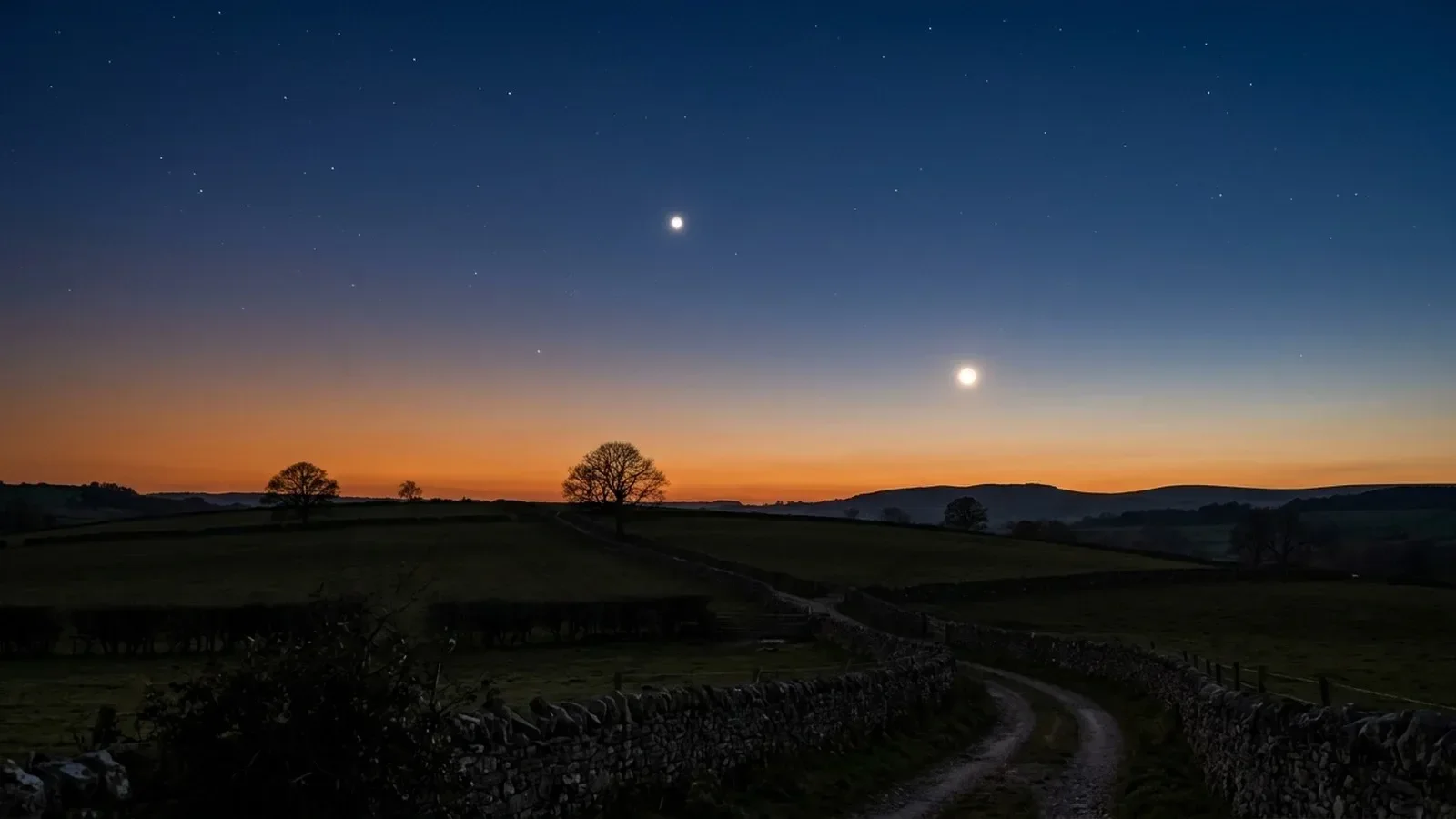
Planetary Dance Continues
While the close encounter between Venus and the moon occurs on May 18, the planetary activity does not cease.
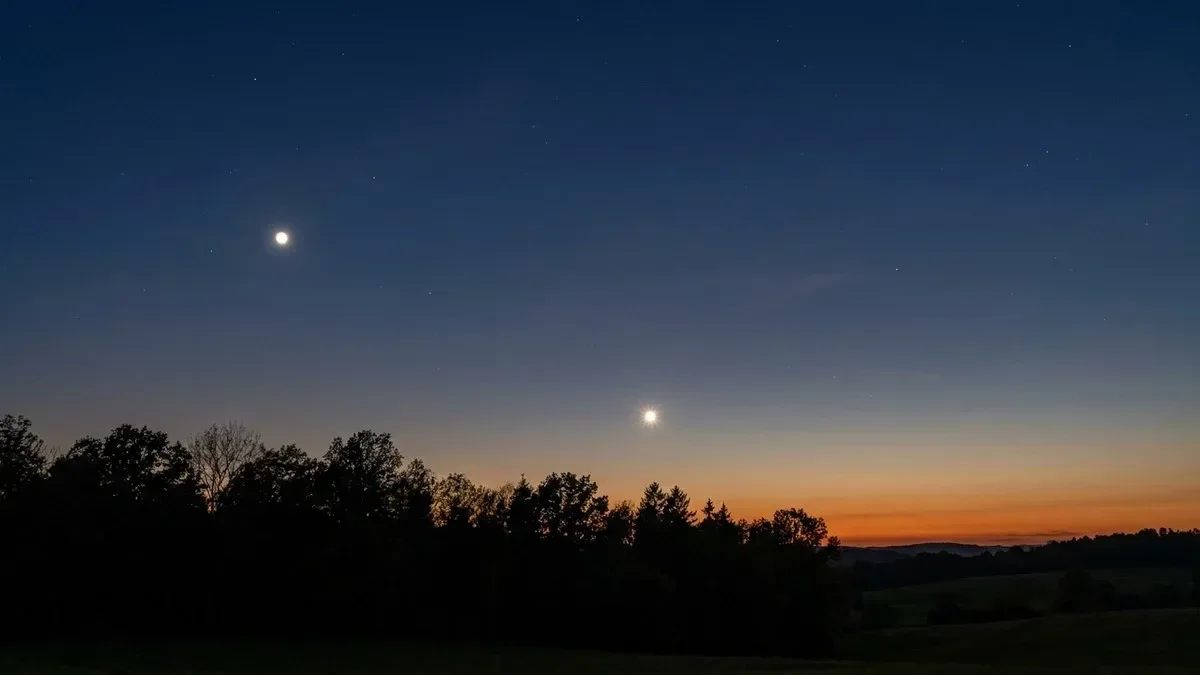
Venus and Jupiter are also converging in the western evening sky, a process observable over the coming weeks.
This gradual approach will culminate in a particularly close conjunction between Venus and Jupiter on June 9. At that time, the two brightest planets will appear exceptionally near each other.
Reports indicate that on June 9, Venus and Jupiter will be separated by a mere 1.6 degrees, an apparent closeness that could be spanned by the width of a little finger held at arm's length.
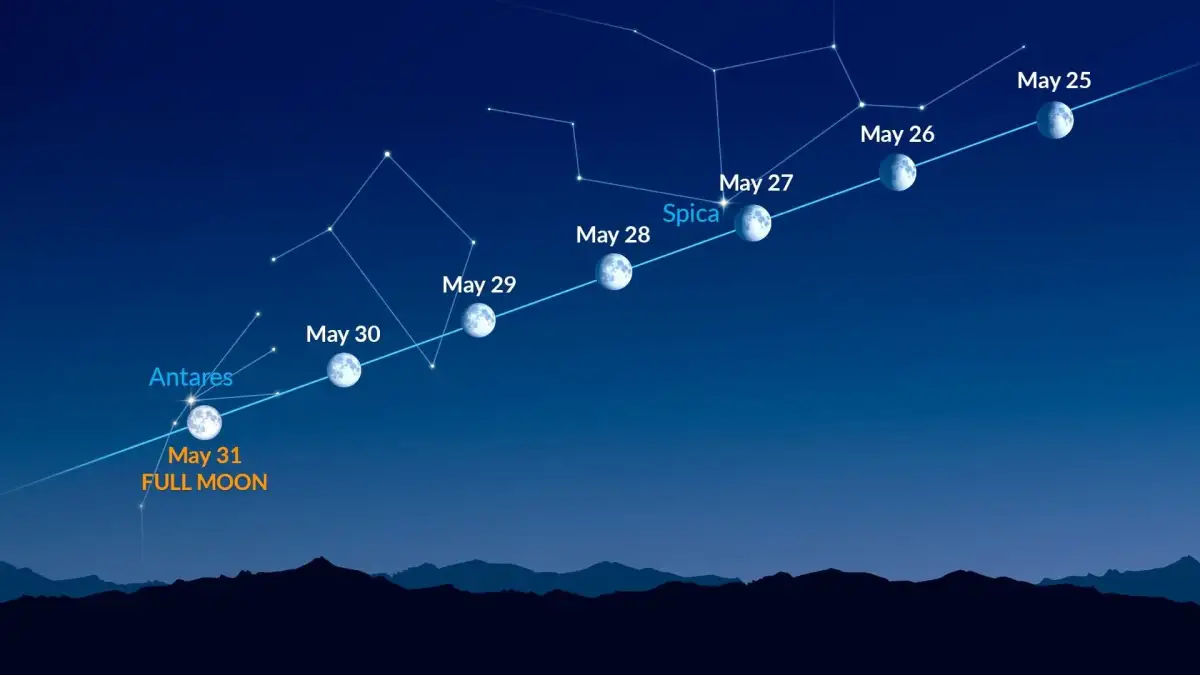
Furthermore, Jupiter itself is expected to join the scene, with the moon shifting its position to appear near Jupiter on May 20, having remained close to Venus on May 19.
Visibility and Viewing Tips
The Venus-moon pairing is expected to be easily visible as twilight deepens.
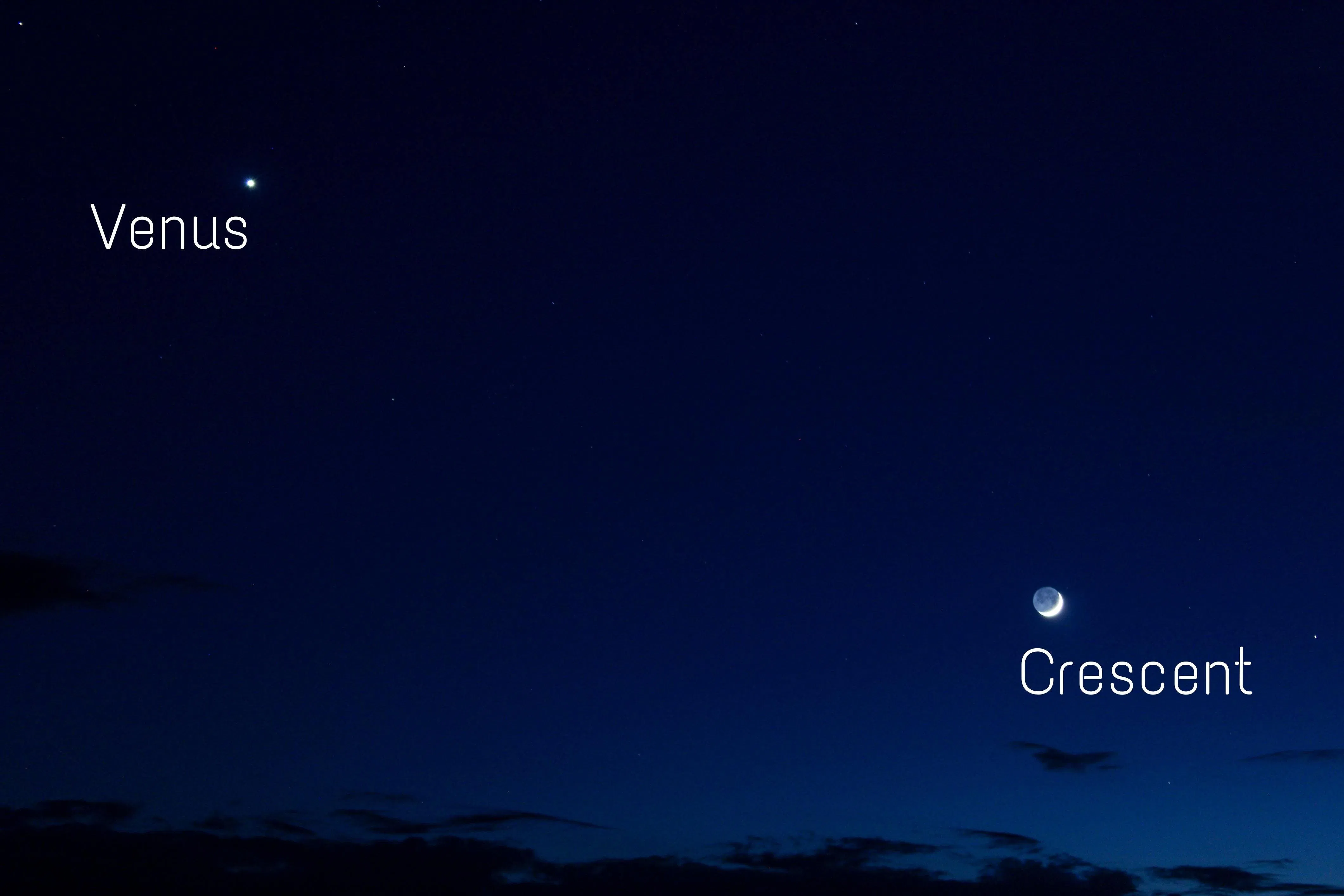
Observers should step outside approximately 30-45 minutes after sunset and look towards the west.
Venus is described as being over 15 degrees above the west-northwest horizon about an hour after sunset.
The crescent moon will be situated a few degrees from Venus, with one report noting it will be about 3 degrees to the right of Venus.
A clear horizon is recommended for optimal viewing, and viewers are cautioned not to delay, as the moon will begin to set within an hour.
Background on Celestial Events
Conjunctions, where celestial bodies appear close together in the sky, are relatively common occurrences. Venus-Jupiter conjunctions, for instance, happen approximately once every 13 months, though the precise geometry varies significantly. The upcoming events are notable for the apparent closeness of the planets and the presence of the slender crescent moon, creating what is termed a "three-object photo opportunity." No special equipment is required to witness these events, as Venus and Jupiter are among the brightest celestial objects visible to the naked eye.
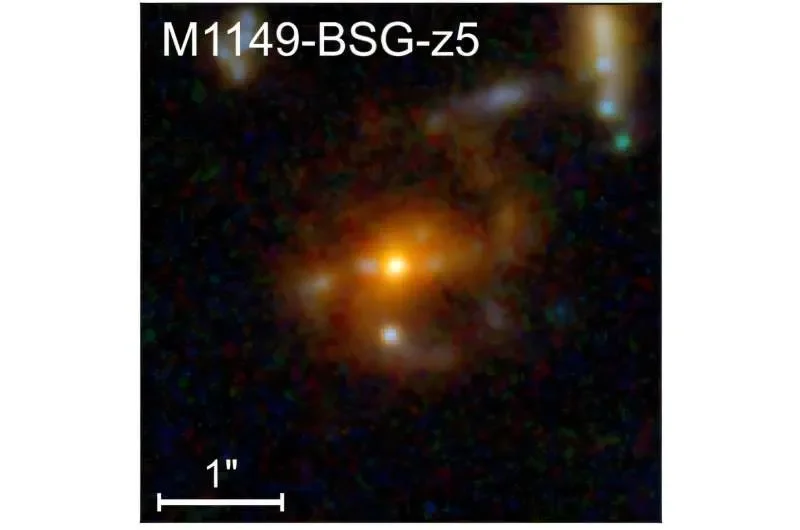
Read More: JWST Finds Oldest Barred Spiral Galaxy M1149-BSG-z5