Orbital Dance Fuels Unprecedented Eruptions
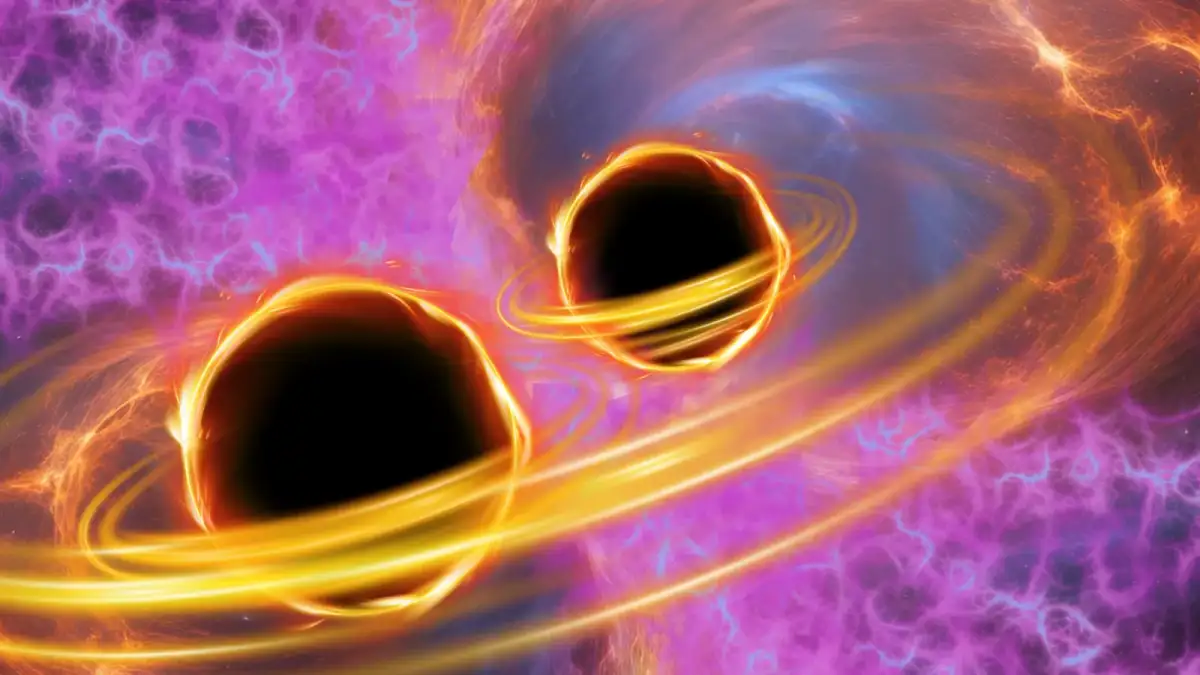
A celestial arrangement, previously cataloged but only recently reclassified, has revealed itself as the first known hot subdwarf-white dwarf binary to produce dwarf nova outbursts. The system, designated ZTF J0007+4804, showcases a low-mass white dwarf actively siphoning hydrogen-rich material from a B-type hot subdwarf. This cosmic feeding frenzy, occurring within a remarkably tight orbital period of approximately 1.8 hours, results in the dramatic brightening events observed by the Transiting Exoplanet Survey Satellite (TESS).
The discovery marks a significant finding, identifying a hot subdwarf-white dwarf system capable of generating dwarf nova outbursts. This particular arrangement is also noted as the fourth identified binary where a star is overflowing its Roche lobe, the gravitational boundary within which a celestial body can retain its atmosphere.
Unpacking the Stellar Duo's Properties
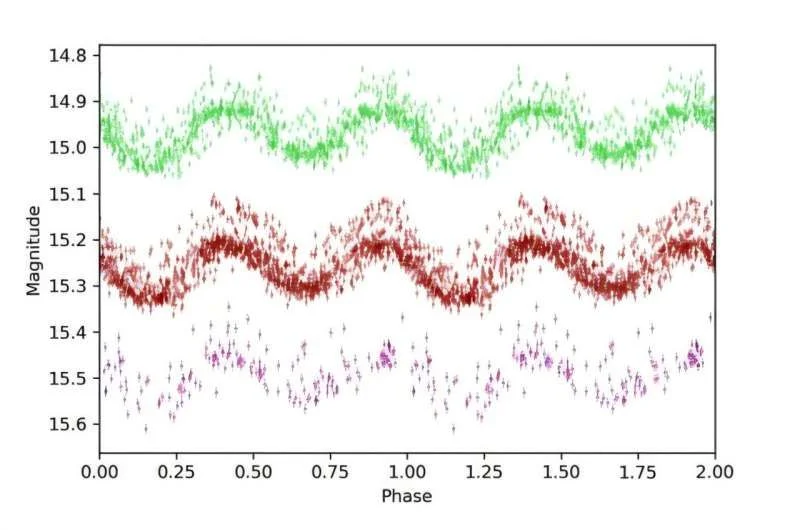
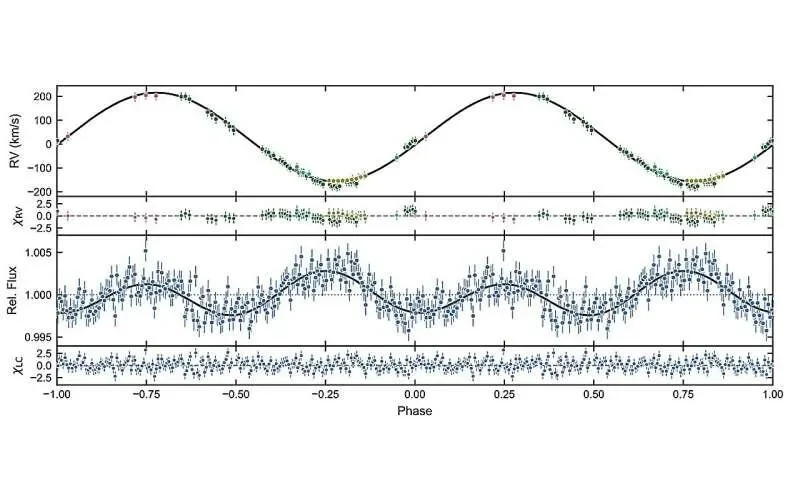
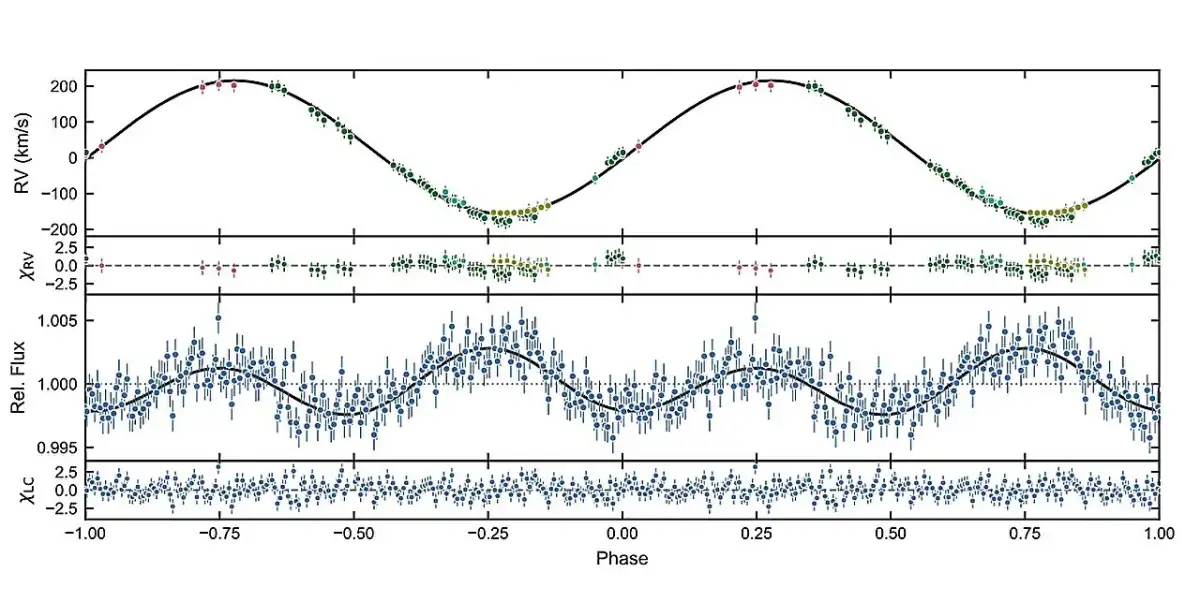
The investigation, detailed on the 'arXiv' preprint server on May 4, meticulously analyzed data from both the Zwicky Transient Facility (ZTF) and TESS. The analysis confirmed the orbital period and identified the period associated with the brightening events. Kinematic data for the system was also calculated, offering a glimpse into its movement through space.
Read More: JWST Finds Oldest Barred Spiral Galaxy M1149-BSG-z5
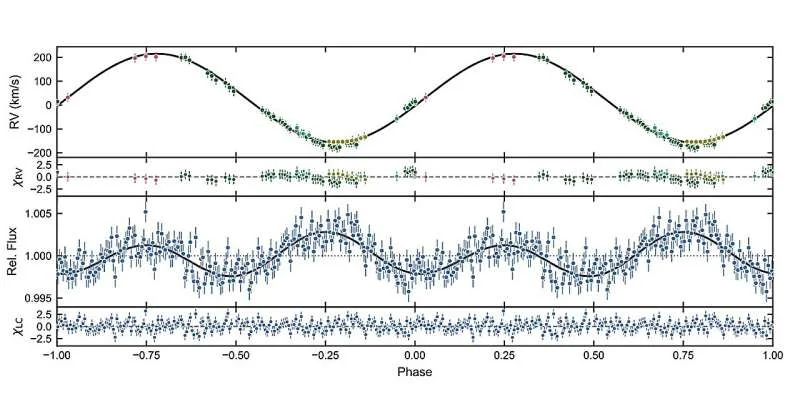
The hot subdwarf component of ZTF J0007+4804 boasts an effective temperature of around 23,500 Kelvin and a mass of approximately 0.42 solar masses. Its companion, the white dwarf, is only marginally more massive, with an estimated mass of 0.48 solar masses. This close proximity and mass disparity are key factors driving the observed outbursts.
A Deeper Look at Binary Subdwarfs
Hot subdwarfs are stars that have shed their outer hydrogen envelopes before reaching the red giant phase, leaving behind a hot, dense core. White dwarfs, on the other hand, are the dense remnants of stars that have exhausted their nuclear fuel. The combination of these two compact objects in a tight binary system creates extreme conditions ripe for energetic phenomena. The system ZTF J0007+4804 provides a unique laboratory for studying stellar evolution and the mechanics of accretion in binary systems.
Read More: US Space Force Victus Haze Mission Successfully Tests Orbital Intercepts
This discovery adds another layer to our understanding of stellar interactions and the diverse evolutionary pathways stars can take. The ongoing study aims to further model the future evolution of this peculiar binary and thoroughly characterize the observed brightening events.