Cosmic Conduit Speculation
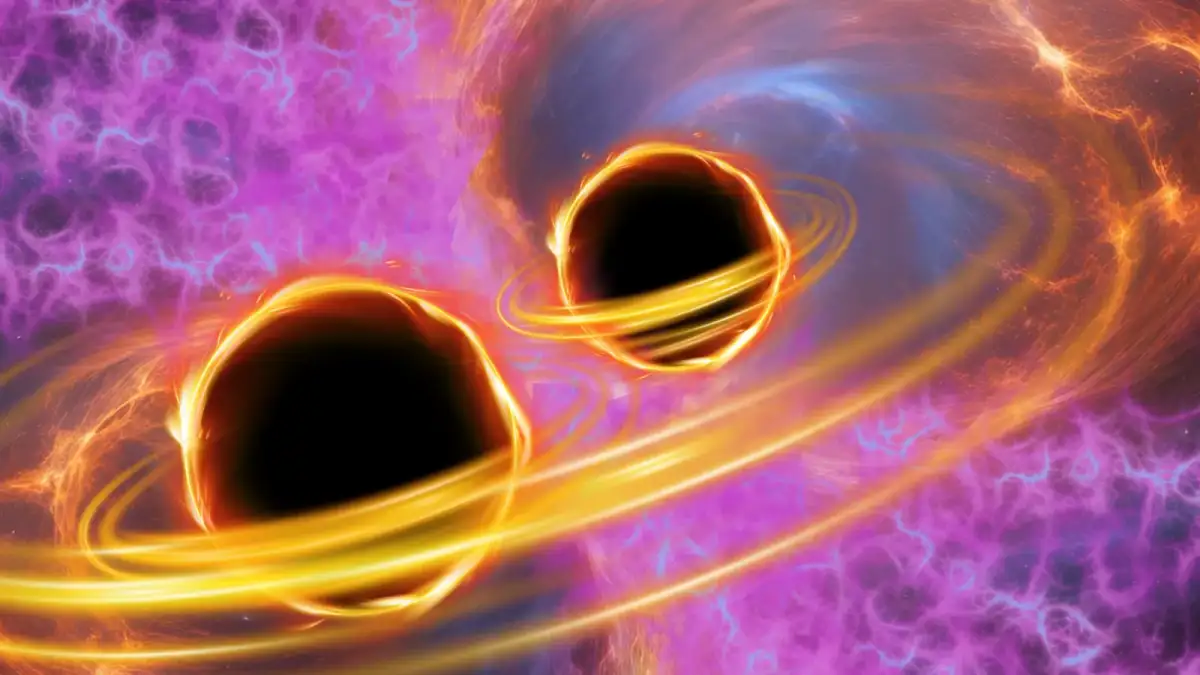
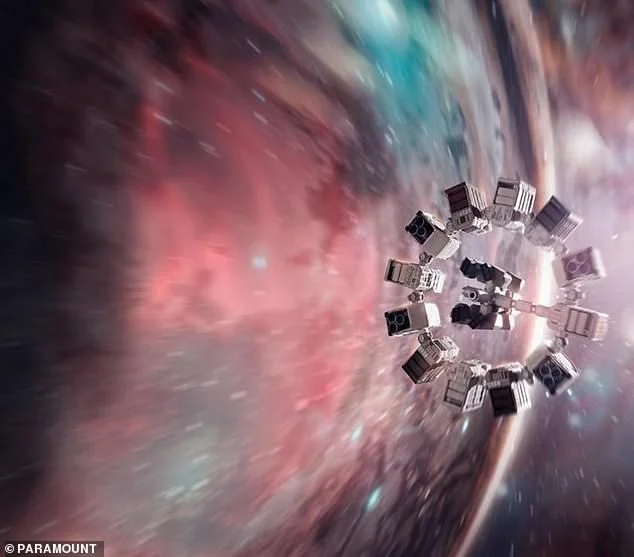
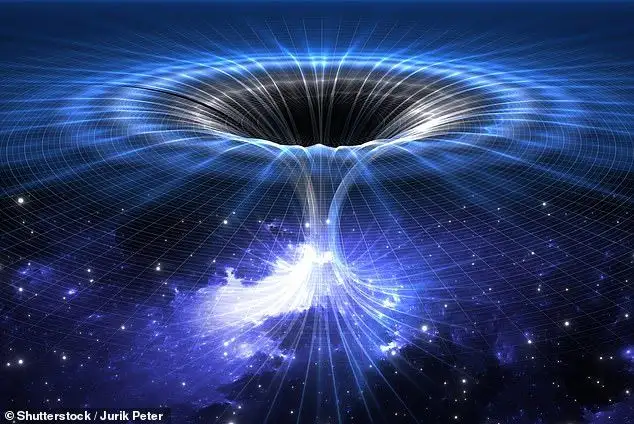
A startling hypothesis posits that our own Milky Way galaxy might harbor a wormhole, an astrophysical anomaly theorized to connect disparate points in spacetime. The conjecture hinges on the pervasive presence of dark matter, the invisible substance believed to hold galaxies together. Specifically, scientists suggest that the dark matter halo surrounding the galaxy could provide the necessary "exotic matter" to sustain the mouth of such a cosmic passage, preventing its collapse. This idea, if substantiated, would imply that such wormholes are not exceptionally rare, particularly in spiral galaxies with substantial dark matter concentrations.
Gamma Rays Hint at Invisible Interactions
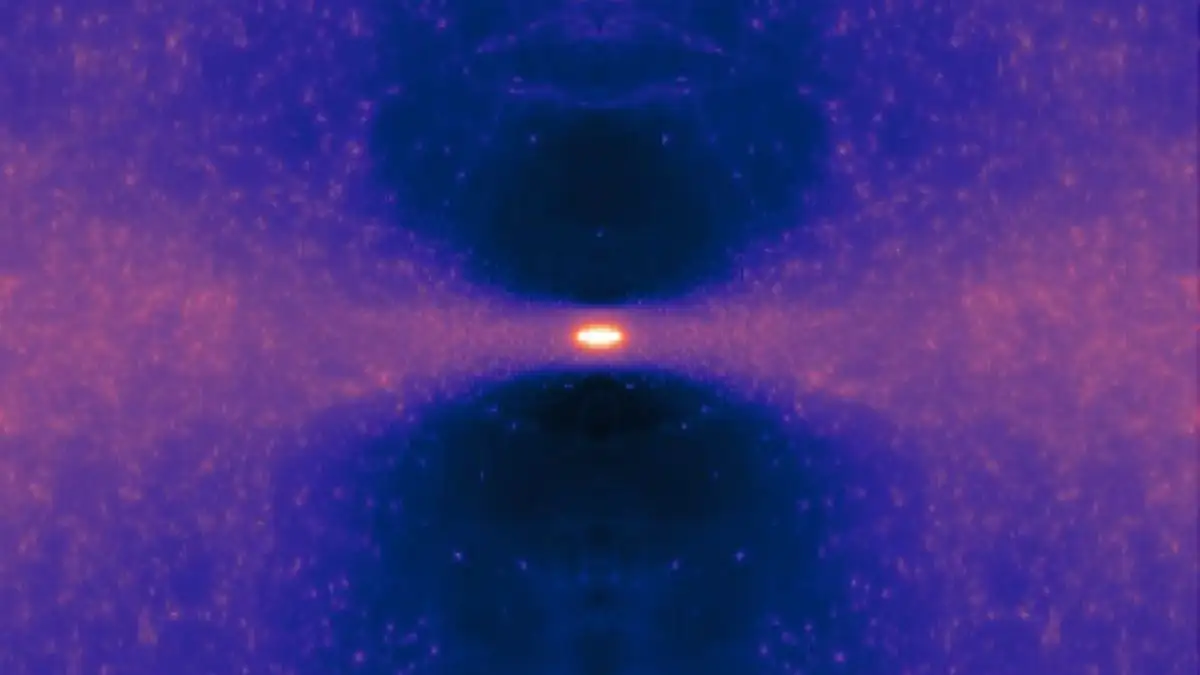
Simultaneously, observations of a persistent, diffuse gamma-ray glow emanating from the galactic center have intensified the focus on dark matter. Researchers are investigating whether this mysterious luminescence could be the byproduct of dark matter particle collisions.

Simulations Suggest Collisions: Recent supercomputer simulations indicate that the collision of dark matter particles could indeed generate the observed bulge-shaped glow. This adds significant weight to the dark matter explanation for the phenomenon.
Alternative Explanations: While dark matter is a leading candidate, other astrophysicists propose that rapidly spinning neutron stars, known as pulsars, might be responsible for the gamma-ray emissions.
First Direct Evidence? The detection of excess gamma light, if definitively unlinked to stellar remnants, could represent the first tangible proof of dark matter's existence. This has been a decades-long pursuit, with numerous experiments, like the LZ Dark Matter Experiment, dedicated to detecting these elusive particles, often theorized as Weakly Interacting Massive Particles (WIMPs).
Dark Matter's Ubiquitous Influence
Dark matter's gravitational influence is fundamental to our understanding of cosmic structure. Without it, galaxies like the Milky Way would disperse due to their own rotational forces. The enigma of its composition and origins persists.
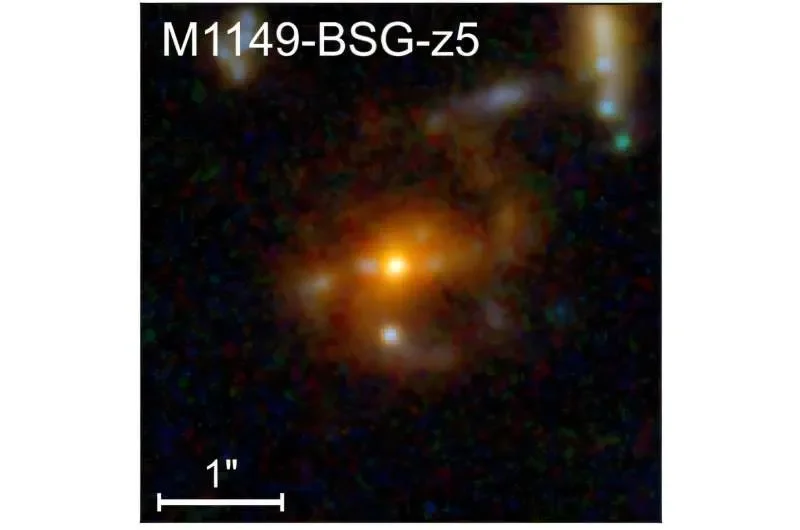
Read More: JWST Finds Oldest Barred Spiral Galaxy M1149-BSG-z5
Galactic Structure: Dark matter is credited with binding galaxies and galaxy clusters, dictating their rotation and overall form.
Unseen Scaffolding: This invisible component shapes the cosmos on all scales, yet its particle properties remain unknown.
A "Pancake" of Dark Matter?
Further complicating the picture, recent astronomical discoveries suggest our galaxy resides within a vast, flattened structure composed of dark matter, referred to as the Local Sheet.
Cosmic Arrangement: This sheet-like distribution of dark matter aligns with the observed arrangement of nearby galaxies, including our own Local Group and Andromeda.
Void and Flow: The model also accounts for the existence of the Local Void, a region with a surprising scarcity of galaxies, from which other galaxies appear to recede. The observed galactic flow patterns are also consistent with this dark matter arrangement.
Novel Theories on Dark Matter's Genesis
Recent theoretical work offers speculative origins for dark matter, diverging from the concept of it being an exotic, new particle.
Mirror World Hypothesis: One theory proposes a hidden, parallel realm with its own set of particles and forces, from which stable, black hole-like objects—accounting for all observed dark matter—originated.
Early Universe Conditions: Other research suggests that dark matter might have emerged naturally from the conditions present in the very early universe, rather than being an entirely novel particle that interacts weakly with ordinary matter.
Axion Quark Nuggets: Another hypothesis considers 'axion quark nuggets' (AQNs) as a potential dark matter form. Unlike many candidates, AQNs could interact with visible matter, potentially releasing ultraviolet light or other electromagnetic radiation, offering a more observable trace. This contrasts with traditional models where dark matter interacts solely through gravity.
This ongoing exploration into dark matter, whether through its potential role in cosmic structures like wormholes or its detectable emissions, underscores its critical, albeit mysterious, presence in the universe.