High Court Considers Executive Order Targeting Citizenship by Birth
WASHINGTON D.C. - A majority of the US Supreme Court justices indicated skepticism during oral arguments this week regarding President Donald Trump's executive order that sought to limit birthright citizenship. The arguments centered on the interpretation of the 14th Amendment's Citizenship Clause, which has long affirmed that individuals born in the United States are citizens. Justices, spanning the ideological spectrum, pressed the administration's legal team, represented by Solicitor General John Sauer, on the merits of fundamentally reshaping established immigration law.
Chief Justice John Roberts, along with several other justices, signaled they were unconvinced by the administration's argument that children born to undocumented immigrants or temporary visitors should be excluded from automatic citizenship. Roberts, in particular, described the government's reliance on narrow historical exceptions, such as children of diplomats or enemy forces, as "very quirky," questioning how these limited categories could be expanded to cover a broader class of individuals. Justice Amy Coney Barrett also reportedly questioned the administration's focus on the amendment's perceived purpose rather than its direct wording.
Read More: Todd Blanche becomes Acting Attorney General after Pam Bondi removed April 2
The case, Trump v. Barbara, directly challenges the longstanding understanding of birthright citizenship, a policy in place for over a century. The executive order, announced at the start of Trump's second term, aimed to grant citizenship only to children born in the U.S. to parents who are either U.S. citizens or legal permanent residents. This move could potentially render hundreds of thousands of children born annually to noncitizen parents undocumented and even subject to deportation.

Legal Arguments and Judicial Questioning
Solicitor General John Sauer, arguing for the Trump administration, faced pointed questions about the legal basis for overturning established precedent, including the Supreme Court's own prior ruling in Wong Kim Ark. Justice Sonia Sotomayor reportedly questioned whether the government was, in effect, asking the Court to disregard or significantly weaken this precedent. The administration's legal strategy appeared to hinge on distinguishing between individuals "subject to the jurisdiction" of the United States and those who may be present temporarily or without authorization.
Read More: Georgia GOP Senate primary on May 19 causes party split and risks losing to Jon Ossoff

Justices also probed the practical application of such an order. When pressed on how the administration would implement its policy, Sauer reportedly pointed to guidance from the Social Security Administration. However, Chief Justice Roberts sought clarification on the prevalence of the issue the administration sought to address, and Sauer was reportedly unable to provide a clear answer regarding the scope of the problem. Some justices, including Justice Brett Kavanaugh, questioned the administration's comparisons to other countries that do not practice birthright citizenship, suggesting that the U.S. Constitution operates independently. Conservative Justice Neil Gorsuch also reportedly raised concerns about the administration's interpretation of "long-term resident" status at the time the 14th Amendment was ratified.
Broader Context and Political Presence
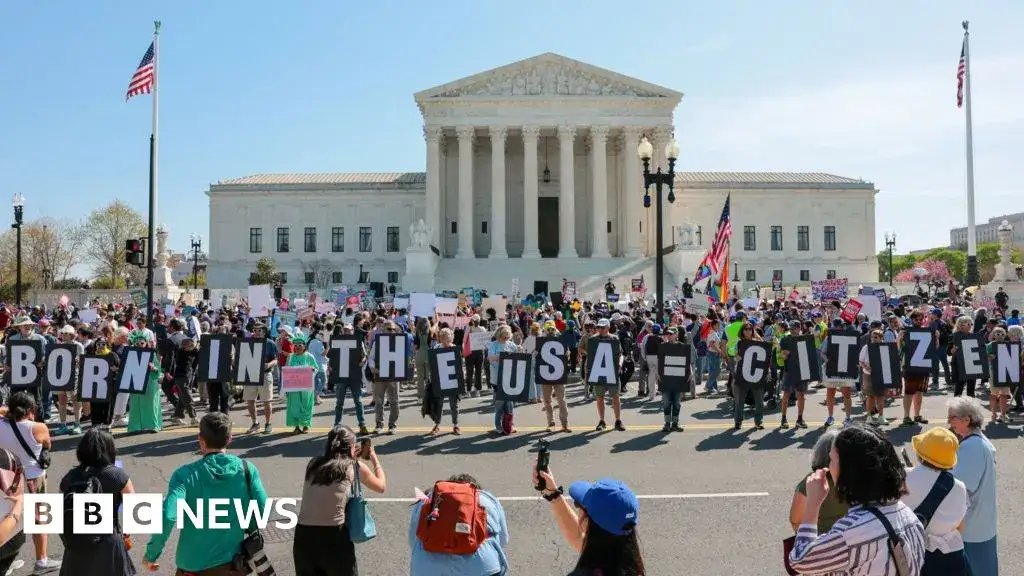
President Donald Trump attended the oral arguments, an unprecedented appearance for a sitting president at the Supreme Court. His presence underscored the significance of the case, which is considered a key element of his broader immigration agenda. Outside the court, demonstrations were held by supporters and opponents of birthright citizenship. This legal challenge comes amid ongoing political debates surrounding immigration policy, with recent legislative efforts concerning funding for the Department of Homeland Security also capturing headlines. Civil rights and immigrant advocacy groups, alongside several states, have filed lawsuits challenging the executive order, arguing it violates the 14th Amendment and established legal interpretations.
Read More: Jan Vishwas Bill 2026: Minor Offences Moved from Criminal to Civil in India