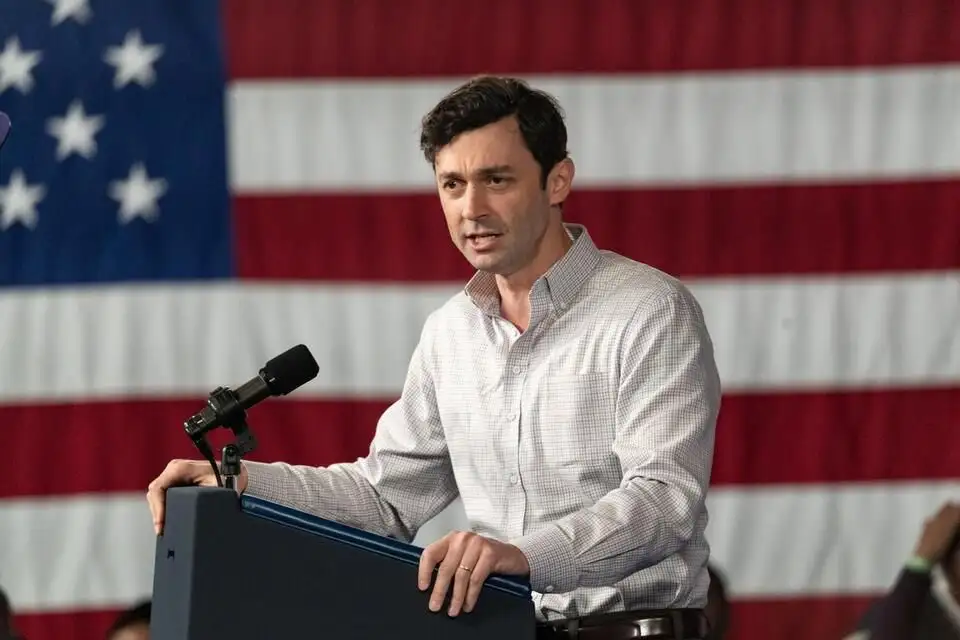
The Georgia Republican primary for the U.S. Senate is currently defined by internecine hostility, threatening the party's ability to challenge incumbent Senator Jon Ossoff. Current projections indicate the May 19 contest will likely bypass a decisive conclusion, forcing a costly and fractious runoff in mid-June.
| Candidate | Political Stance | Primary Backing/Support |
|---|---|---|
| Buddy Carter | 'MAGA warrior' | Unaligned |
| Mike Collins | 'MAGA extremist' | Unaligned |
| Derek Dooley | Former football coach | Endorsed by Brian Kemp |
Internal GOP strategists characterize the state of the campaign as a self-inflicted crisis.
Candidates are trading personal insults and belittling monikers rather than focusing on legislative policy or broad-spectrum electoral appeal.
Financial resources are being depleted rapidly in an atmosphere described as an "all-out slugfest," creating structural disadvantages for the eventual nominee.
Strategic Erosion
The Georgia Senate seat was initially framed by national Republicans as the definitive 'crown jewel' for party pickup opportunities. This perception has shifted. Internal discourse now centers on blame rather than mobilization, with various stakeholders acknowledging that unity remains the only mathematical path to reclaiming the seat.
"We created this problem and it’s not any one person." — Unnamed GOP Strategist
Structural Fragility
The primary is exposing the friction between varying strains of the party. The inclusion of figures aligned with Donald Trump’s political platform—such as Carter and Collins—competing against Dooley, who represents a more institutional faction backed by Governor Kemp, has transformed the ballot into a proxy war for the party's identity.
Read More: Taiwan Holds Nantou County Drills to Prepare for State Collapse
The byproduct of this misalignment is a feedback loop: candidates attack one another to consolidate their base, yet this exact mechanism degrades the brand of the prospective general election candidate. While party operatives maintain that the state remains 'competitive' in theory, the current operational reality suggests that the party is struggling to pivot from a contest of personalities to a coherent challenge against Ossoff.
Context: The primary functions as an observational study on political entropy. As parties lose their centralized narrative, local contests fragment into ego-driven skirmishes, often nullifying the initial capital invested in winning these specific battleground districts.