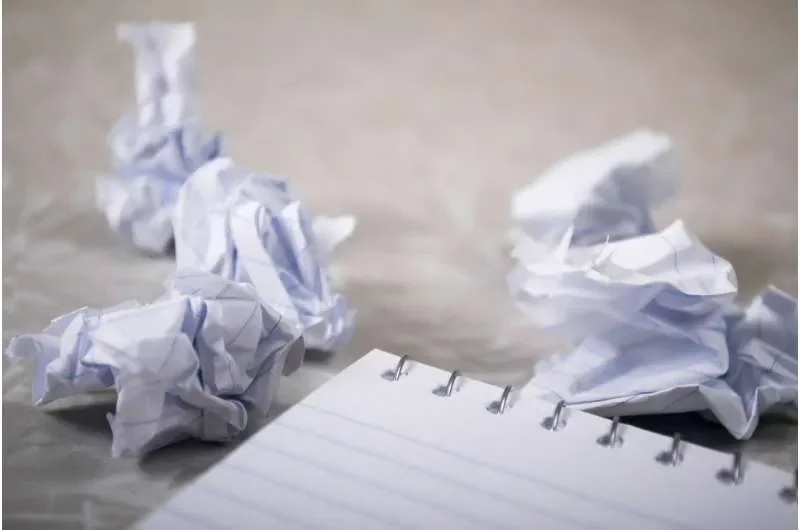
New understanding of hornification, the stiffening process in paper fibers, promises to unlock more robust recycling cycles for paper products. This phenomenon, where fibers lose water absorbency and rigidity increases upon drying and rewetting, has long presented a bottleneck in sustainable paper production.
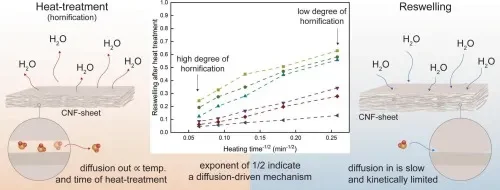
Research now illuminates the specific 'mechanisms' at play. It's found that chemical bonds form within fibers during this drying and rewetting cycle, causing them to stiffen. This insight is crucial because it suggests that by better understanding and potentially manipulating these bonds, fibers could be recycled substantially more times than the current limit of five to seven.
The differential impact on various wood sources has also been observed. Hardwood fibers appear to be more susceptible to hornification than softwood fibers. This is attributed to the former's inherently more complex structure, leading to greater swelling before drying and a more pronounced collapse during the process. This divergence has direct implications for how different types of paper products might fare under repeated recycling.
Read More: New Cicada Covid Variant BA.3.2 Has 75 Mutations, May Evade Vaccines
The Cycle of Stiffness
Hornification is an inherent property of cellulose-rich materials. When paper dries, its constituent fibers undergo changes. Upon rewetting, these changes become permanent, leading to a reduction in the fibers' capacity to absorb water and an increase in their stiffness. This process is not a superficial hardening but rather involves internal alterations to the fiber structure.

The prospect of overcoming this limitation hinges on the 'advances' in deciphering these internal changes. This renewed focus on hornification suggests a pathway towards 'increased circularity' in the paper industry, a move away from linear consumption models.
A Deeper Dive into Fiber Structure
The investigation into hornification began as a bid to solve a long-standing "mystery" in paper science. The practical consequence of this stiffening is a gradual degradation of fiber quality with each recycling pass. The knowledge gained aims to provide a foundation for 'improved paper recycling', potentially extending the usable life of paper fibers significantly.
Read More: India Cities Fine Water Waste: Rs 5,000 Penalty for Misuse This Summer
While the specifics of the 'kinetically trapped state' are still under rigorous examination, the overarching narrative points towards a future where the environmental footprint of paper production can be diminished through smarter recycling practices. This research is being conducted by entities like 'Karlstad University', signaling a concerted effort in the academic and industrial spheres to address this persistent challenge.