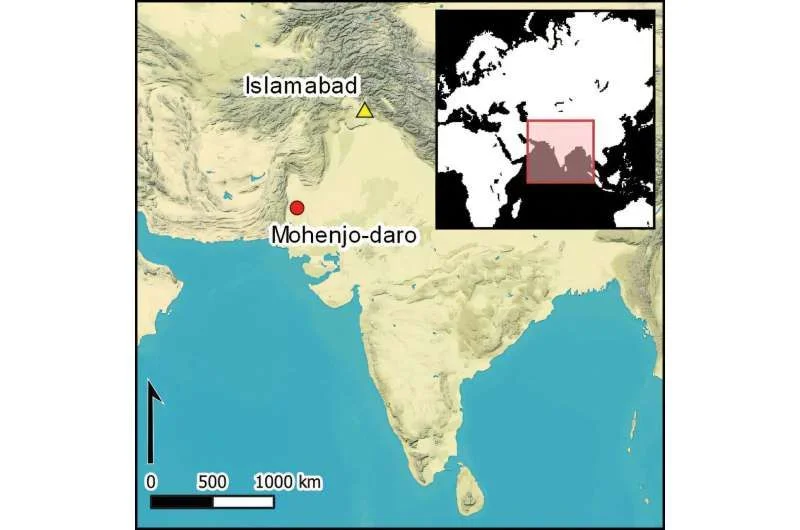
Mohenjo-daro, a city stretching back four millennia, appears to have bucked the trend of rising inequality that often accompanies urban development. New research suggests that as this ancient settlement grew and became more successful, the gap between its wealthiest and poorest inhabitants may have actually shrunk. This stands in stark contrast to prevailing historical narratives that posit urban growth invariably leads to a widening wealth disparity.
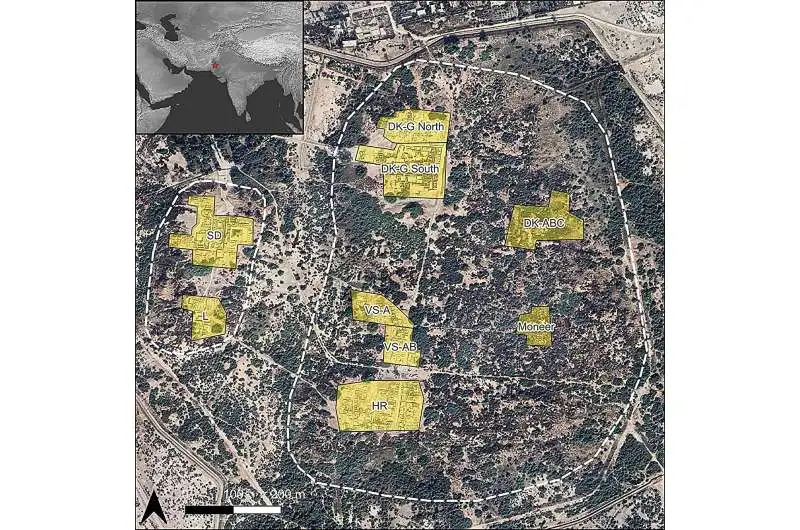
The distribution of significant artifacts, such as 'Indus seals' – tools vital for commerce and governance – within ordinary homes, rather than concentrated in public buildings or palaces, points to a broader access to power and resources. This pattern suggests that the benefits of the city's success were not siphoned off by a small elite.
Evidence of Collective Investment
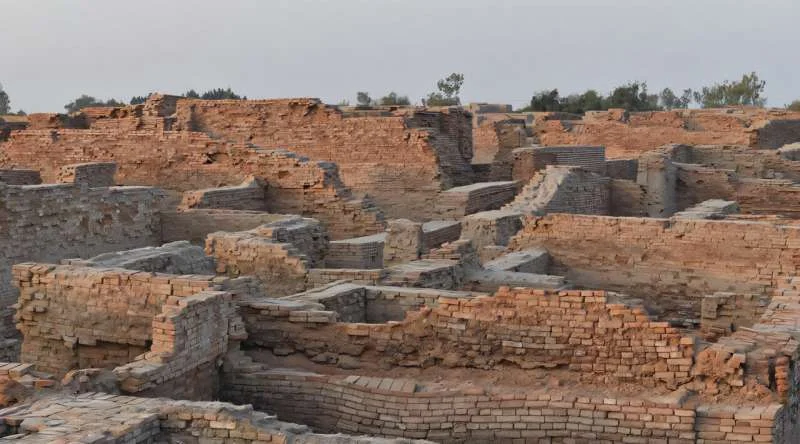
The city's infrastructure, including sophisticated drainage systems and well-maintained streets, also provides a window into its social fabric. Investment in these public works, crucial for the well-being of all residents, indicates a collective effort for the common good. This contrasts with scenarios where such public amenities are neglected or used primarily to benefit a ruling class.
Read More: St. Augustine's ideas on justice help explain US politics
Instead of a single ruler or a small cabal monopolizing resources, the archaeological record implies that the citizens of Mohenjo-daro collaborated to ensure a good standard of living was accessible to everyone. The widespread presence of what are described as "tools of government" in everyday households underscores this notion of shared prosperity.
Rethinking Urban History
For decades, the established view among historians has been that the evolution of villages into cities was a process intrinsically linked with increasing inequality. The logic was that as societies became more complex and prosperous, a ruling class – be it kings, priests, or other leaders – would inevitably gain control of wealth and power, thus widening the chasm between the haves and have-nots.
The findings from Mohenjo-daro present a compelling counter-argument, forcing a re-evaluation of these long-held assumptions about the trajectory of early urban societies. The implications are significant for understanding how human settlements have developed and the varied paths they have taken.
Read More: 5,900-Year-Old Child Skull Found in Norway Cave

Anomalous Urbanism
The archaeological evidence unearthed at Mohenjo-daro challenges the notion that societal advancement necessarily entails a decline in egalitarianism. The city's apparent ability to foster prosperity alongside greater equality offers a unique historical case study.
The presence of extensive, well-planned urban infrastructure, including what scholars describe as advanced drainage systems, is a key indicator. This type of public works typically signifies a society that prioritizes collective welfare, a feature that, according to the current understanding, should diminish as cities grow more complex and wealth concentrates.
The distribution patterns of artifacts like the aforementioned 'Indus seals' further bolster the argument for a more equitable distribution of societal benefits. These seals, understood as instruments of trade and administration, are notably absent from depictions of grand palaces or centralized governmental structures. Their prevalence in what are identified as common residences suggests that mechanisms of governance and economic participation were more broadly disseminated.
Read More: The Plot Against America Miniseries Discussed in April 2026
This discovery from a city dating back approximately 4,000 years offers a significant departure from the widely accepted historical model, which posits that the development of civilizations invariably leads to the monopolization of power and resources by a select few.