Astronomers have initiated the Atacama Large Aperture Submillimeter Telescope (AtLAST), a European-led project designed to map the "dusty half" of the universe—a significant portion of the cosmos currently shielded from observation by gas and interstellar debris. As of May 20, 2026, the project shifts from conceptual framework to potential execution, aiming to provide a high-resolution window into the cold, hidden matter that regulates star formation.

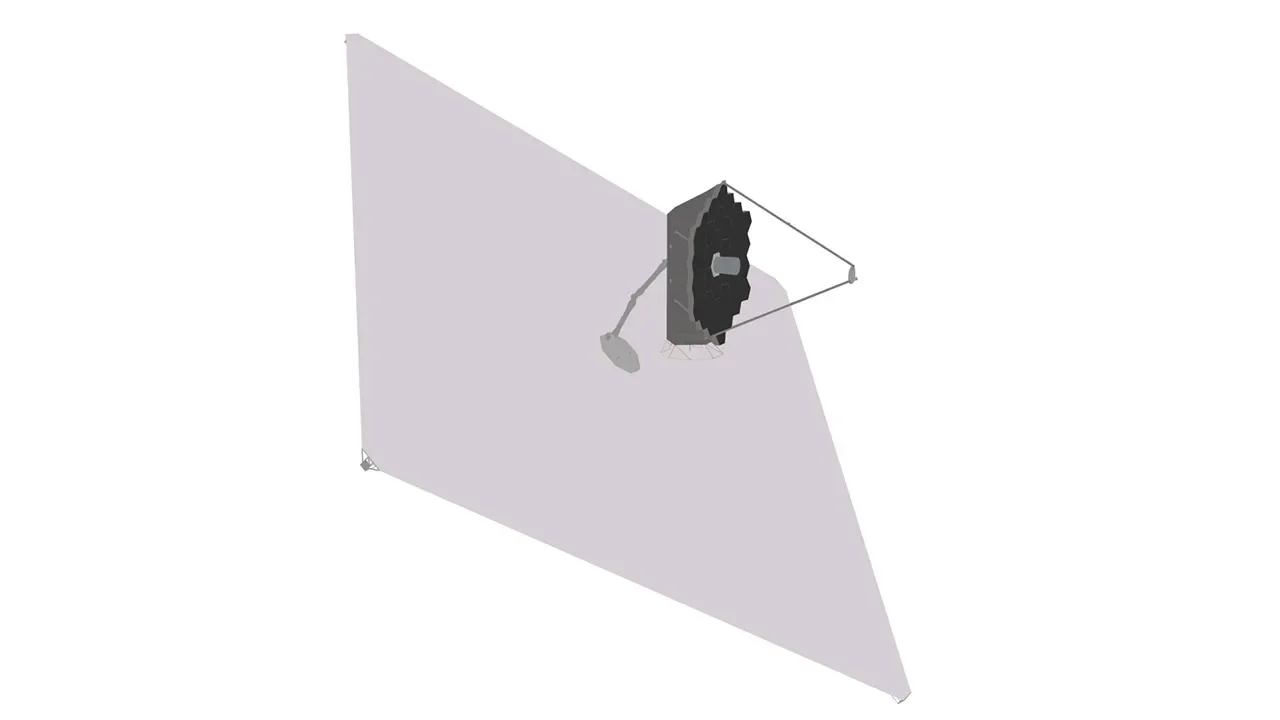
The 50-meter single-dish aperture is the primary technical signal, intended to bridge the observation gap between current submillimeter arrays and other wavelength-specific facilities.
Structural Objectives and Scope
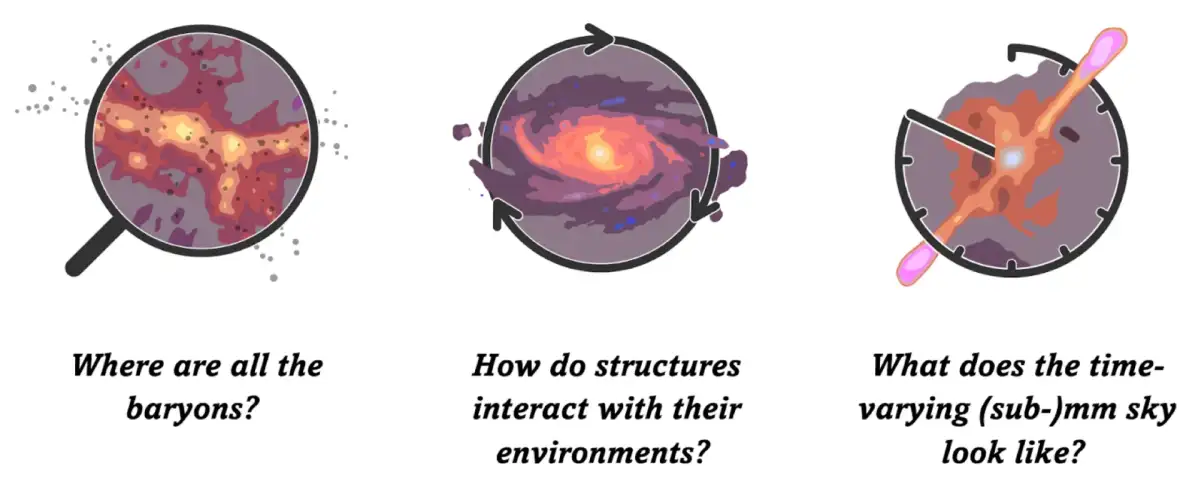
The AtLAST mission addresses a fundamental limitation in contemporary astrophysics: the inability to map cold gas and dust efficiently. While existing arrays excel at high-resolution interference, they often lack the "survey speed" required to capture large-scale, low-brightness structures.
Star Formation: Detecting the mechanisms of gas condensation in previously obscured regions.
Galactic Mapping: Resolving millions of galaxies with luminosity comparable to the Milky Way at high redshifts.
Solar Physics: Observing previously unseen atmospheric components of the Sun.
Sustainability: The project is framed within a model of energy-conscious engineering, specifically targeting operations in the Atacama Desert without reliance on fossil fuels.
| Feature | Technical Target |
|---|---|
| Diameter | 50 Meters |
| Spectrum | Submillimeter |
| Capability | Single-dish mapping; high survey speed |
| Key Location | Atacama Desert, Chile |
Ambiguity in Nomenclature
Researchers must distinguish between the ground-based Atacama Large Aperture Submillimeter Telescope (AtLAST) and the conceptually unrelated Advanced Technology Large-Aperture Space Telescope (ATLAST), a distinct project linked to the evolutionary trajectory of the Hubble and James Webb space telescopes. The current project discussed in the 2026 development reports pertains strictly to the European-led ground infrastructure.
Read More: Indigenous Data Rights Now Key in Conservation Genomics
The Scientific Gap
Modern astrophysics is hindered by the physical limits of current sensor arrays. The AtLAST Project documentation emphasizes that without a singular, massive-dish instrument, a critical segment of the electromagnetic spectrum remains under-utilized.
Critical nuance: The push for this telescope stems from the necessity to link datasets across varying wavelengths.
Operational status: Following recent design studies—including a conference held in Mainz—the community is transitioning toward finalizing theoretical expectations and mock observation catalogues to justify the massive logistical undertaking.
Investigation Note: While the project has gained momentum through ESO white papers and recent user surveys, it represents a pivot toward "Energy Justice" in astronomical research—an attempt to reconcile the immense power requirements of modern hardware with ecological site-management in remote, sensitive regions.