
A saying, attributed to Chinese wisdom, "When sleeping women wake, mountains move," is currently circulating, sparking conversations about female empowerment and collective action. The phrase, appearing across various platforms in recent times, has been linked to themes of transformation, confidence, and the untapped power within women.
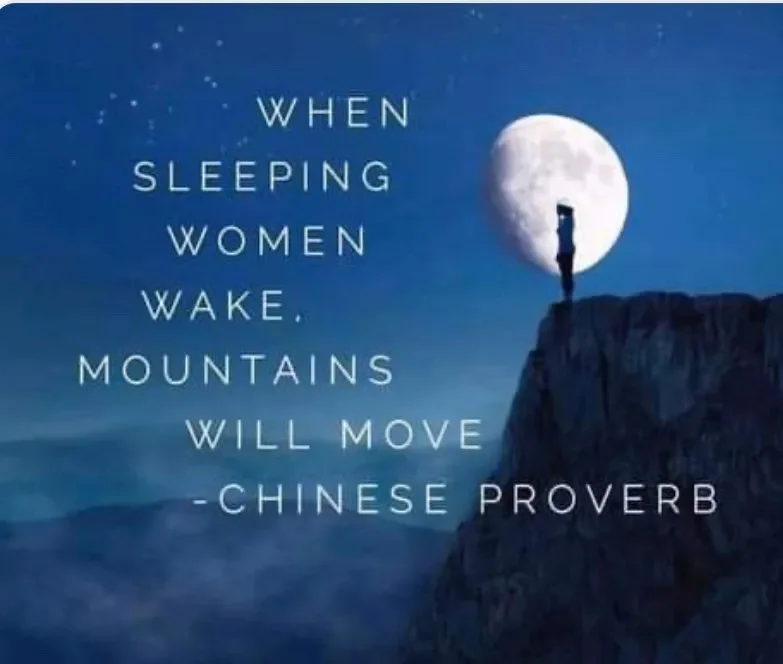
The proverb, "When sleeping women wake, mountains move," has surfaced in contemporary discussions and media, frequently tied to concepts of female empowerment, self-discovery, and the potent impact of collective female action. This aphorism suggests a profound capacity for change and upheaval when women, previously perceived as dormant or inactive, mobilize.

While the phrase is widely presented as a Chinese proverb, its precise origin and verifiable historical context within Chinese culture remain elusive. Research into Chinese proverbs and idioms, which often draw from ancient texts and philosophical traditions, has not yielded a definitive source for this particular saying. Instead, it appears to have gained traction through modern interpretations and its evocative metaphorical weight.
Read More: Why the New Atheism movement lost public influence by April 2026

One interpretation, found in a recent piece, connects the proverb to the idea of women accessing their inherent "depth of joy, beauty, and wisdom" to achieve greater success. This perspective frames the "waking" as a process of self-realization and active engagement with life, leading to significant personal and communal shifts.

Unpacking the "Phony Wisdom" Trope
The lack of a clear, documented origin for "When sleeping women wake, mountains move" aligns with a broader scholarly critique of what some term "phony Chinese wisdom." Linguists and cultural commentators have previously pointed out instances where sayings are attributed to Chinese culture without solid evidence, sometimes originating from mistranslations, misattributions, or even entirely different cultural contexts.
For example, the frequently cited "Crisis = danger + opportunity" is often presented as a Chinese proverb, yet its etymology has been thoroughly debunked. Investigations suggest this phrase likely arose from a misunderstanding of Chinese characters and their nuances, rather than a direct translation of an ancient aphorism.
Read More: St. Augustine's ideas on justice help explain US politics
A Daily Dose of Proverbs
Various online resources offer daily Chinese proverbs, aiming to provide insights into Chinese culture, history, and worldview. These platforms typically provide the proverb in Chinese, with Pinyin transliteration, English translation, and an explanation of its meaning. Themes covered in such collections range from family and nature to broader life lessons, encompassing concepts like perseverance, learning, and societal dynamics.
However, the prevalence of the "mountains move" proverb, particularly in contexts emphasizing female agency, highlights how proverbs can gain currency and evolve in meaning, independent of their original linguistic or cultural moorings. The power of the metaphor, it seems, has transcended its purported origins to resonate with contemporary aspirations.