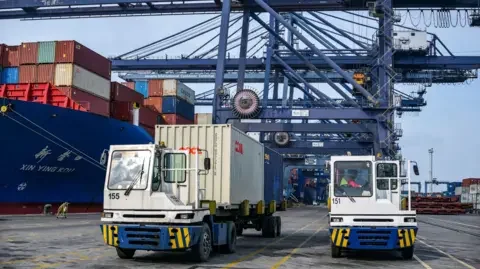
The United States and Indonesia have reached a significant trade agreement, lowering tariffs on goods exchanged between the two nations. This deal, finalized after months of discussion, aims to create new market access for American businesses and address previous trade imbalances. While both sides project benefits, some analysts express concern over potential implications for Indonesia's economy.
The agreement comes at a time when the US, under President Donald Trump, has been actively seeking to renegotiate trade terms with various countries. Indonesia, a key partner in Southeast Asia, has agreed to reduce its tariffs on US products. In return, the US has set a specific tariff rate for Indonesian imports, a move intended to provide more predictable trade conditions.

Agreement Details and Timeline
The path to this agreement involved several stages. In July 2025, the White House released a fact sheet announcing a "historic trade deal" with Indonesia. This announcement followed President Trump's indication on July 16, 2025, that a tariff reduction had been agreed upon after a phone call with Indonesian President Prabowo Subianto.
Read More: Canada delays electric car target due to US tariffs costing jobs
A framework for the deal was initially reached in July 2025.
The final agreement was solidified around July 23, 2025, as reported by The Jakarta Post.
Under the accord, Indonesia will reduce its tariffs on over 99% of American goods and remove non-tariff barriers.
The US, in turn, has set its tariffs on Indonesian products at 19%.
Key Provisions and Economic Impacts
The trade deal involves several key provisions impacting both nations' economies.

For the United States:
Market Access: The agreement aims to unlock significant market access in Indonesia for American manufacturing, agriculture, and digital sectors.
Reduced Trade Deficit: President Trump has highlighted the deal as a step towards addressing the US trade deficit with Indonesia, which was noted as its fifteenth largest goods trade deficit.
Investment: The US has promised to consider offering investment financing to Indonesia through the Export-Import Bank and the US International Development Finance Corporation.
For Indonesia:
Reduced Tariffs on Exports: The 19% US tariff rate is a reduction from earlier threats of a 32% blanket duty. This affects key Indonesian exports such as palm oil, spices, and pharmaceuticals.
Investment Terms: Indonesia has agreed to allow US companies to extract critical minerals under terms similar to those for domestic investors.
Market Headwinds: The deal comes as Indonesia faces market challenges, and it could position the country to attract manufacturing and investment as firms look to diversify supply chains away from China.
"The United States currently runs its fifteenth largest goods trade deficit with Indonesia. President Donald J. Trump announced a landmark trade deal with Indonesia that will provide Americans with market access in Indonesia once considered impossible and unlock major breakthroughs for America’s manufacturing, agriculture, and digital sectors." - White House Fact Sheet, July 22, 2025
"He said as part of the deal, Indonesia had agreed to lower its trade tariffs for products from the US, which America has complained were high for many agricultural products as well as certain manufactured goods." - BBC News, July 16, 2025
Perspectives on the Agreement
While the agreement aims to foster stronger trade ties, different perspectives exist regarding its overall benefit.
Official Statements and Projections:
The White House has characterized the deal as "historic" and a result of challenging "unfair trade practices." President Trump has indicated that this agreement is part of a broader strategy to renegotiate trade terms globally, with similar deals mentioned with Vietnam and the Philippines. Indonesian officials have expressed that the talks proceeded smoothly, with delays attributed to factors like the US government shutdown.

Concerns and Criticisms:
Some economists and policymakers in Indonesia have raised questions about the deal's fairness and its potential impact on the nation's trade balance.
Read More: US F-15 Jet Crashes in Iran, One Pilot Rescued, One Missing
Trade Imbalance: Experts warn that the agreement could potentially deepen Indonesia’s existing trade imbalance.
Unequal Terms: The terms of the bilateral trade agreement have been described by some as potentially one-sided.
Vulnerability: There is an ongoing debate about whether the trade deal will strengthen Indonesia's economic position or expose it to long-term vulnerabilities.
"Several economists believe the agreement could deepen Indonesia’s trade imbalance. Bilateral Trade Agreement Seen as One-Sided The unequal terms have prompted criticism over Indonesia’s position in the bilateral trade agreement." - Invest Indonesia, July 16, 2025
"Whether this trade deal strengthens Indonesia’s position or exposes it to long-term vulnerabilities remains an open question." - Invest Indonesia, July 16, 2025
Conclusion and Next Steps
The trade agreement between the United States and Indonesia marks a significant development in their bilateral economic relationship. The 19% tariff rate for Indonesian exports to the US represents a reduction from previous threats, potentially benefiting key sectors. For the US, the deal is seen as an opportunity to expand market access and address trade deficits.

However, concerns remain about the potential for a deepening trade imbalance for Indonesia and the perceived inequality in the agreement's terms. The long-term economic implications for Indonesia will depend on how these factors play out and the nation's ability to navigate the new trade landscape.
Further monitoring will be necessary to assess the actual impact of these changes on trade flows, investment patterns, and the overall economic health of both nations. The formalization of the "Agreement on Reciprocal Trade" is expected in the coming weeks, locking in the agreed-upon benefits and terms.
Read More: Canada US Trade Talks Slower Than Mexico Talks, Ex-Trump Official Says
Sources:
White House Fact Sheet: https://www.whitehouse.gov/fact-sheets/2025/07/fact-sheet-the-united-states-and-indonesia-reach-historic-trade-deal/ (Published: Jul 22, 2025) - Provides official US government perspective and key details of the agreement.
BBC News: https://www.bbc.com/news/articles/cwyq0ln6z6lo (Published: Jul 16, 2025) - Reports on the initial tariff reduction announcement and key figures involved.
CNBC TV18: https://www.cnbctv18.com/world/donald-trump-and-indonesias-prabowo-finalise-trade-deal-slashing-tariff-tate-to-19-ws-l-19854178.htm (Published: Jul 23, 2025) - Details specific trade provisions, including those for Indonesian exports and US investment.
Business Times (Singapore): https://www.businesstimes.com.sg/international/asean/trump-indonesian-president-prabowo-finalise-trade-deal-slashing-tariff-rate-19 (Published: Jul 23, 2025) - Confirms finalization of the deal, tariff rates, and scale of goods facilitated.
CNBC: https://www.cnbc.com/2025/07/22/trump-indonesia-trade-tariffs-framework.html?msockid=1aee921fa5366ed601af8519a40f6f5a (Published: Jul 22, 2025) - Discusses the framework agreement and places it within the context of other US trade deals.
Invest Indonesia: https://investindonesia.co.id/2025/07/16/indonesia-export-tariffs-set-at-19-in-us-deal-benefit-or-burden/ (Published: Jul 16, 2025) - Presents critical perspectives from economists and policymakers regarding the potential downsides for Indonesia.