
FLASH: Markets Slam Shut as Disease Re-Emerges
The re-emergence of African Swine Fever (ASF) in Spain late last year has sent shockwaves through the nation's substantial pork industry, leading to immediate and widespread closures of export markets. This abrupt halt in international trade has directly impacted farmers like Jordi Saltiveri, who oversees a farm with 8,000 pigs. While domestic demand for pork remains robust, with Spaniards reportedly consuming the animal "from head to tail," the loss of export destinations has driven down prices, placing significant financial pressure on producers.
JUST IN: Global Repercussions and Localized Bans
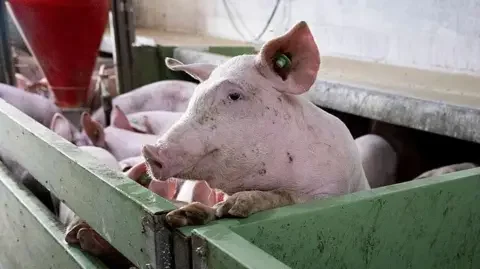
The implications of ASF's detection extend beyond Spain's borders. While some trading partners, including the European Union, China, and the United Kingdom, have opted for more targeted restrictions—banning only pork originating from the affected regions in northeastern Spain—the overall effect has been a chilling of global demand. This has not only curtailed the volume of Spanish pork reaching foreign tables but also depressed its market value.
LATEST: Industry Unease Over Containment

Despite the industry's critical reliance on exports, questions are being raised about the efficacy of Spain's containment strategies. Following the detection of ASF in wild boar populations outside the initial high-risk zones in February, institutions like Mercolleida, a key agricultural market in Catalonia, have reportedly voiced criticism regarding the official response. The wild boar population in Catalonia alone is estimated to be between 120,000 and 180,000, presenting a significant challenge for disease control.
Lingering Questions on Research and OversightFurther complicating the...

Lingering Questions on Research and Oversight
Further complicating the situation are revelations about international collaborative research on the African Swine Fever virus involving entities in Spain and the United States. Discussions have emerged regarding the development of modified viral strains and the broader implications for transparency and accountability in biological research, particularly in light of past controversies surrounding laboratory leaks. The current ASF outbreak, which marks the first appearance of the disease in Spain in over three decades, reignites concerns about potential laboratory origins.

Background
UPDATE: African Swine Fever is a highly contagious and...
African Swine Fever is a highly contagious and deadly viral disease affecting domestic and wild pigs. It poses no threat to human health but is devastating to the swine industry. The virus is highly resistant and can persist in pork products for extended periods, making biosecurity and rapid detection paramount in controlling its spread. Spain's pork sector is a significant contributor to the national economy, making the threat of ASF a matter of considerable economic concern.