

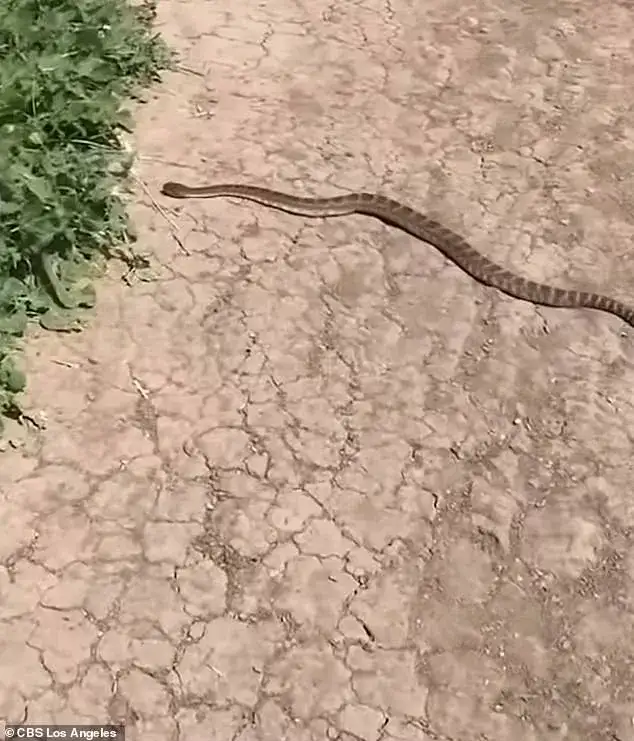
NEAR-FATAL ENCOUNTER ON VENTURA COUNTY TRAIL
Bailey Vanden Bossche, a 14-year-old, is currently in critical condition after being bitten by a rattlesnake while mountain biking in Newbury Park, Ventura County, on March 20. The incident occurred around 5:30 p.m. on the Wendy Trail when Vanden Bossche fell off her bike on an uneven path and landed in tall brush.

Vanden Bossche stepped on the snake after falling, sustaining a bite that has led to her current dire state. She was later rescued by firefighters who had to hike to her location and subsequently transported to a local hospital, where she received anti-venom treatment.

THE AFTERMATH AND ONGOING RECOVERY
Bailey's grandfather, Bryan Vanden Bossche, described her visible distress, noting her "face distorted and the muscles going in different ways." Initially, she and her friend believed the injury was a broken ankle, with only a single puncture wound apparent. She remains on crutches, her foot still significantly swollen. Her mother, Brooke Cushman, confirmed that Bailey is now "a lot better" but acknowledged the initial fear and uncertainty surrounding the emergency call.
Read More: New Cicada Covid Variant BA.3.2 Has 75 Mutations, May Evade Vaccines

CONTEXT OF INCREASING INCIDENTS
This event is not isolated. Southern California has seen multiple rattlesnake-related incidents recently, including at least two fatalities. A 46-year-old woman, Gabriella Bautista, died on March 14 after being bitten while hiking in Wildwood Regional Park, also in Thousand Oaks. Another individual, Julian Hernandez, also died from a rattlesnake bite sustained while mountain biking on the Quail Hill Trailhead in Orange County earlier in March. Ventura County Fire Department has reported at least four snakebite incidents since Bautista's death.

UNDERSTANDING THE RISK
While rattlesnake bites are generally considered rare and snakes tend to avoid human contact, authorities are issuing warnings for those frequenting local trails. California is home to seven species of rattlesnakes. Experts advise maintaining a safe distance from any encountered snakes and to avoid placing hands or feet in areas where they cannot be seen clearly. The venom of a rattlesnake is primarily hemotoxic, meaning it attacks blood and tissue, leading to severe pain, swelling, and potentially tissue damage and internal bleeding.
Read More: Surgeons Warn Against Long Toilet Stays and Flushable Wipes for Colon Health


