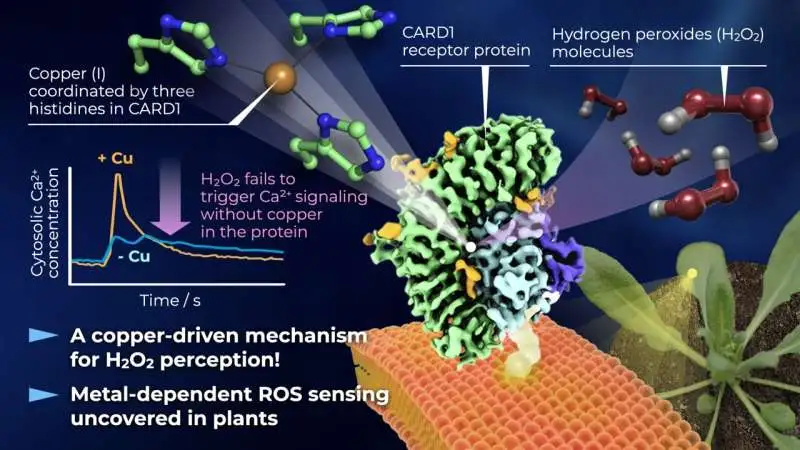
Plant survival under environmental strain relies on a copper-dependent sensing mechanism located in the CARD1 receptor, displacing prior scientific models that attributed this function to cysteine-based chemistry. The study, published today, 18 May 2026, in Nature Communications, details how this metallic site facilitates the detection of hydrogen peroxide (H₂O₂), a key signaling molecule triggered by pathogens and abiotic pressure.
| Mechanism Component | Previous Understanding | Updated Scientific Evidence |
|---|---|---|
| Sensing Agent | Cysteine-based residue | Copper-dependent redox site |
| Target Molecule | Redox-related species | Hydrogen peroxide (H₂O₂) |
| Receptor Identity | Broad sensor classification | CARD1 specific receptor |
Mechanism and Implications
The identification of this sensor challenges the existing paradigm regarding how sessile organisms—plants incapable of locomotion—perceive their immediate chemical surroundings. The Redox Signaling pathway relies on this copper-centered architecture to process external stimuli into internal defensive responses.
CARD1 acts as the primary gatekeeper for detecting reactive oxygen species.
The chemical interaction occurs via copper-mediated redox reactions rather than the oxidation of cysteine amino acids.
Precise perception of quinones and hydrogen peroxide is now tied to this copper-dependent process.
Contextual Background
For decades, plant biologists sought to clarify how cells monitor fluctuating levels of reactive molecules in the environment. These molecules function as both signaling agents and markers of oxidative damage. By identifying the specific role of the copper site, researchers have moved toward a structural understanding of plant Stress Tolerance. This knowledge carries implications for agriculture, potentially allowing for the engineering of crops that exhibit more robust defensive signaling when confronted with climate or biological stressors.
Read More: Indigenous Data Rights Now Key in Conservation Genomics