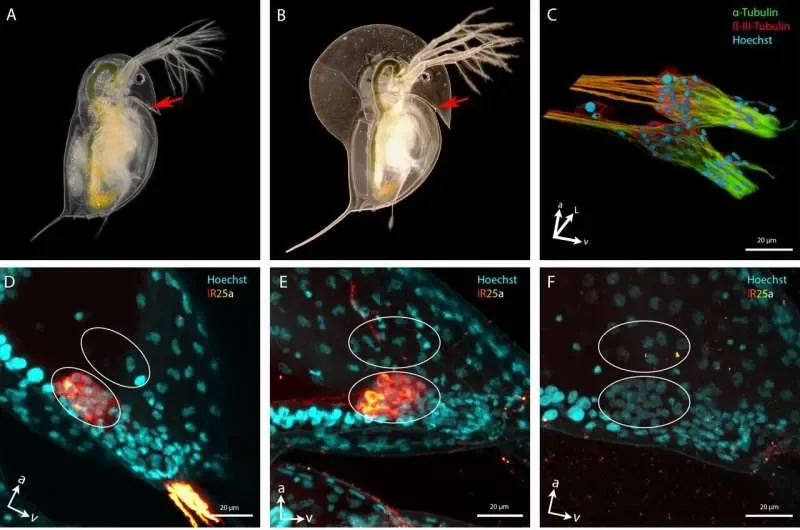
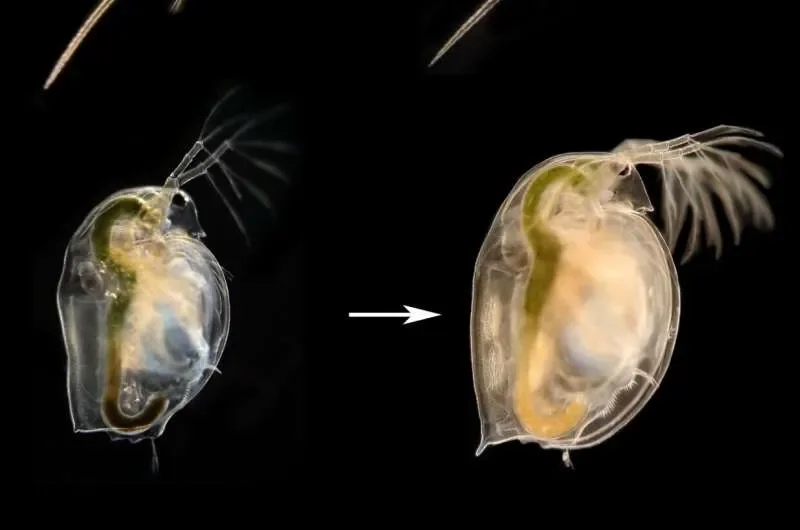
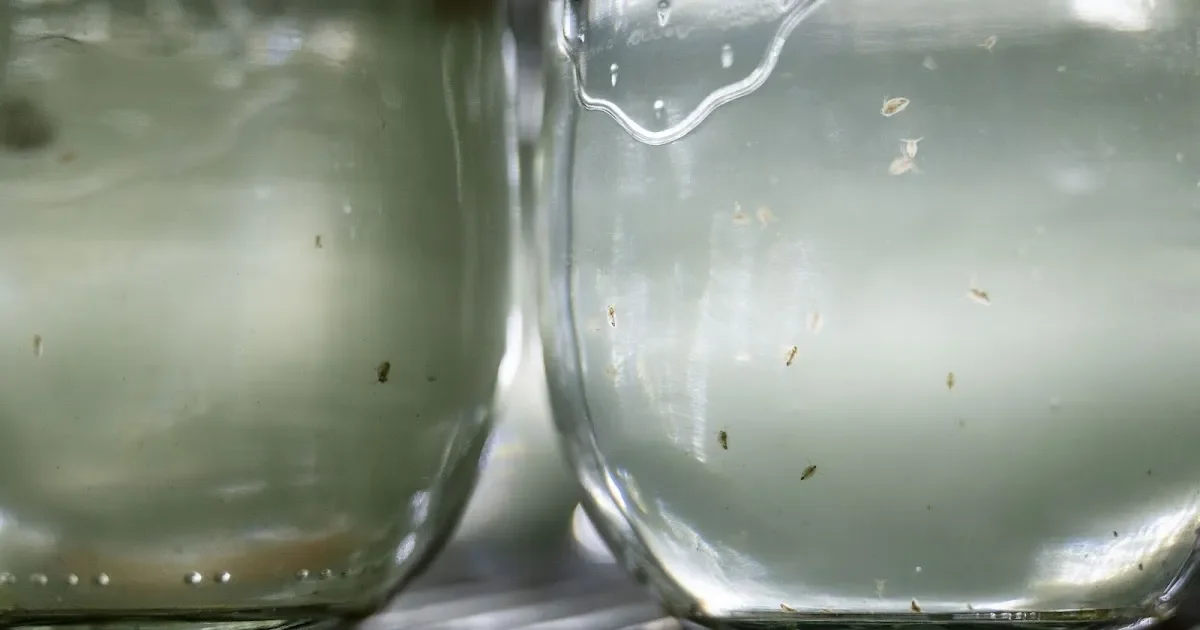
Research published in the Proceedings of the Royal Society B: Biological Sciences has identified two specific ionotropic receptors (IRs), designated as IR25a and IR93a, as the primary mechanism through which Daphnia (water fleas) perceive chemical signals of approaching predators. These protein complexes serve as biological sensors that convert external chemical cues, known as kairomones, into internal electrical impulses, prompting the organisms to develop protective physical structures like helmets.
The integration of IR25a and IR93a into the cell membrane is the necessary prerequisite for Daphnia to anchor receptor complexes and translate environmental threats into tangible morphological change.
| Mechanism | Functional Role |
|---|---|
| IR25a / IR93a | Co-receptor scaffolds anchoring the sensing complex |
| Kairomones | Chemical signals emitted by predators triggering the response |
| RNA Interference | Method used by researchers to knock down gene expression |
The RNA interference (gene knockdown) experiments conducted by the research team from Bochum confirmed that disabling these specific receptors inhibits the ability of Daphnia to recognize predator presence.
The biological response is not merely reactive; it involves a sophisticated reallocation of metabolic resources between growth and reproduction.
Findings indicate that different genotypes exhibit varied expression patterns, even when the resulting survival phenotype (the "helmet") appears visually identical across species.
The Mechanism of Adaptive Plasticity
For years, the nature of "morphological plasticity"—the capacity of an organism to alter its body shape in response to environmental stimuli—remained observed but functionally opaque. Scientists knew that predators leaked chemical indicators into the water, yet the specific hardware required for Daphnia to "read" these molecules remained unknown.
Read More: Indigenous Data Rights Now Key in Conservation Genomics
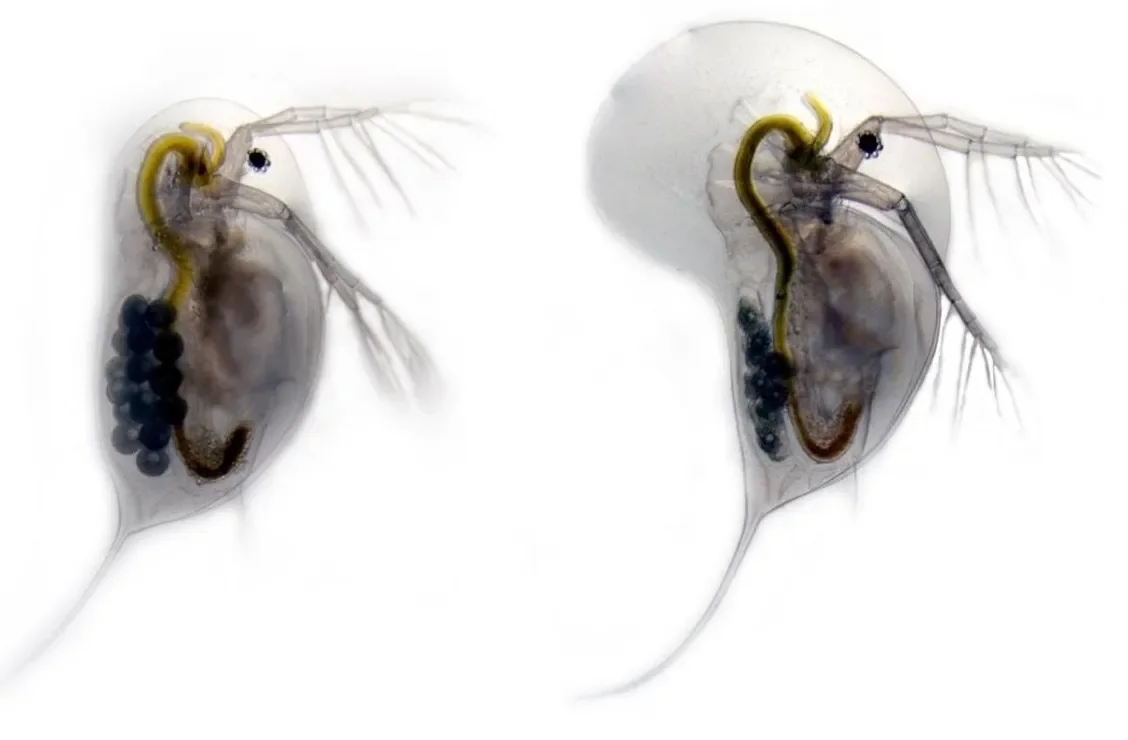
From a neurobiological perspective, the reliance on IR25a and IR93a mirrors the sensory architecture found in various insect systems. This evolutionary overlap suggests that the strategy of using ionotropic receptors for chemosensory adaptation is a deep-seated mechanism for survival in freshwater ecosystems.
While the recent findings provide a high-resolution view of the sensing apparatus, future research is expected to focus on the evolutionary trajectory of these genes. Scientists intend to map how these predator-prey interactions diverged across different species, further explaining how water fleas balance the energetic costs of building armor against the immediate need for reproduction.