A halo-like excess of high-energy gamma rays, detected by the Fermi Gamma-ray Space Telescope, is being put forward as a potential direct signal of dark matter annihilation. The observation, analyzed by Professor Tomonori Totani of the University of Tokyo, aligns with theoretical predictions for what happens when dark matter particles collide and annihilate. This tentative identification could represent a significant step in the century-long quest to directly observe dark matter, a substance comprising an estimated 85 percent of the universe's matter, yet largely invisible to current detection methods.
First Direct Glimpse?
The research, published around November 25, 2025, focuses on gamma-ray emissions emanating from regions presumed to be rich in dark matter. Totani's analysis identified a specific signature – a 20 GeV halo-like excess in Galactic diffuse emission – that matches expected patterns from the decay or annihilation of dark matter particles. This signal, if confirmed, would move beyond indirect observations, such as gravitational lensing, which have only hinted at dark matter's existence by its influence on visible matter.
Read More: New Copper Sensor CARD1 Helps Plants Detect Stress Today
The findings suggest dark matter might be composed of elementary particles significantly heavier than protons.
This gamma-ray signature could offer a new avenue for studying both dark matter and the energetic processes within the cosmos.
Skepticism and Further Scrutiny
While the claims have generated considerable excitement, they are also met with caution and calls for more evidence. Critics, including astrophysicist Professor Justin Read from the University of Surrey, highlight the difficulty in distinguishing a true dark matter signal from other astrophysical phenomena.

Sorting a genuine dark matter signature requires meticulously accounting for all known non-dark matter sources.
Professor Read points to a lack of significant signals from other similar galactic regions as grounds for questioning Totani's conclusions.
Further validation would involve detecting this specific gamma-ray signature in other dense dark matter environments. The scientific community is now awaiting replication and additional data to either confirm or refute this potential breakthrough.

A New Angle on Cosmic Collisions
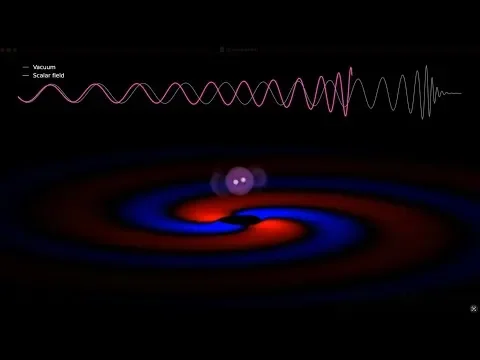
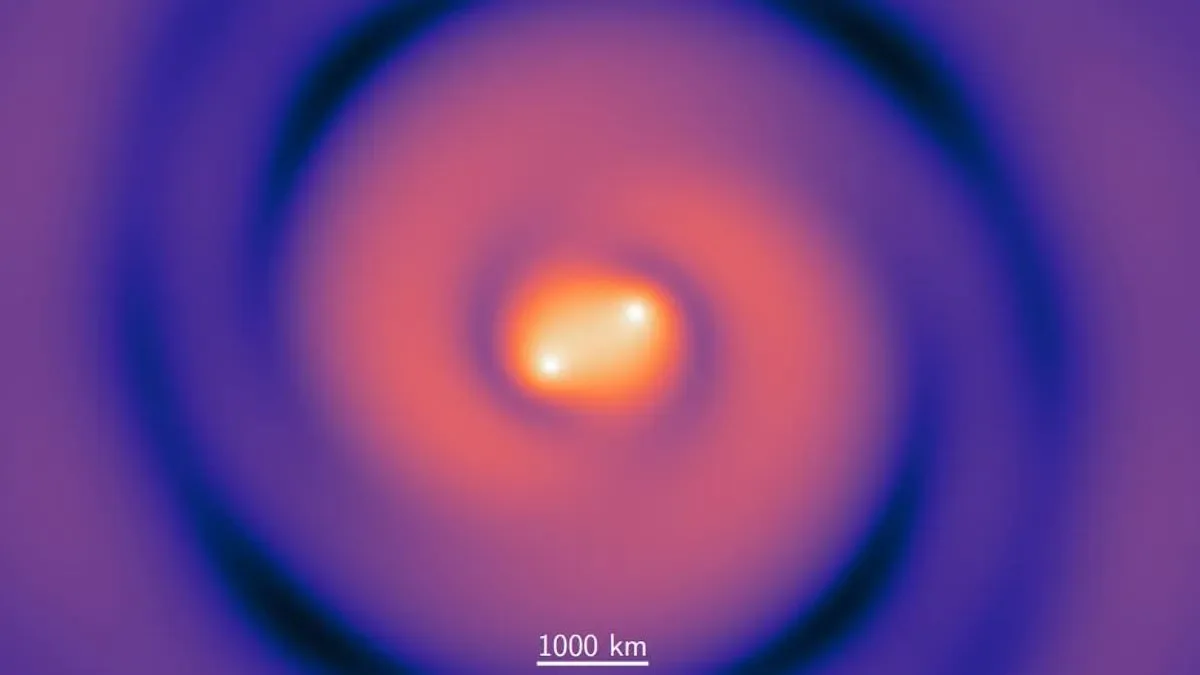
Separately, and potentially indicating a different, more accidental discovery pathway, researchers from the US, UK, and Europe have proposed a novel method for indirect dark matter detection. This approach theorizes that the gravitational waves produced by colliding black holes, if occurring within a dark matter cloud, could carry an imprint of that dark matter environment.
Read More: Moon, Venus, Jupiter Seen Together in Western Sky Tonight
This mechanism suggests that gravitational wave observatories could, by chance, capture evidence of dark matter's presence.
It posits that energy transfer between a spinning black hole and surrounding dark matter waves could leave a detectable trace.
This idea, which emerged in recent scientific discourse (published approximately one day prior to this report), offers a complementary, though less direct, path to understanding dark matter's nature.
The Long Search for Dark Matter
Dark matter was first hypothesized nearly a century ago to explain discrepancies between theoretical models of the universe and observational data. Its invisible nature and interaction solely through gravity have made it one of physics' most persistent enigmas. While WIMPs (Weakly Interacting Massive Particles) remain a leading candidate, their direct detection has proven elusive. This latest development, whether through gamma-ray analysis or gravitational wave studies, signifies a renewed push to finally resolve this fundamental mystery.