Researchers have charted a detailed map of the fruit fly's nervous system, uncovering specialized wiring crucial for its rapid escape behaviors. This intricate map reveals how uncommon neuron-to-neuron connections, termed axo-axonic synapses, act as a fine-tuning mechanism for the swift signals driving these life-saving dodges.
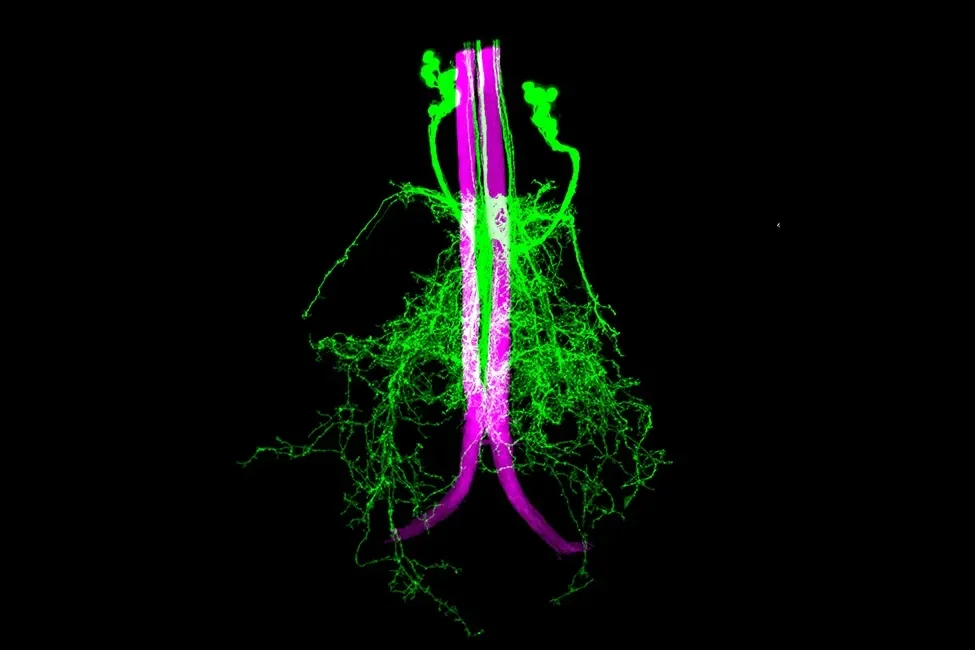
The study, a comprehensive blueprint of the fruit fly's (Drosophila melanogaster) escape-response circuitry, demonstrates that specific axo-axonic neurons can directly amplify signals from escape-command neurons, known as giant fibers. This amplification increases the probability that rapid escape signals will be activated. The findings also suggest that the fly's motor control network operates in a manner distinct from many other known brain systems.
Decoding the Wiring
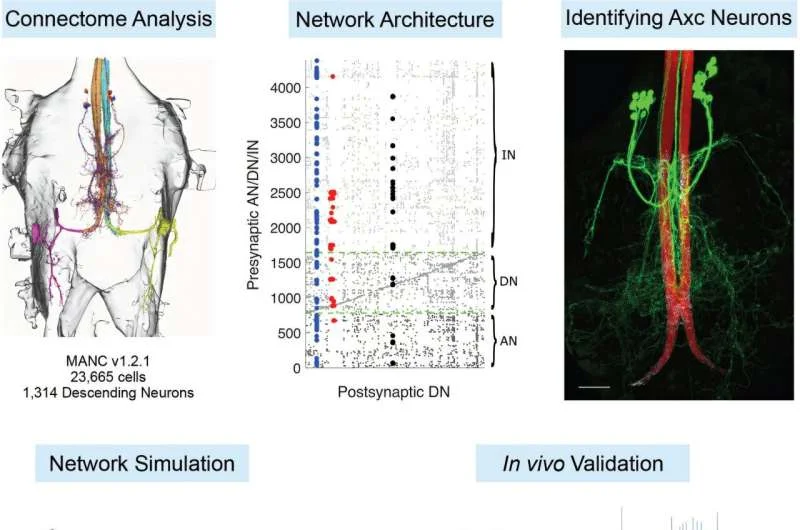
Using one of the most detailed neural maps assembled to date, scientists at Florida Atlantic University analyzed all 1,314 descending neurons within the fruit fly's ventral nerve cord. These neurons transmit commands from the brain to the body. The research provides the first thorough examination of these axo-axonic connections and their role across an entire neural network. While the strong influence of axo-axonic synapses on signal transmission has been known, their prevalence and behavioral impact across complex networks remained largely unexamined.
Read More: Indigenous Data Rights Now Key in Conservation Genomics
Broader Implications
The complexity of the fly's brain, while vastly different from larger animals, offers insights into fundamental neural processes. The fruit fly possesses approximately 100,000 neurons, a stark contrast to the estimated 100 million in a mouse brain. Yet, understanding these simpler systems is considered a significant step toward comprehending more complex neural architectures, including those in humans. The mapping efforts also contribute to a larger endeavor to create comprehensive brain atlases for various species.
Context of Escape
Flies don't solely rely on vision for their rapid reactions. Air currents generated by an approaching threat, such as a hand, provide an early warning, offering crucial milliseconds for processing and initiating an escape maneuver. This sensory information is used to calculate the threat's origin, dictating the specific evasive action taken. The timeframe for a fly to react to a sudden swat is remarkably short, often within 100 to 200 milliseconds.
Read More: Hagfish Lost Eyes But Gained Other Senses, Fossils Show
The Fruit Fly Brain Project
Recent scientific advancements have focused on mapping the fruit fly brain with unprecedented detail. A significant achievement involved creating a synapse-by-synapse map of the adult fruit fly brain, revealing nearly 140,000 neurons. Previous work had also mapped the brain of a larval fruit fly, detailing all 3,016 neurons and 548,000 synapses. These detailed "wiring diagrams" serve as atlases, annotating the brain's structure and circuits, potentially aiding in understanding brain diseases and informing future research on larger, more complex brains.