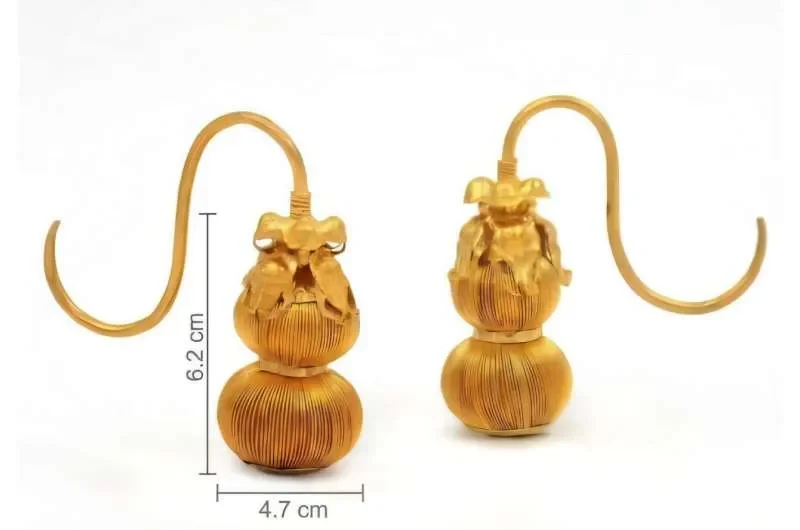
Researchers have successfully replicated a historically vanished goldworking process known as Jin zhe si, according to a study published 4 days ago in npj Heritage Science. By utilizing high-purity gold, investigators demonstrated how artisans in the Ming Dynasty (1368–1644) achieved intricate, filigree-like textures without the use of individual wire filaments.
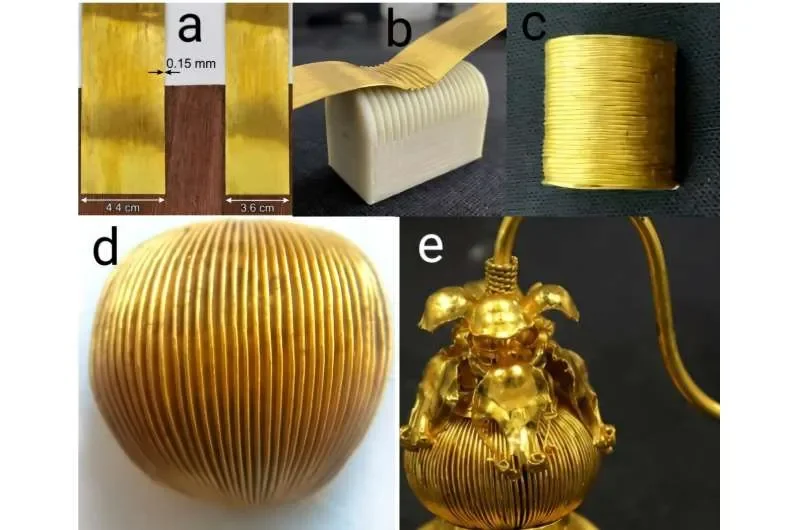
The technique relies on the extreme malleability of gold, allowing for repeated folding into thin, corrugated structures that resist cracking or material failure.
| Technical Attribute | Historical Ming Practice | Modern Replication |
|---|---|---|
| Method | Jin zhe si (folding) | Mechanical mimicry |
| Filament Use | None (structural folds) | None (structural folds) |
| Primary Material | High-purity gold | High-purity gold |
| Documentation | Archaeological analysis | Stereomicroscope & drawings |
Structural Investigation
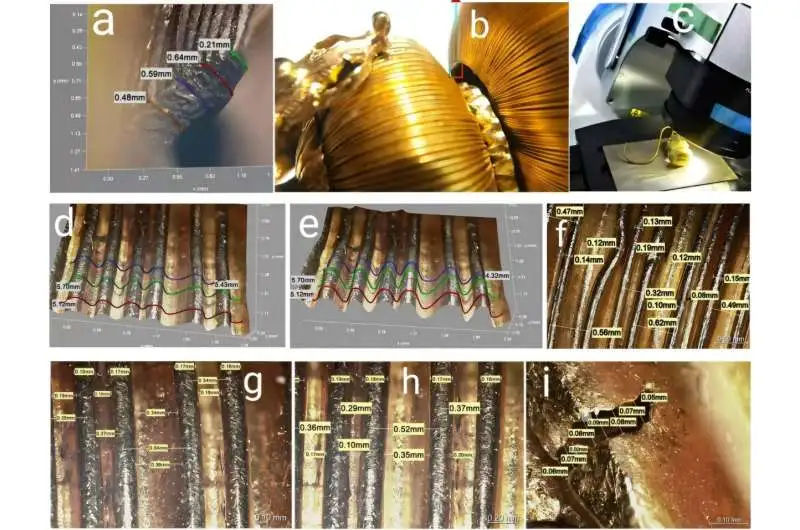
The replication project focused on the production of a double gourd-shaped pendant, adorned with gold leaves and vines. While the visual output resembles traditional filigree, researchers Z. Tian and K. Ren categorize Jin zhe si as a distinct metallurgical discipline. Through the use of stereomicroscopy, the team documented the geometric precision required to produce the characteristic corrugations that mimic wire ornamentation.
Read More: Indigenous Data Rights Now Key in Conservation Genomics
This study clarifies the structural logic behind ornamental Ming jewelry that has baffled analysts for decades.
The project moves beyond observation to functional re-creation, confirming that the physical properties of gold—specifically its capacity for intense deformation—were exploited to their limits by historical craftsmen.
Findings were disseminated via 'npj Heritage Science' on April 3, 2026.
Historical Context of Ming Goldsmithing
The Ming Dynasty period is noted for a high degree of specialization in precious metal crafts. Historically, artifacts from this era—such as gold coronets and inlaid belt hooks—often utilized a mixture of inlay, filigree, and structural folding. The discovery that Jin zhe si operated as a non-wire-based decorative technique forces a re-classification of how specific imperial ornaments were constructed.
As of today, April 7, 2026, the study stands as a primary reference for the mechanical capabilities of late-imperial Chinese goldsmiths, distinguishing their unique methods of shaping high-purity gold from more common Eurasian filigree traditions. The distinction remains significant for the history of material science and archaeological conservation.