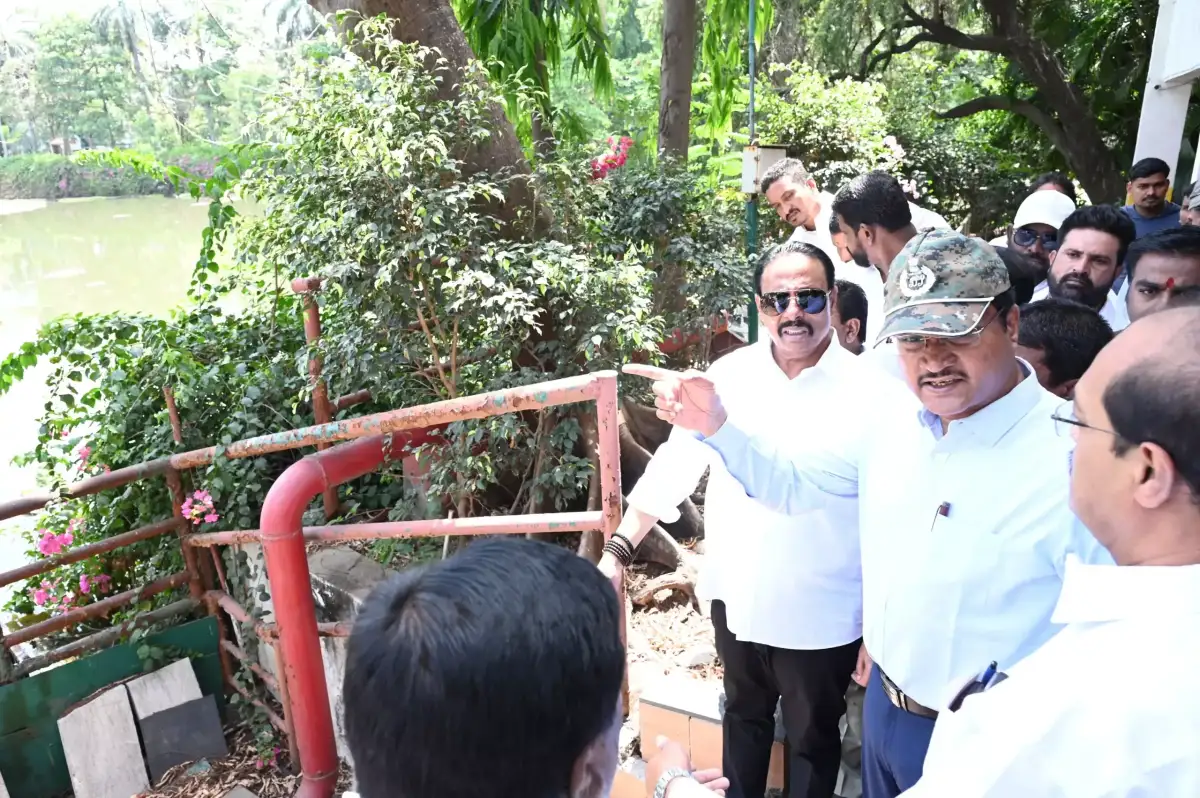
Hyderabad: The existence of Taj Banjara Lake, a vital urban water body, is under severe strain. HYDRAA Commissioner A.V. Ranganath has ordered a detailed probe into widespread encroachments and rampant pollution plaguing the lake, citing a road constructed within its Full Tank Level (FTL) limits and continuous dumping of waste as primary threats. The Commissioner also confirmed the complete disappearance of nearby ponds – Ongoni Kunta, Kanakayya Kunta, Marrivani Kunta, and Erra Kunta – due to extensive encroachment.
The HYDRAA chief’s intervention follows a series of public complaints received through Praja Vani, highlighting a crisis affecting multiple water bodies in the Mamidipally and Shamshabad areas as well. Reports indicate that sewage water is being directly discharged into Taj Banjara Lake, which has become a repository for large quantities of plastic waste, turning it into one of Hyderabad's most polluted water bodies. Residents have voiced concerns that these vanishing ponds, with their connecting flood canals arbitrarily blocked, contribute to residential areas being inundated during rains.
Read More: Amazon Land Use Changes Cause Disease Clusters in Brazil
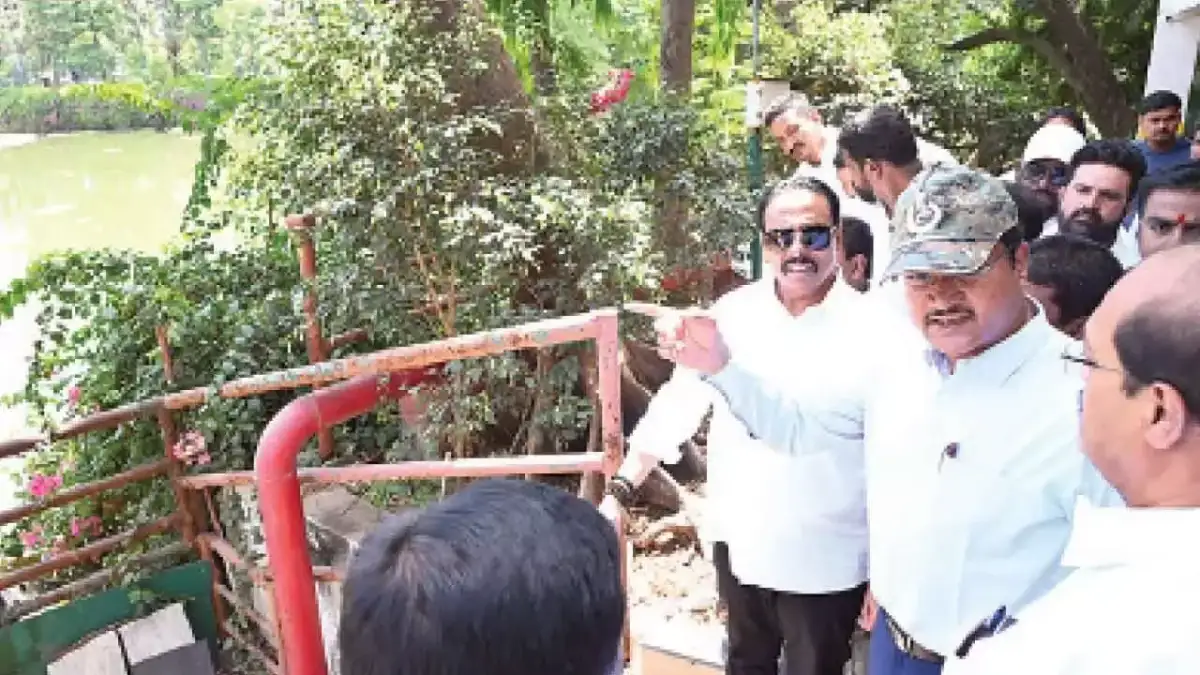
Official Action and Resident Grievances
Commissioner Ranganath conducted a field inspection on Wednesday, directly observing the deteriorating condition of Taj Banjara Lake and the surrounding missing ponds. He warned of strict action against constructions obstructing canals and exacerbating flood risks, while assuring residents that the lake would be preserved without encroaching on private properties. A comprehensive report on protecting government land adjacent to Banjara Lake and its subsequent rejuvenation has been demanded.
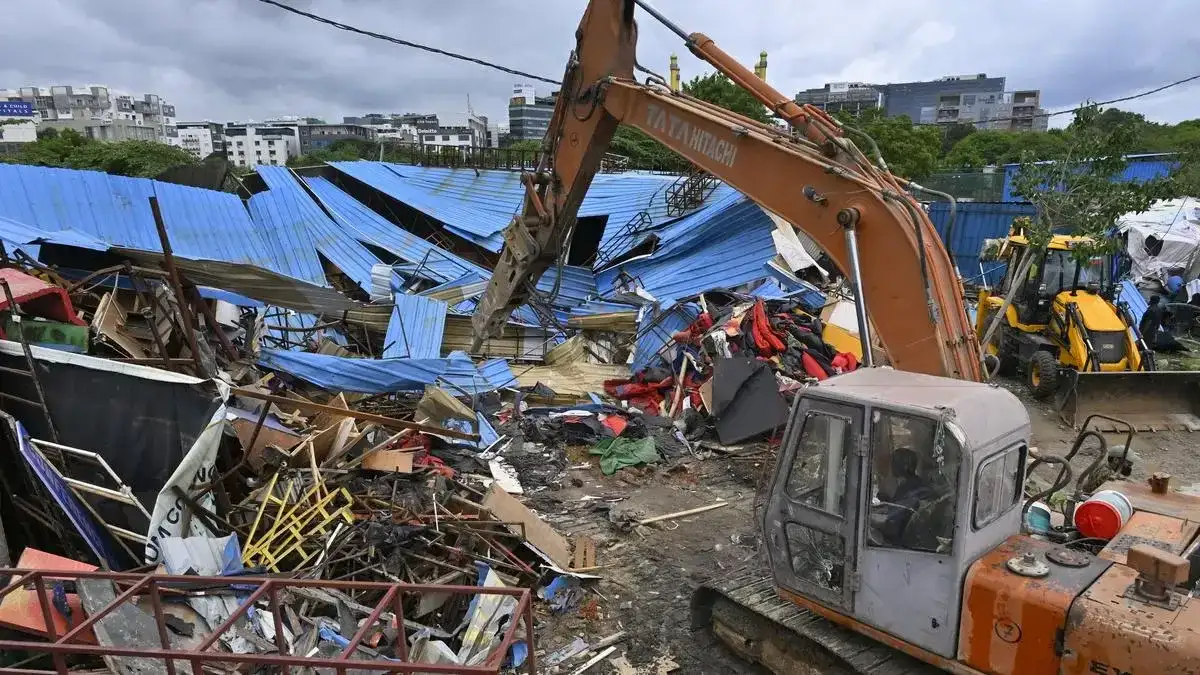
Further compounding the issue, devotees have lodged complaints that encroachments have obstructed the pathway leading to the Kattamaisamma Temple, with allegations specifically pointing towards the Taj Banjara Hotel. Ranganath has assured that a meeting with encroachers will be arranged, with HYDRAA poised to intervene and remove any obstructions if no resolution is reached.
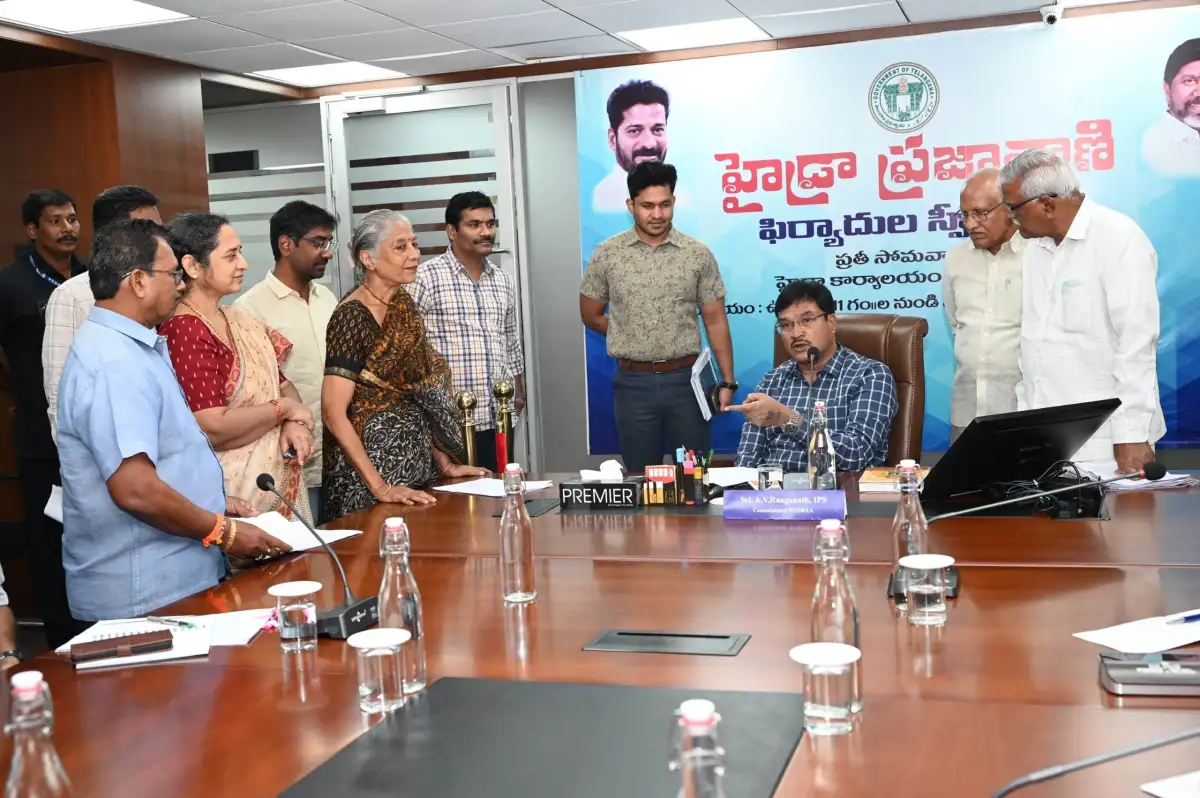
Broader Patterns of Urban Neglect
This situation mirrors ongoing concerns regarding government land encroachment in other parts of Banjara Hills. Recent public complaints have exposed alleged flaws in land regularization processes, with instances of individuals encroaching on government plots, applying for regularization on portions, and even constructing structures on illegally occupied land without any formal application. Similar grievances have surfaced in Gopanpally and Shaikpet, where public utility lands, including parks and roads, have reportedly been converted into saleable plots.
Read More: Hyderabad SHE Teams Arrest 127 for Harassment in June 2026
Commissioner Ranganath, who also heads the Lake Protection Committee for lakes within the Outer Ring Road (ORR) and was formerly the EVDM Commissioner, has previously flagged serious drain bottlenecks in Banjara Hills. His earlier observations attributed recurring floods to unscientific design alterations and encroachments that narrow stormwater channels. HYDRAA has previously undertaken actions to clear encroachments on nalas, noting that unauthorized structures had significantly reduced culvert widths, hindering the free flow of water.
The HYDRAA chief's directive for a probe into Taj Banjara Lake's encroachments and pollution underscores a critical juncture for the urban water body.
The Commissioner's concurrent investigation into disappearing ponds in Mamidipally and Shamshabad suggests a systemic issue affecting water management in the region.
Resident complaints regarding blocked flood canals and the inundation of residential areas during rains highlight the immediate consequences of unchecked development.
The alleged encroachment of pathways to the Kattamaisamma Temple adds a layer of cultural and religious impact to the environmental crisis.
The broader context of government land encroachment and flawed regularization processes, as reported in other areas of Banjara Hills, points to systemic governance challenges.
Commissioner Ranganath's prior focus on drain bottlenecks and the subsequent removal of encroachments on nalas indicate a pattern of addressing infrastructural issues arising from illegal construction.