Hyderabad is charting a course for a monumental transformation by 2050, with plans inked for an unprecedented infrastructure overhaul. Central to this vision is a colossal ₹4 lakh crore mobility blueprint aimed at radically reshaping how the city functions. This ambitious scheme is not merely about adding new structures; it signifies a fundamental re-evaluation of the city's fabric, its movement, and its relationship with its waterways.
The centerpiece of this grand design involves a significant expansion of public transit and the creation of vast new road networks. A staggering 556.6 km of Metro rail lines are projected, dwarfing current capacities and promising to connect previously underserved areas. Complementing this, 2,847 km of new road corridors are slated for construction, intended to untangle the city's notorious traffic snarls. Furthermore, the plan incorporates 34 Road Over Bridges (ROBs) and 16 Road Under Bridges (RUBs) to eliminate disruptive level crossings, alongside an expansion of the Multi-Modal Transport System (MMTS) rail network to 336.4 km, and the development of 7 inter-city bus and truck terminals.
Read More: Two building collapses in India kill 6 people
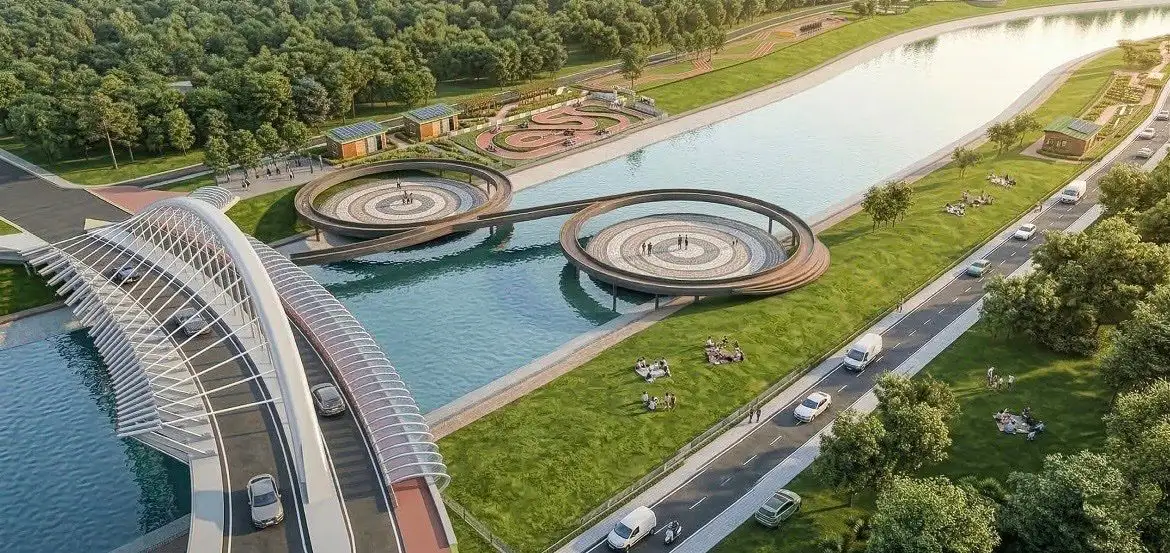
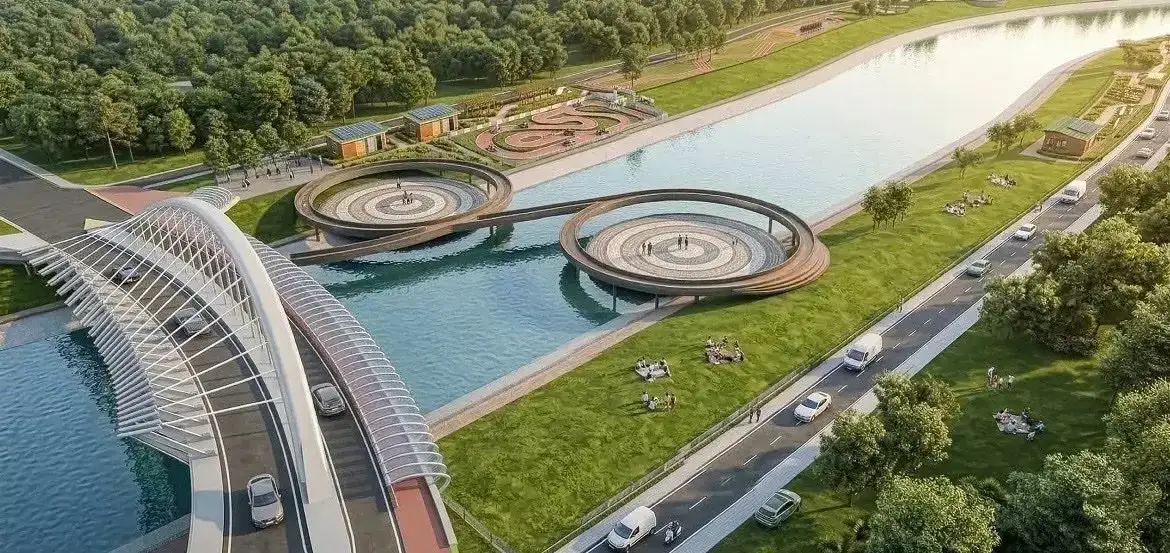
A striking component of these extensive plans is the proposal for 29 new bridges to span the Musi River. This significant investment in bridging a waterway previously characterized as a neglected drain underscores a profound shift in how the river is perceived and integrated into the urban landscape. This surge in bridge construction is intrinsically linked to a broader Musi Riverfront Development Project, with the first phase alone slated to cost between ₹6,500–₹7,000 crore. This phase will focus on a 21 km stretch, aiming to revitalize the river and its banks, a stark departure from its historical neglect.
Mobility Blueprint's Many Facets
The expansive mobility blueprint, under preparation as a precursor to the Hyderabad Metropolitan Region's master plan for 2050, extends beyond immediate transit. Officials have emphasized the pressing need to bolster public transportation systems, citing the rapid proliferation of personal vehicles as a key concern. Discussions have also highlighted the persistent traffic and parking woes plaguing both core city areas and Cyberabad, prompting recommendations for dedicated parking management and decongestion strategies.
Read More: Hyderabad SHE Teams Arrest 127 for Harassment in June 2026
"Transport commissioner K Ilambarithi stressed the need to strengthen public transport in view of the rapid growth of personalised vehicles."
"Joint police commissioner D Joel Davis highlighted traffic and parking challenges in core city areas and Cyberabad, recommending parking management plans and decongestion strategies."
Further ambitions within the blueprint include the strengthening of existing Metro and MMTS systems, alongside the conceptualization of high-speed rail corridors connecting Hyderabad to neighboring major cities like Bengaluru and extending towards Amaravati and Chennai.
Revitalizing the Musi: More Than Just Bridges
The Musi River, long relegated to the status of a polluted waterway, is now at the heart of a revitalization effort. The Musi Riverfront Development Project, involving an international consortium of five consulting firms, is tasked with creating a detailed project report (DPR). This initiative is presented not just as an environmental cleanup but as a catalyst for economic growth, aiming to elevate Hyderabad to the status of internationally recognized urban centers.
The first phase of the riverfront development will concentrate on two specific stretches of the Musi, covering a combined 21 kilometers. This segment, running from the Outer Ring Road (West) to Gandhi Sarovar at Bapu Ghat, encompasses significant infrastructure works. These include the laying of trunk sewer mains and stormwater drains, the construction of water-retention structures like weirs and barrages, and extensive riverfront beautification. Crucially, this initial phase alone will involve the construction or upgrading of 14 bridges, with nine being newly proposed and five existing structures slated for enhancements.
Read More: Bihar gets $10.5 Billion from HUDCO for New Cities
"The development of the Musi River begins with precisely defining its boundaries, allowing the team to craft comprehensive designs, drawings, and a detailed project report (DPR)."
"The project’s first phase covers two critical river stretches, from Gandipet (now rechristened Gandhi Sarovar) to Bapu Ghat, and from Himayat Sagar to Gandhi Sarovar, a combined 21 kilometers of the Musi."
Context: A City's Evolving Vision
Hyderabad's engagement with large-scale infrastructure projects is not new, but the sheer scope and integrated nature of the current proposals suggest a marked shift in urban planning priorities. The ₹4 lakh crore mobility blueprint and the concurrent Musi River revitalization project represent a coordinated attempt to address multifaceted urban challenges – from traffic congestion and environmental degradation to economic development and regional connectivity. The vision extends to a potential 'Secular Vision for the Musi Riverfront', as articulated by officials, suggesting an intent to integrate diverse community needs and historical considerations into the urban renewal process. This push towards a comprehensive overhaul signals a desire to fundamentally re-engineer Hyderabad's urban experience over the coming decades.