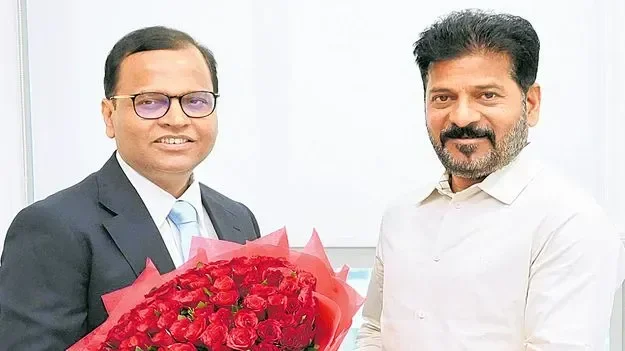
HYDERABAD - Chief Minister Revanth Reddy has pledged to find a lasting answer to the ongoing dump yard crisis at Jawahar Nagar, Kapra. His assurance comes after receiving a memorandum from an all-party delegation, itself representing the Jawaharnagar Dumping Yard Joint Action Committee (JAC). The core of the commitment involves exploring modern methods for waste management, including a potential delegation to study international scientific practices.
The Chief Minister’s promise follows a pattern of discussions and directives concerning Hyderabad’s waste management. In March 2026, he instructed officials to prepare newly identified dump yards for use and encouraged the adoption of electric vehicles for garbage collection within the Core Urban Region (CURE) areas. At that time, he specifically mentioned the need to manage construction waste, urging against indiscriminate dumping in the CURE zone and demanding special arrangements for its removal.
Read More: Amazon Land Use Changes Cause Disease Clusters in Brazil
Earlier in January 2024, the Chief Minister had already proposed the establishment of multiple dump yards in Hyderabad to combat the overwhelming volume of garbage. The Jawahar Nagar dump yard alone was then processing an estimated 8,000 tonnes of waste daily, significantly impacting nearby residents through air pollution and odors. At that juncture, there was also a suggestion to explore the potential for generating electricity from waste, with officials encouraged to collaborate with the Telangana State Southern Power Distribution Company Limited (TSSPDCL).
Political Undercurrents and Past Protests
The issue of dump yards is not without its political entanglements. In February 2025, a protest against a proposed GHMC dump yard in Sangareddy saw the detention of Narsapur BRS MLA V Sunitha Lakshma Reddy. Villagers had reportedly been demonstrating against the plan to establish a dump yard on 150 acres.
Furthermore, in late April 2025, Chief Minister Revanth Reddy publicly blamed K. Chandrashekar Rao (KCR) for the state's financial situation, referring to it as a "treasury loot." This accusation underscores a broader political narrative of blame and accountability that often surrounds governance issues, including environmental concerns.
Read More: Hyderabad SHE Teams Arrest 127 for Harassment in June 2026
Background: A City's Growing Waste Burden
Hyderabad, like many rapidly expanding urban centers, faces an escalating challenge in managing its waste. The sheer volume generated strains existing infrastructure, leading to environmental degradation and public health concerns. Previous administrations have grappled with finding sustainable solutions, often resulting in piecemeal efforts or proposals that struggle to materialize. The current administration's renewed focus, while pledging international study and modern techniques, must navigate the complex realities of land acquisition, community consent, and the economic viability of advanced waste processing. The mention of electric vehicles and potential energy generation from waste hints at a desire for more integrated and perhaps forward-thinking approaches, but the practical implementation remains the critical question.