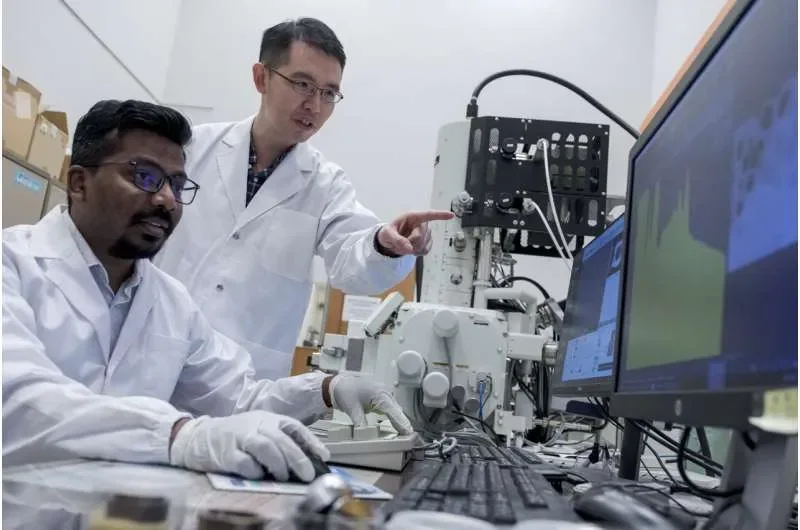
A novel approach employing graphite flakes might drastically redefine the scale of X-ray technology for biological imaging. Researchers are exploring ways to generate 'water-window' X-rays, crucial for observing cells without invasive staining, outside the confines of massive, inaccessible synchrotrons.
The challenge lies in producing X-rays within the specific "water window" wavelengths (2.2 to 4.4 nanometers), which offer high contrast for biological samples. Current tabletop machines often lack the tunable energy ranges or the full spectrum needed, forcing reliance on prohibitively expensive, room-sized synchrotrons.
This push towards compact X-ray sources could lead to more accessible and versatile bioimaging tools. The work signals a potential shift away from specialized, large-scale facilities toward laboratory-based setups capable of producing X-rays useful for understanding cellular processes at unprecedented detail.
Shrinking the Giant's Shadow
The aspiration is to replicate the capabilities of synchrotrons—large facilities that accelerate particles to near light speed to generate X-rays—using much smaller, more manageable equipment. These synchrotrons, often described as larger than a house, present a significant barrier to entry for many research institutions due to their cost and sheer size.
Read More: HKUST Scientists Discover How DICER Enzyme Cuts RNA With High Precision in 2024
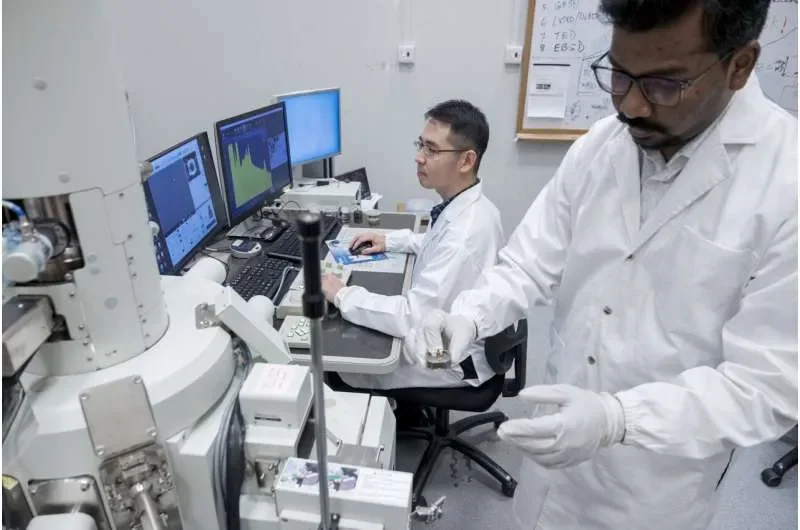
The current research is probing methods to generate these specific X-ray wavelengths with a focus on efficiency and tunability. This includes exploring the use of van der Waals materials and advanced laser techniques, such as free-electron shaping using quantum light, to manipulate and generate X-ray radiation.
A Spectrum of Possibilities
The 'water window' is particularly significant because X-rays in this range are readily absorbed by oxygen and carbon, elements abundant in biological matter, while being less absorbed by water. This property allows for high-resolution imaging of cellular structures like DNA and proteins without the need for contrast agents that could alter the sample.
Previous attempts at generating coherent X-rays in this range have involved complex setups. For instance, some methods have utilized sub-femtosecond laser pulses and mid-infrared laser drivers, coupled with high-harmonic generation in targets like high-pressure helium. The goal has always been to achieve efficient energy conversion and phase matching to produce the desired X-ray output. The new focus on graphite flakes suggests a potential simplification of this process, moving it closer to practical, bench-top applications.
Read More: Linux users struggle to get older AMD GPUs working with new drivers
The development could empower researchers with more localized X-ray generation capabilities, enabling advancements in fields ranging from fundamental cell biology to medical diagnostics, potentially leading to 'bench-top' microscopes capable of detailed biological observation.




.jpg)