Molecular Scissor's Secret Revealed
A recent flurry of reports highlights a significant advance in understanding the enzyme DICER, a crucial player in RNA silencing. Researchers from The Hong Kong University of Science and Technology (HKUST) have utilized advanced techniques, including high-resolution cryo-electron microscopy (cryo-EM), to visualize the enzyme's atomic-level interactions with RNA.
This work provides unprecedented structural snapshots of DICER's dynamic adjustments, revealing how it achieves single-nucleotide precision in processing microRNAs (miRNAs). This accuracy is fundamental, dictating the production of mature miRNAs that govern gene expression. For years, the precise mechanism behind DICER's cleavage accuracy remained elusive, despite its known critical role.
Structural Insights into Enzyme Flexibility
The discovered structural details illuminate how DICER undergoes "conformational adjustments" before cleaving RNA substrates. These adjustments guide the RNA into the correct "register" for precise cutting.
The study identified not only the previously known U-favoured 5′-end binding pocket but also a newly discovered G-favoured 5′-end binding pocket.
This structural flexibility is key to explaining DICER's ability to process precursor miRNAs with varied loop sizes and shapes, a characteristic that has long puzzled scientists.
Implications for Disease and Regulation
The heightened understanding of DICER's precise functioning has far-reaching implications.
Read More: Indigenous Data Rights Now Key in Conservation Genomics
Gene regulation research is advanced by these findings.
New insights are offered into the molecular underpinnings of diseases such as cancer, immune disorders, and genetic diseases.
Previous observations have already linked mutations in DICER or reduced DICER activity to several cancers and developmental disorders, underscoring the enzyme's critical biological role.
Background: The Enigma of miRNA Processing
MicroRNAs (miRNAs) are small non-coding RNA molecules that play vital roles in regulating gene expression. Their biogenesis involves a complex pathway, with DICER acting as a key enzyme. DICER is responsible for cleaving double-stranded RNA precursors into short miRNA duplexes, which are then incorporated into the RNA-induced silencing complex (RISC). The accuracy of this cleavage step is paramount; even a single nucleotide difference can alter the resulting miRNA's function and its target specificity. This precision is what makes DICER one of biology's most "precise molecular scissors."
Related Developments
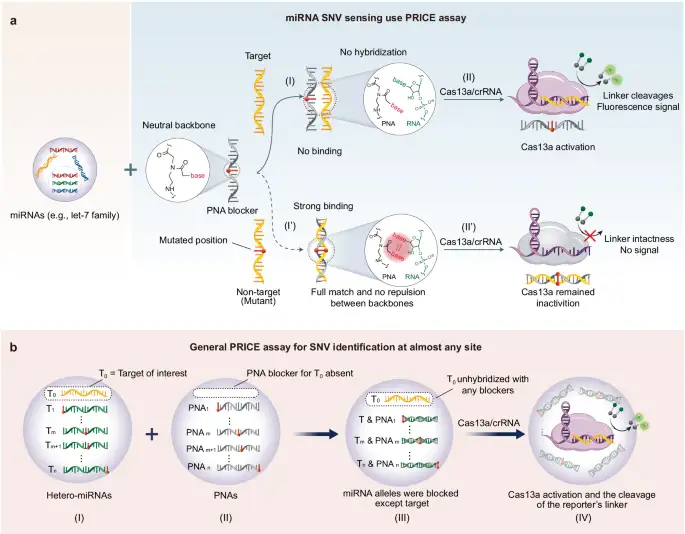
Separately, research has also focused on developing methods for detecting miRNAs with similar precision. The 'PRICE' assay, for instance, has been detailed for its capability in direct and robust detection of microRNAs at single-nucleotide resolution. This assay utilizes specific molecular probes to distinguish target miRNAs from their mutants, enabling sensitive detection even in complex mixtures.
Read More: Hong Kong Customs Seizes 2.2 Million Illicit Cigarettes, HK$11.3 Million Laundered