


Aggression's Divides
New findings from the 'University of Lincoln', UK, cast doubt on a long-standing idea about why humans fight. The research, published in 'Evolution Letters', indicates that ordinary, everyday squabbles don't necessarily pave the way to killing. This challenges the notion that a species prone to minor scraps is automatically predisposed to lethal conflict.
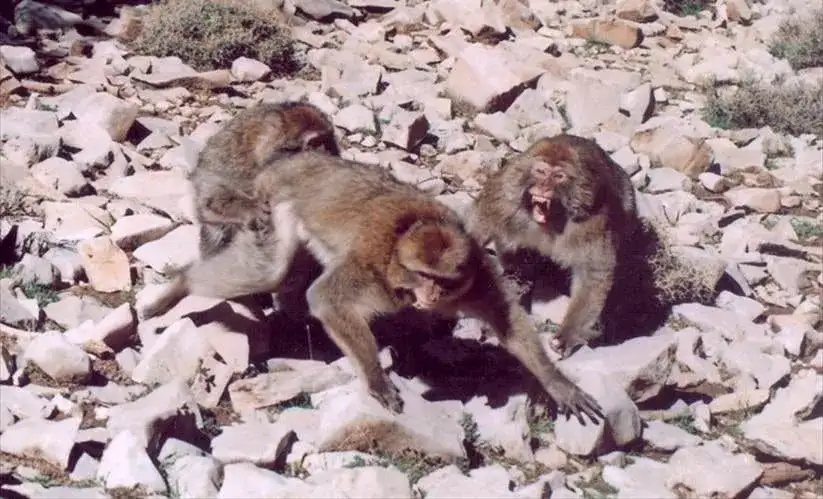
The study suggests that mild aggression and lethal violence may have developed along separate evolutionary routes.

The investigation found that while different types of killing behavior showed some shared connections, they had little apparent link to minor conflicts. This implies that the underlying causes or mechanisms for lethal aggression are evolutionarily distinct from those driving less severe forms of aggression. The prevailing view, that aggression exists on a single scale from minor disputes to fatal outcomes, is thus called into question. Instead, the work proposes that different types of aggression arise under varied environmental and societal conditions.
Read More: HKUST Scientists Discover How DICER Enzyme Cuts RNA With High Precision in 2024
Examining Human Behavior
The debate over the root of human violence has often proceeded with the assumption that aggression is a monolithic trait. This new perspective, however, suggests a more fractured reality. The capacity for conflict, it seems, is not a simple, escalating force but a complex interplay of factors that can manifest in vastly different ways. This has implications for how we understand not just our evolutionary past but also our present behavior and societal structures.
Broader Context
Previous discussions have touched on the idea that human aggression might be shaped by circumstances and environment, rather than being a fixed, inherent trait. Some have even posited that while the potential for violence exists within us, it does not dictate our destiny, and that we play an active role in shaping our actions and communities. This current research offers a scientific basis for exploring these complexities further, moving away from simplistic narratives about innate human tendencies.
Read More: Rob James Claims Hair Loss Reversed With Daily Routine, Others Use Minoxidil



.jpg)
