The Precarious Path of Jewish Tradition in Syria
The dwindling Syrian Jewish population in Damascus, estimated at fewer than one hundred souls, renders the maintenance of kosher traditions an urgent, existential challenge. These ancient practices now rely on fragile, individual efforts in a landscape from which the community has all but vanished. Efforts are underway to revive local kosher meat production, a move seen as crucial for sustaining these traditions. However, skepticism lingers regarding the feasibility of dedicated kosher establishments.

Brought from Afar, Held by Few
For years, members of the small Jewish community in Damascus have relied on imported kosher meat, often brought by visitors from abroad. Trips organized for Syrian Jews in Brooklyn have involved transporting substantial amounts of kosher meat, sometimes around 50 pounds, to Damascus. This reliance on external supply chains highlights the challenges of maintaining a self-sufficient kosher infrastructure.

A Historical Echo in a Quiet Quarter
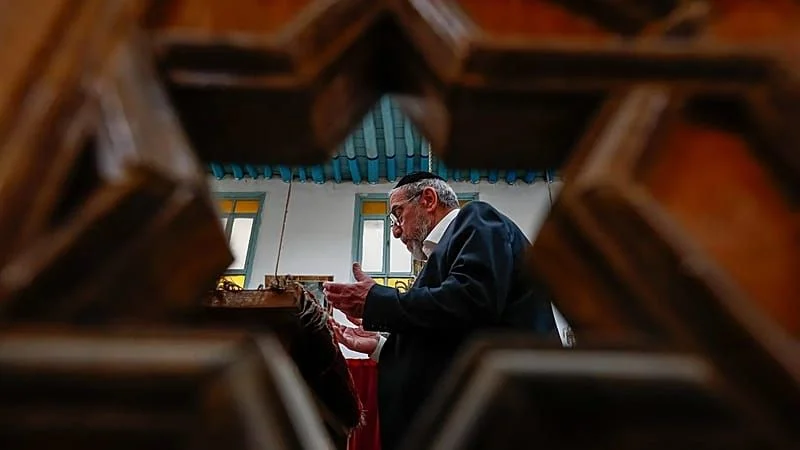
The historic Jewish Quarter of Damascus, once a vibrant center for tens of thousands, now speaks of a profound silence. The stark decline of its Jewish population makes the continuation of religious practices a monumental task. Some have voiced objections to specialized kosher establishments, advocating instead for inclusivity where restaurants serve all patrons equally.
Read More: Why the New Atheism movement lost public influence by April 2026

Navigating Ancient Laws in a Modern Context
Maintaining kosher dietary laws in Damascus presents unique hurdles. Classic Syrian dishes that combine meat and dairy, prohibited under kosher guidelines, are notably absent from menus. Plans are being discussed to establish dedicated kosher facilities, including new grills, skewers, plates, and utensils for exclusive kosher use, even within hotel kitchens. This adaptation signals a commitment to preserving religious observance amidst overwhelming odds.
A Community Clinging to Identity
The struggle to observe kosher practices has become a poignant symbol of a community fiercely clinging to its identity. The first kosher dinners, like one held recently for Hanukkah in a hotel kitchen, mark significant moments, offering a glimpse of renewed observance for both Syrian and visiting Jewish individuals. The return of kosher food, even in limited capacity, is viewed as historic by some, particularly for those connected to the Syrian Jewish diaspora.
Read More: Gulf Oil Exports Rise in June but Still Below Pre-War Levels
The Broader Narrative
The current situation in Damascus is viewed by some through a complex lens. Discussions arise concerning the framing of these developments, with accusations that certain media outlets might be engaging in 'foodwashing' the Syrian regime by highlighting these culinary efforts. This points to the intricate political and social environment in which the remaining Jewish community operates.
Background:The Syrian Jewish community has experienced a dramatic demographic collapse over decades, largely due to emigration. This exodus has left a profound impact on the ability to sustain religious and cultural traditions. Recent years have seen a small but notable increase in visits from Syrian Jews living abroad, particularly from communities in the United States. These visits have coincided with efforts to reintroduce kosher food and observance into Damascus, albeit on a very small scale. The narrative surrounding these efforts is complex, touching on community preservation, diaspora engagement, and the broader geopolitical context of Syria.
Read More: Why Makeup Choices Show Political Identity in the US on April 7 2026