As of April 7, 2026, clinical observation has established a correlation between specific structural deviations in the human brain and the execution of premeditated violence. Recent data indicates that a diminished amygdala—the region governing emotional processing—frequently appears in individuals convicted of murder. These findings, while statistically significant, do not establish a biological mandate for criminal conduct.
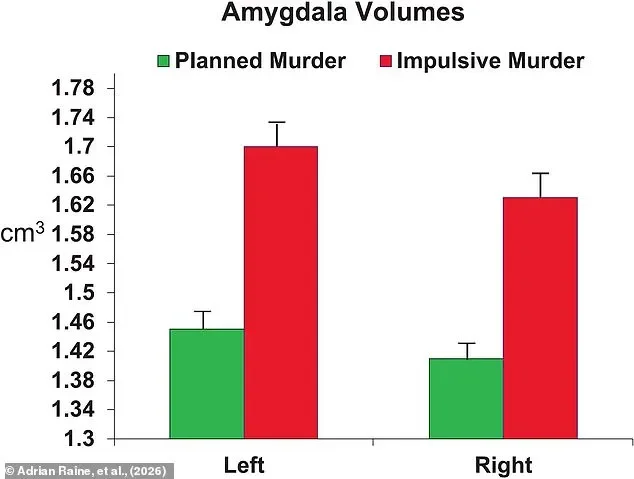
The presence of a smaller amygdala is associated with elevated psychopathic traits, suggesting a physical substrate for impaired empathy or moral inhibition.

| Observed Anomaly | Potential Behavioral Link |
|---|---|
| Reduced Amygdala Volume | Impaired empathy / affective blunting |
| Weakened White Matter Connectivity | Disconnect between logic and impulse control |
| Frontal-Limbic Dysfunction | Breakdown in moral decision-making |
Disconnects in Decision-Making
Research extends beyond static volume measurements to functional connectivity. Current neuroscience posits that "cold-blooded" acts are often facilitated by weakened pathways between emotional centers and the regions responsible for logical appraisal. When these circuits are fractured, the internal mechanism typically used to regulate violent tendencies may fail to activate, leaving the subject with a distorted moral compass.
Read More: Indigenous Data Rights Now Key in Conservation Genomics
Inconsistent Diagnostics: Researchers maintain that brain scans alone are insufficient to diagnose psychopathy or predict future recidivism with certainty.
Population Variance: Extensive studies—including UChicago-affiliated research involving over 800 prisoners—demonstrate that brain anatomy is not a binary. Many individuals with similar neurological profiles never commit violent acts, while some convicted killers display "normal" neuroanatomy.
The Problem of Judicial Integration
The arrival of brain scans in courtrooms as evidence introduces a conflict between clinical categorization and legal responsibility. There is a palpable tension between the deterministic view—that a person’s brain structure makes them a criminal—and the judicial necessity of holding individuals accountable for their choices regardless of biological markers.
"A brain scan alone cannot diagnose psychopathy or predict future behavior with certainty." — Neuroscience Consensus
While researchers categorize these structural differences as meaningful indicators of how subjects process social and emotional stimuli, they caution against the reduction of complex human malice to a simple physical defect. The brain functions as a dynamic system; therefore, isolated structural snapshots provide only partial clarity on the origins of premeditated harm.