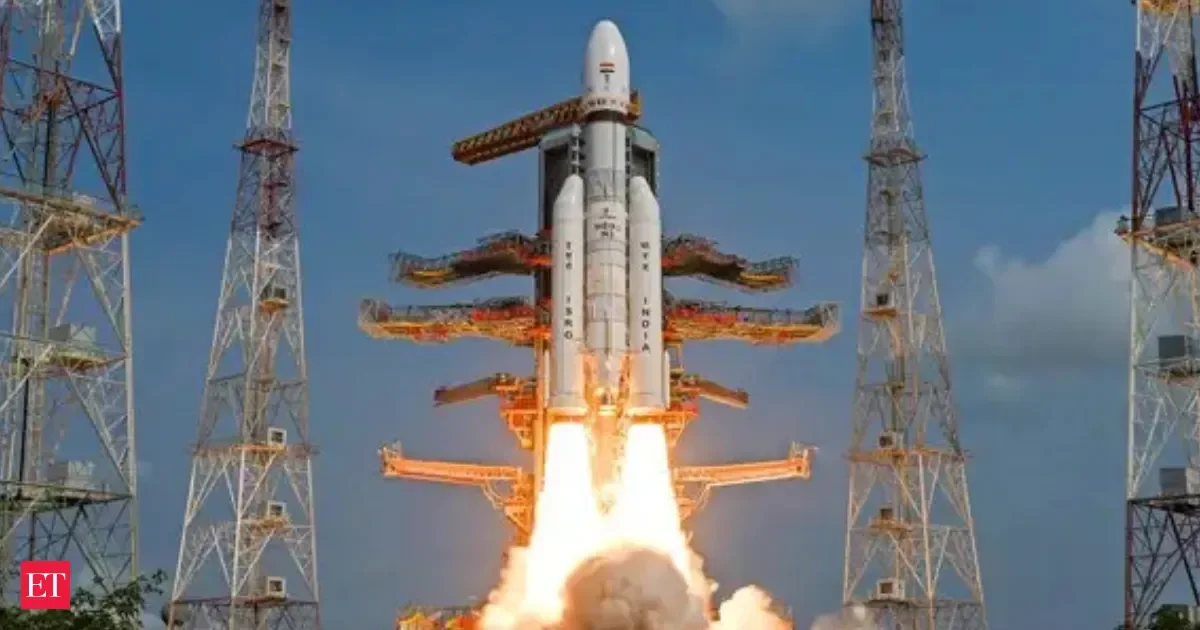
The Indian Space Research Organisation (ISRO) is preparing to resume orbital launch operations in May 2026. This restart follows a six-month period of inactivity triggered by consecutive anomalies in the Polar Satellite Launch Vehicle (PSLV) program, specifically within the vehicle's third stage during missions PSLV-C61 and PSLV-C62.
The agency has convened a National Level Expert Committee to investigate technical failures, marking a pivot toward systemic industrial review as it attempts to reclaim operational momentum.
Technical Anomalies and Operational Impact
The PSLV, historically considered the agency’s "workhorse," has faced severe scrutiny following the back-to-back trajectory deviations of its latest missions. While the LVM-3 continues to maintain a faultless flight record, the PSLV's technical lapses have created a bottleneck for several strategic and commercial objectives:
NavIC Navigation: Indigenous satellite constellation expansion is currently stalled.
SSLV Development: The Small Satellite Launch Vehicle (SSLV), which utilizes technology derived from the PSLV's third stage, has been impacted by the ongoing forensic probe.
Private Integration: Multiple private missions, including the inaugural flight of privately manufactured PSLV components, have faced significant scheduling shifts.
Industry Re-alignment and Private Sector Growth
While ISRO recalibrates its internal engineering, the Indian Space Sector is seeing an increase in decentralized activity through IN-SPACe. Funding and collaborative agreements are moving forward despite the agency’s primary launch delays:
Read More: Indigenous Data Rights Now Key in Conservation Genomics
| Entity | Focus Area | Collaboration |
|---|---|---|
| Red Balloon Aerospace | Near-space/AI | Armenia-based Bazoomq |
| Bellatrix Aerospace | VLEO missions | South Korean TelePIX |
| Skyroot Aerospace | Launch capability | Vikram-1 (Window: July-Aug) |
Under the Technology Adoption Fund (TAF) scheme, entities like Astrobase Space Technologies, SatSure Analytics, and TM2SPACE have been selected for funding, signaling a shift toward diversifying the manufacturing base to mitigate reliance on centralized, single-point-of-failure infrastructure.
Institutional Context: Transparency vs. Strategy
The decision to proceed with the PSLV-C62 launch prior to the full public disclosure of the PSLV-C61 Failure Analysis Committee report drew criticism regarding institutional transparency. The current restart plan in May represents an attempt to reconcile these demands for accountability with the necessity of maintaining a viable Space Policy roadmap.
The agency now faces the challenge of managing a dual-track strategy: stabilizing the legacy PSLV architecture while simultaneously accelerating the transfer of hardware manufacturing to private industry partners to broaden the scope of India's Space Economy.
Read More: India IVF Costs And Social Barriers Limit Access In April 2026