Recent reanalysis of oceanic data points to a significant weakening of a key Atlantic Ocean current system, a phenomenon linked to the formation of a persistent 'cold blob' in the North Atlantic. This weakening system is now considered by researchers to be perilously close to a tipping point. The findings, drawn from reanalysis efforts, suggest a critical threshold may be imminent for the Atlantic Meridional Overturning Circulation (AMOC), a vast network of currents that influences global weather patterns.
The implications of a destabilized AMOC extend far beyond regional temperature anomalies. Its weakening impacts the distribution of heat and nutrients across the Atlantic, potentially affecting marine ecosystems and weather systems in Europe and North America. While the exact timing of a potential tipping point remains a subject of intense scientific scrutiny, the current trajectory indicates an increased risk of abrupt changes in ocean circulation.
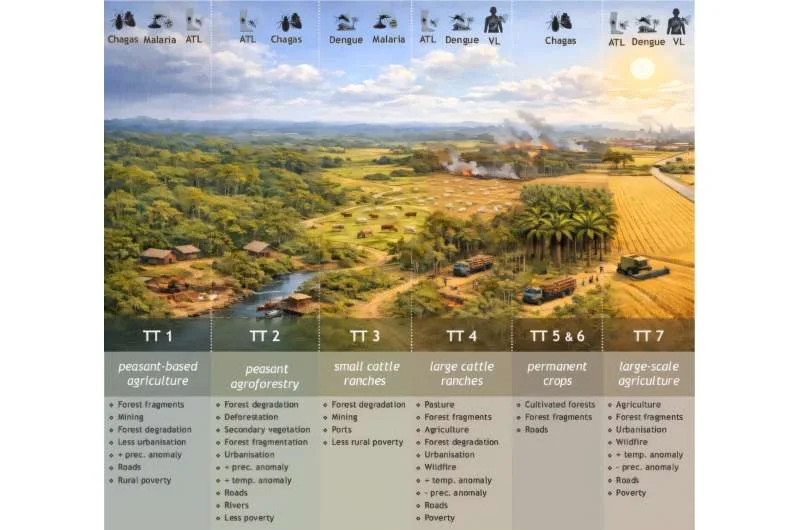
Read More: Amazon Land Use Changes Cause Disease Clusters in Brazil
AMOC's Role and Potential Breakdown
The AMOC acts as a giant conveyor belt, transporting warm surface waters from the tropics northward and cooler, deeper waters southward. This circulation is crucial for regulating climates, particularly in Northern Europe, where it moderates winter temperatures.
A slowdown or collapse of the AMOC could trigger:
Dramatically colder winters in Europe.
Shifts in precipitation patterns, potentially leading to drier conditions in some regions and increased rainfall in others.
Faster sea-level rise along the North American coast.
Disruptions to fisheries and marine life.
Reanalysis and 'Cold Blob' Connection
The 'cold blob', a region of anomalously cool sea surface temperatures south of Greenland, has been observed for years. While its exact causes have been debated, this latest reanalysis provides a compelling link to the deteriorating state of the AMOC. The data suggests that as the AMOC weakens, it can no longer transport as much warm water northward, leading to a cooling effect in its northern reaches.
The research utilized comprehensive reanalysis data, integrating various observational sources with climate models.
This approach allowed scientists to reconstruct past ocean conditions and assess the long-term trends of the AMOC.
The study highlights the interconnectedness of Earth's climate systems and the potential for cascading effects when critical thresholds are breached.
Context: A System Under Pressure
The AMOC has shown signs of weakening over the past century, a trend often attributed to increasing meltwater from Greenland and Arctic ice sheets, which can alter ocean salinity and density, thereby affecting circulation. The concept of a 'tipping point' refers to a critical threshold beyond which a system undergoes rapid, irreversible change.
Read More: Indigenous Data Rights Now Key in Conservation Genomics
Understanding these dynamics is crucial for predicting future climate scenarios and potential impacts on human societies and ecosystems.
The scientific community continues to refine models and gather data to better grasp the complexities and sensitivities of the AMOC.