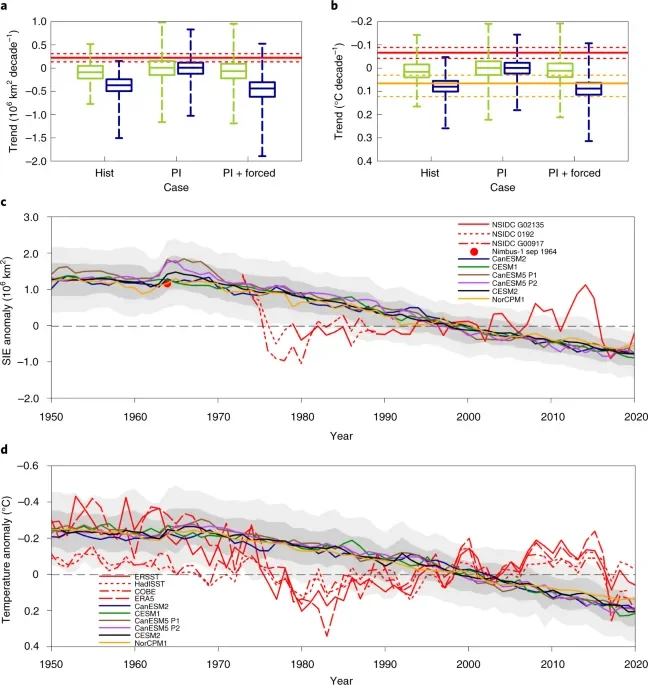
Current climate simulations are undergoing a structural reassessment as evidence links the depletion of stratospheric ozone directly to regional cooling in the Southern Ocean. For decades, standard climate models projected widespread warming, standing in stark contrast to empirical observations of surface temperature decline and fluctuating sea-ice patterns in the Antarctic.
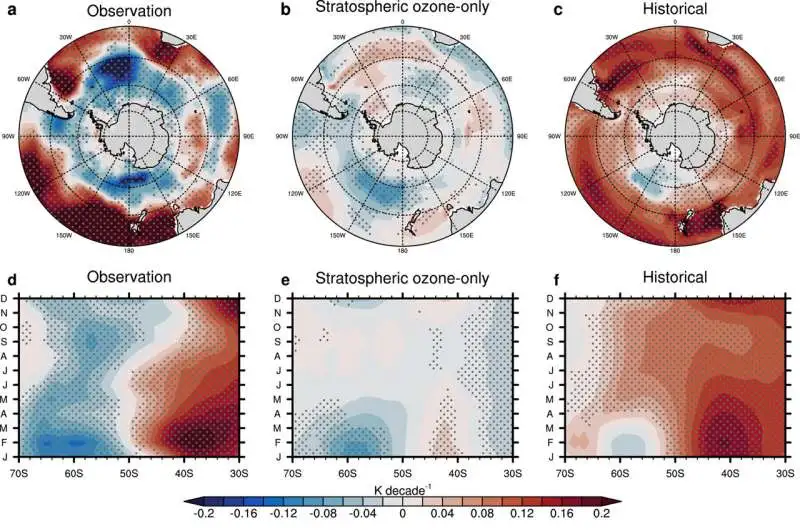
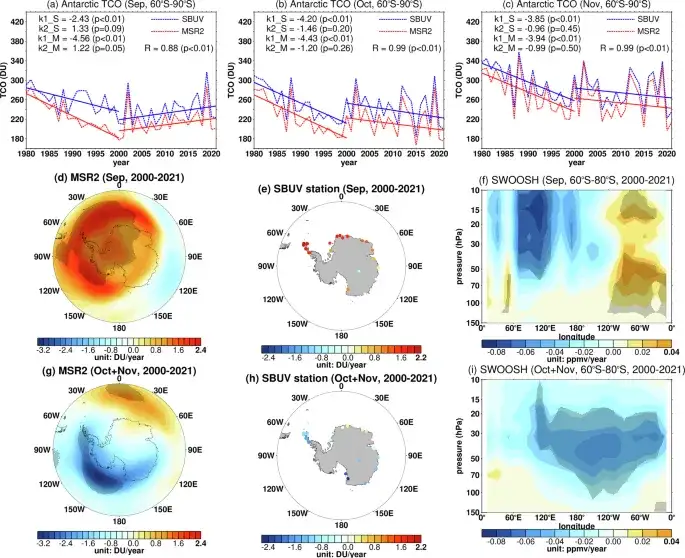
Recent analysis identifies ozone depletion as a primary, though not exclusive, driver of this localized cooling. While global warming persists, the atmospheric shifts resulting from ozone loss provide a specific cooling signal that counters warming trends in the Southern Ocean, influencing regional sea ice expansion, most notably in the Ross Sea.
Analytical Discrepancies
The friction between model outputs and field data centers on the Southern Ocean's anomalous thermal behavior. While global averages shift upward, the region surrounding the Antarctic has displayed sustained periods of surface cooling, forcing a revision of predictive protocols.
Read More: Amazon Land Use Changes Cause Disease Clusters in Brazil
| Factor | Effect on Southern Ocean | Research Context |
|---|---|---|
| Ozone Depletion | Surface Cooling | Primary regional driver |
| Freshwater Influx | Surface Cooling | Driven by ice-sheet melt |
| Tropical Variability | Seasonal Oscillation | Influences regional trends |
Technical Nuance and Model Alignment
The divergence in model projections has prompted a re-examination of how simulations handle chemical and physical variables.
Stratospheric vs. Tropospheric Ozone: Historical simulations often utilized different ozone protocols (e.g., CMIP5 vs. CMIP6). Modern integration suggests that focusing specifically on stratospheric ozone-only simulations more accurately reflects the observed surface cooling than generic total ozone estimates.
Sea-Ice Variability: The interaction between ozone-driven wind stress and the ocean's meridional overturning circulation creates a transient response, implying that seasonal factors—rather than just annual averages—are critical to understanding the state of the Southern Ocean.
The Feedback Loop: Evidence indicates a reciprocal complication: while ozone loss impacts temperatures, rising sea surface temperatures in other contexts are now cited as potential hindrances to the natural recovery of the stratospheric ozone layer, creating a complex, interdependent atmospheric cycle.
Background: Reconciling the Data
For years, the Southern Ocean served as an outlier in global climate systems. Models based on standard greenhouse gas projections predicted uniform warming, failing to account for the nuance of localized cooling. Recent investigative efforts by climate scientists have expanded the inquiry to include three primary mechanisms: latent and sensible heat flux anomalies, freshwater input from melting ice shelves, and the aforementioned stratospheric ozone shifts. As of 04/07/2026, the scientific consensus moves away from single-cause explanations, favoring a layered view of atmospheric and oceanic feedback loops that reconcile why the region defies universal warming projections.