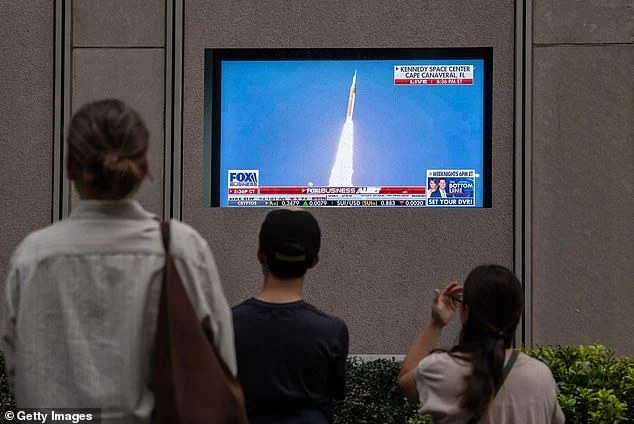
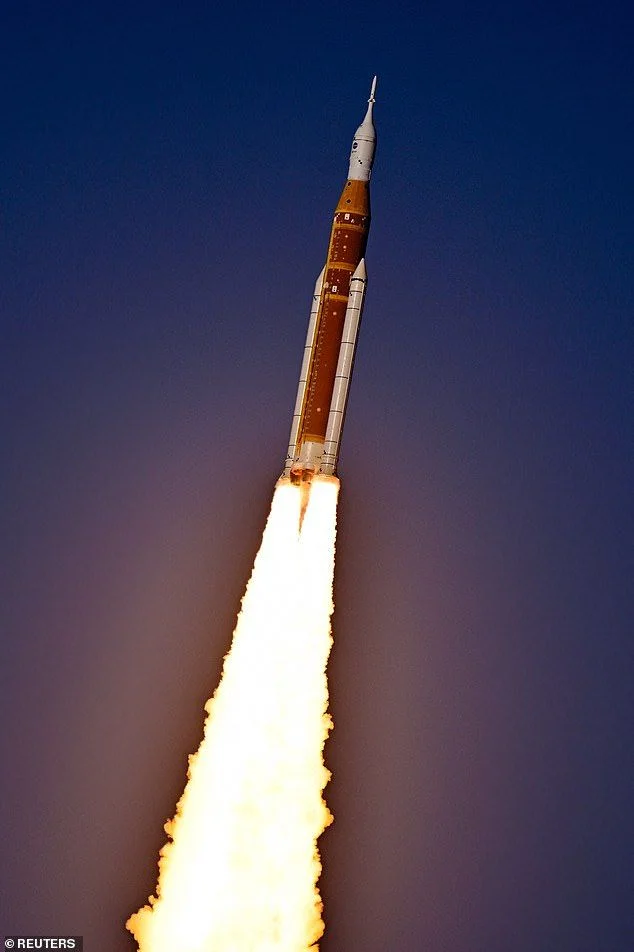
The Artemis II mission, carrying four astronauts, has successfully launched from Florida, marking humanity's first crewed voyage toward the Moon in over fifty years. This initial ascent, powered by the colossal Space Launch System (SLS) rocket, propels the Orion spacecraft and its occupants farther into the cosmos than any humans have ventured previously. The launch occurred at 6:35 p.m. ET on Wednesday, after brief delays attributed to system-related issues that momentarily cast doubt on the proceedings.
The crew, comprising NASA astronauts Reid Wiseman, Victor Glover, and Christina Koch, alongside Canadian Space Agency's Jeremy Hansen, is slated for a roughly ten-day mission. While this particular flight will not involve a lunar landing, it serves as a critical test for both the Orion capsule and the SLS rocket. Its trajectory will take them on a journey around the Moon and back to Earth. The mission aims to gather vital data on space radiation, microgravity, and their physiological effects on the human body, alongside testing key lunar mission hardware for future endeavors.
Read More: NASA Robot Mission Launched to Raise Swift Telescope Orbit, Add 10 Years
A Glimpse of the Cosmic Endeavor
The liftoff itself was a spectacle of immense power. Witnesses described a deep rumbling followed by a brilliant white flame erupting from the launch pad, engulfing it momentarily as the SLS rocket, billed as NASA's most powerful operational booster, rose skyward. Crowds across Florida and those watching via broadcast paused their daily routines to observe this significant event. Post-launch, a palpable sense of relief and "giddy euphoria" was reported among NASA staff at the Kennedy Space Center.

Testing the Waters (and Space)
Artemis II is framed as the prelude to future lunar explorations, with subsequent missions, such as Artemis III, aiming for actual landings and the testing of more complex lunar landing equipment. The success of this flight is paramount for validating the capabilities of the Orion spacecraft and the SLS launch vehicle, paving the way for more ambitious stages of the Artemis program.
Read More: New York Mets vs Atlanta Braves 7 April 2026 NL East game preview

"Artemis II is the opening act."
Background: A Return to the Lunar Frontier
This mission represents a renewed push into deep space exploration, coming more than half a century after the last crewed missions ventured toward the Moon. The Artemis program, spearheaded by NASA with international partners, seeks to establish a sustained human presence on and around the Moon, ultimately serving as a stepping stone for potential Mars missions. The technical details leading up to the launch included meticulous procedures, such as the topping of liquid hydrogen for the SLS rocket's core stage and main propulsion system chilldown. The crew's objective is to test systems and gather scientific information crucial for long-term space habitation and exploration.