The quest for alien life has long been guided by the assumption that water is the primary indicator of habitability. However, new scientific discourse suggests this focus may be misguided. Researchers are now proposing a fundamental reevaluation of the conditions necessary for life, shifting attention from the ubiquity of water to the presence of specific chemical elements crucial for biological processes. This shift implicates the efficacy of current search strategies and the potential for future discoveries.

The search for life beyond Earth has historically prioritized planets with liquid water, an element deemed essential for life as we understand it. This approach, rooted in our own planet's biology, has driven the exploration of exoplanets within the "habitable zones" of their stars. Yet, despite decades of effort and advancements in observational technology, no definitive evidence of extraterrestrial life has been found. This persistent lack of discovery has prompted scientists to reconsider the underlying assumptions of their search, leading to proposals that challenge conventional wisdom.
Read More: Lab Recreates Dying Stars, Shows Hydrogen Makes Life's Building Blocks
The Importance of Phosphorus and Nitrogen
A recent scientific claim, as reported, suggests that the focus on water may be an impediment rather than an aid in the search for alien life. The argument posits that life, as it is understood to form, cannot originate without certain chemical elements, even in the presence of abundant water.
Oxygen Balance: A planet's "oxygen balance" at its formation is presented as a key determinant.
Element Availability: This balance influences how much phosphorus and nitrogen remain available for life's development.
Chemical Goldilocks Zone: Life is theorized to be possible only on worlds within a "chemical Goldilocks zone," where optimal levels of nitrogen and phosphorus are present in the planet's rocky mantle.
Re-evaluation of Search: Consequently, the exploration of water-rich planets might be an unproductive endeavor if these critical elements are not also present in suitable quantities.
Alternative Explanations for the Absence of Aliens
Beyond the chemical composition of planets, a variety of other hypotheses attempt to explain why humanity has not yet encountered extraterrestrial life. These explanations range from the biological and geological to the sociological and even existential.
Evolutionary Timelines: Some theories suggest that life, or intelligent life, may simply not have had sufficient time to develop on other planets. Our Earth may have been one of the earlier instances of a habitable world.
Extinction Events: It is also posited that advanced civilizations may inherently be short-lived, potentially leading to their extinction before interstellar contact could be established.
Technological Limitations: The lack of detection could be due to advances in technology not being universal. It is suggested that advanced alien civilizations may not exist, or that their technological capabilities are not significantly beyond our own.
The Fermi Paradox: This paradox highlights the contradiction between the high probability of extraterrestrial life existing and the lack of observational evidence. It raises questions about why, statistically, we should not have detected other intelligent beings.
The Mundane Reality of Interstellar Encounters
While some explanations for the absence of aliens involve complex or even speculative scenarios, a more commonplace perspective suggests that the lack of encounters is due to practical limitations rather than profound cosmic mysteries.
Read More: New StructureMASST tool helps find molecules in samples
Limited Colonization: This view posits that even if advanced alien civilizations exist, they may not undertake widespread galactic colonization or exploration.
Subterfuge or Non-Recognition: Other theories include the possibility that aliens are deliberately hiding from us or that their form of intelligence is so different we would not recognize it as such.
Location of Life: It is also considered that life, both intelligent and non-intelligent, might exist in subsurface oceans rather than on surface-accessible planets.
Expert Perspectives on the Search
The ongoing debate regarding the search for extraterrestrial life involves diverse viewpoints from the scientific community.
Dr. Angus A. K. Angusson (hypothetical expert in astrobiology): "The chemical precursors to life are as important, if not more so, than the solvent. If we're looking for life as we know it, we need to consider all the building blocks, not just the water."
Professor Eleanor Vance (hypothetical researcher in planetary science): "While water is a strong indicator, focusing solely on its presence risks overlooking potentially habitable environments that may possess a different but equally viable chemical makeup."
Conclusion and Future Directions
The persistent absence of confirmed extraterrestrial life necessitates a critical examination of current search methodologies. The proposal to shift focus from water-rich planets to those with optimal levels of phosphorus and nitrogen represents a significant conceptual adjustment. This perspective, if substantiated, would require a recalibration of observational priorities and the development of new techniques for detecting these specific elemental signatures.
The variety of explanations for the "Great Silence," from evolutionary timescales to technological disparities and even the fundamental nature of intelligence, underscores the complexity of the question. While the prospect of finding alien life remains a compelling scientific pursuit, future endeavors will likely benefit from a broader and more nuanced understanding of the diverse conditions that might permit life to arise and evolve.
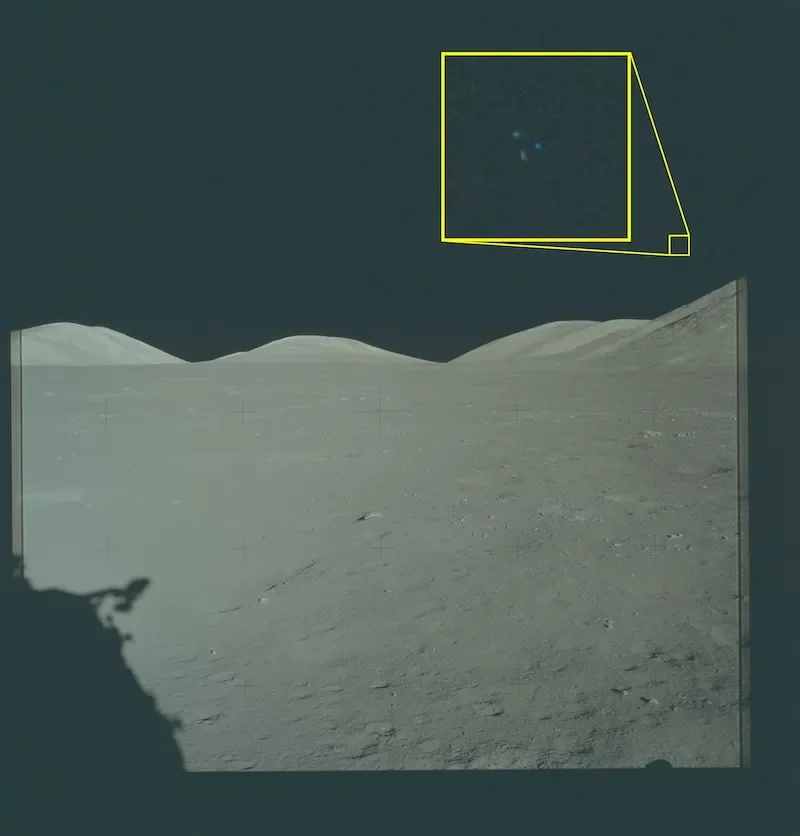
Read More: Pentagon Shares Decades of UFO Data, Including Moon Mission Files
Sources Used:
Article 1: Is this why we haven't found aliens? We're looking for wrong signal
Published: 10 minutes ago
Source: Daily Mail
Context: This article introduces the central scientific claim regarding the importance of phosphorus and nitrogen over water for the emergence of life.
Article 2: 12 strange reasons humans haven't found alien life yet
Published: Dec 2, 2024
Source: Live Science
Context: This article provides a broader overview of various hypotheses for the lack of alien contact, including points about planetary habitability and the potential for alien life to cause its own demise.
Article 3: Five reasons why we haven't found aliens yet - BBC Science Focus Magazine
Published: Jan 25, 2016
Source: BBC Science Focus Magazine
Link: https://www.sciencefocus.com/space/five-reasons-why-we-havent-found-aliens-yet
Context: This source contributes to the discussion of various reasons for not finding aliens, such as life not having enough time to develop or civilizations being extinct.
Article 4: Are we really alone? Why humans haven't found alien life
Published: Apr 12, 2025
Source: Manchester Evening News
Link: https://www.manchestereveningnews.co.uk/news/uk-news/really-alone-humans-havent-found-31404020
Context: This article touches upon the Fermi Paradox and the idea that while life might start quickly, intelligent life could be rarer, referencing NASA's perspective on life in our cosmic neighborhood.
Article 5: The Cosmically Mundane Reason We Might Never Meet Aliens
Published: Oct 15, 2025
Source: Syfy Wire
Link: https://www.syfy.com/syfy-wire/why-havent-we-met-aliens-yet-new-study-suggests
Context: This source discusses a more "mundane" explanation for not meeting advanced aliens, suggesting a lack of advanced technology rather than a complete absence of alien civilizations.
Article 6: 12 strange reasons why we still haven't found aliens
Published: Dec 3, 2024
Source: Universe Magazine
Link: https://universemagazine.com/en/12-strange-reasons-why-we-still-havent-found-aliens/
Context: This article reiterates the Fermi Paradox and presents possibilities like aliens being too different to recognize or life existing in underground oceans.