This event, if confirmed, could offer a rare look at an intermediate-mass black hole in action, feeding on a stellar remnant and producing powerful emissions. The observation highlights the capabilities of the Einstein Probe in capturing extreme cosmic phenomena.
A recent observation by the Einstein Probe (EP) has identified a cosmic event, cataloged as EP250702a, which might represent the first direct detection of a black hole consuming a white dwarf. This potential discovery, detailed in a study involving numerous international institutions including The University of Hong Kong (HKU), suggests that the EP has successfully captured an "unprecedented high-energy cosmic event."
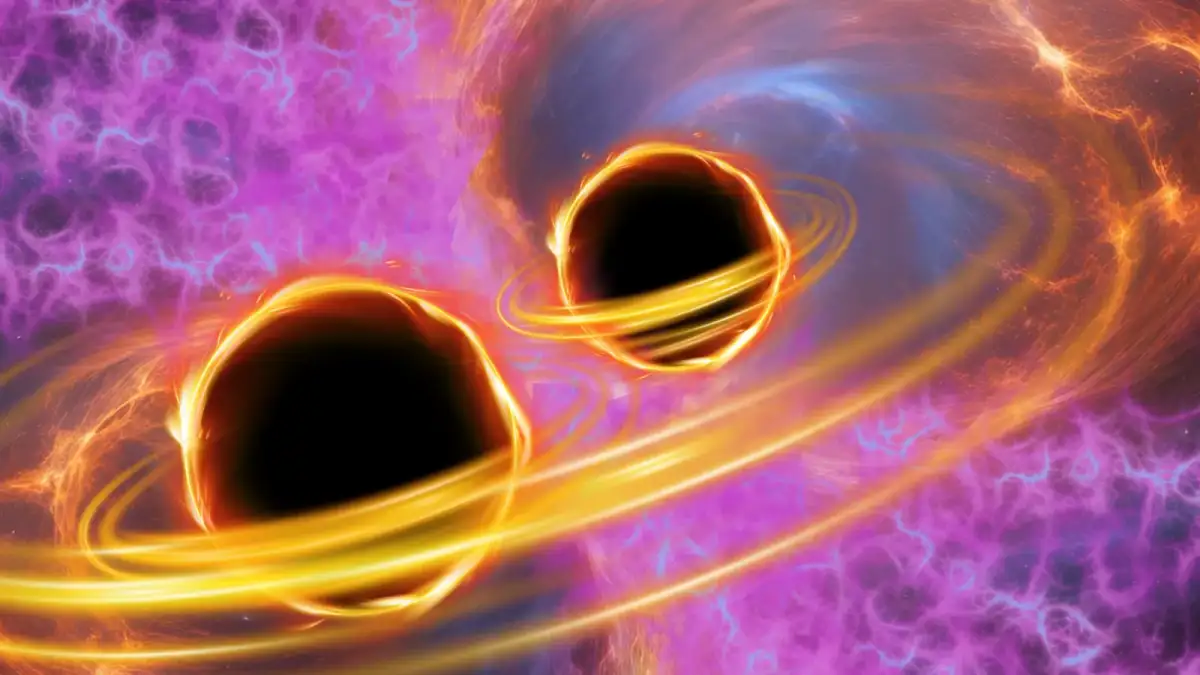
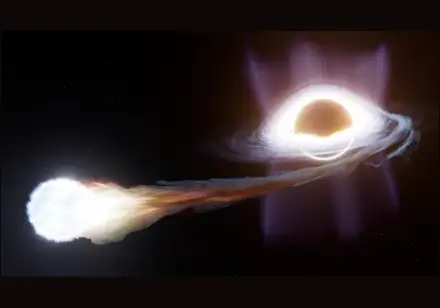
If confirmed, this observation would be the first clear, direct evidence of an intermediate-mass black hole tearing apart a white dwarf and producing a relativistic jet.
The collaboration for this paper includes over 40 universities and research institutions. Key contributors from HKU include Professor Lixin Dai as a co-corresponding author and Dr. Jin-Hong Chen as a co-first author. The findings demonstrate the EP's capacity to "be the first to capture the Universe's most extreme moments."
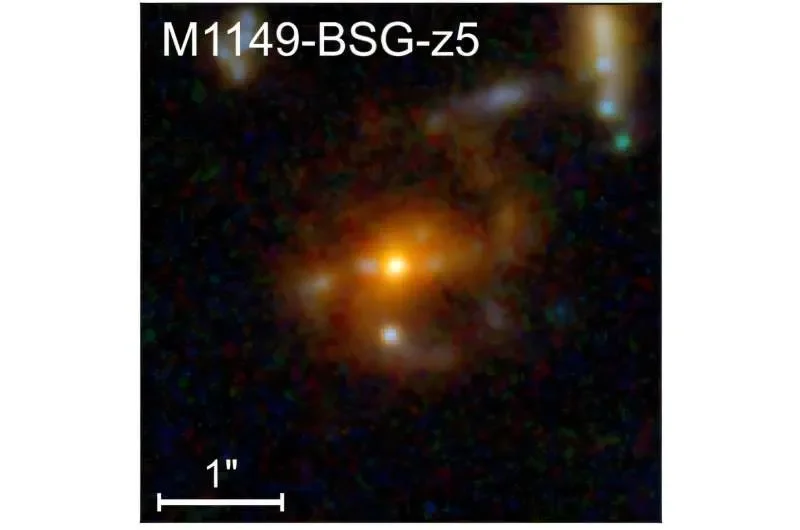
Read More: JWST Finds Oldest Barred Spiral Galaxy M1149-BSG-z5
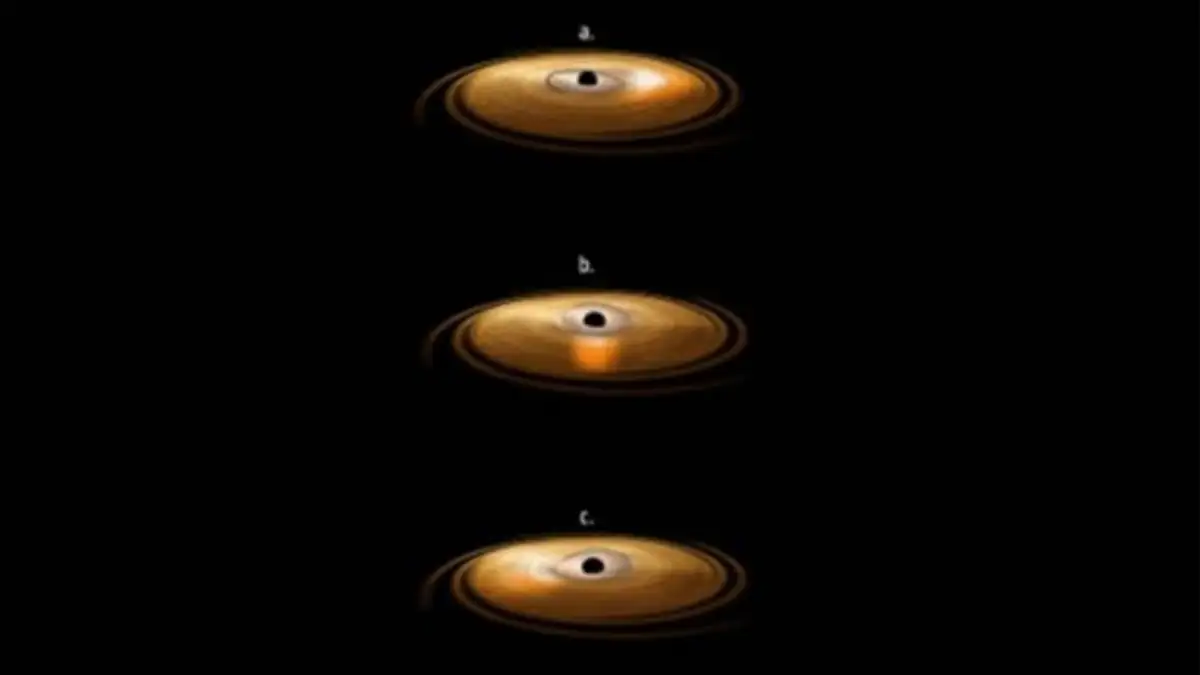
Context of Extreme Cosmic Events
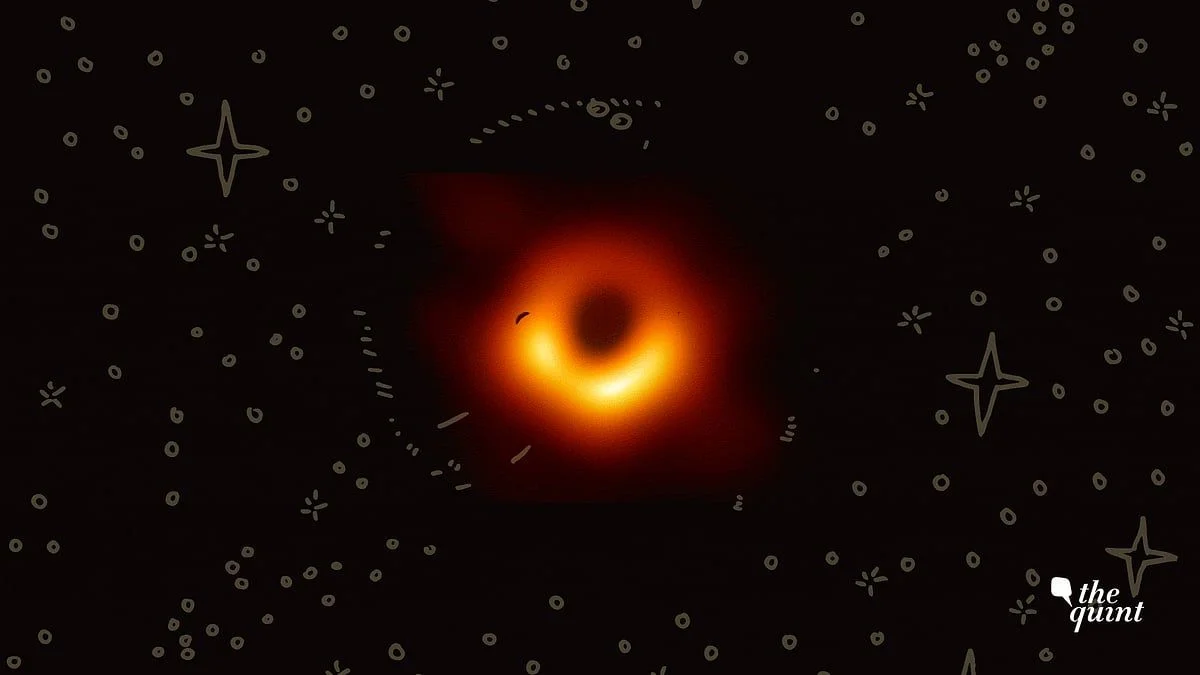
Black holes, areas in space with intense gravity from which nothing, not even light, can escape, remain objects of deep scientific interest. The Event Horizon Telescope (EHT) project, a global network of radio telescopes, previously captured the first-ever image of a black hole in 2019. This achievement, a culmination of years of observation and technological advancement, tested Einstein's theories of general relativity.
Initial Black Hole Imaging: The EHT project utilized eight radio telescopes to image the black hole at the center of galaxy Messier 87. This was a landmark moment, providing a visual confirmation of theoretical models.
Theoretical Foundations: The concept of black holes has been explored for decades, with theoretical frameworks like Einstein's general relativity forming the bedrock of our understanding. The Chandrasekhar Limit, for instance, defines a critical mass for stars that could potentially collapse into black holes.
Observational Challenges: Due to their inherent invisibility, studying black holes has historically relied on indirect methods, such as observing their gravitational influence on nearby matter or the emissions produced when matter falls into them.
The Einstein Probe's Role
The Einstein Probe (EP) is designed to detect high-energy X-ray emissions from transient cosmic events. Its capabilities are aimed at observing "the Universe's most extreme moments." The potential observation of EP250702a showcases the EP's ability to capture rapid and energetic phenomena that might otherwise go unnoticed.
Read More: US Space Force Victus Haze Mission Successfully Tests Orbital Intercepts
EP250702a Observation: This specific event is described as a high-energy cosmic occurrence, offering new insights into extreme astrophysical processes.
Capabilities Highlighted: The discovery is presented as a testament to China's contributions to international astronomical exploration, particularly in capturing novel cosmic events.
The Nature of Black Hole Interactions
Black holes interact with their surroundings in profound ways. The observation of a black hole tearing apart a star is a known, albeit rare, phenomenon.
Tidal Disruption Events (TDEs): When a star passes too close to a black hole, the immense gravitational forces can rip the star apart. This process, known as a tidal disruption event, can produce significant emissions that are detectable by telescopes.
White Dwarf Interaction: A white dwarf is the dense remnant of a star that has exhausted its nuclear fuel. Its interaction with a black hole, particularly an intermediate-mass black hole, presents a unique scenario for studying extreme gravitational physics. Such an event could lead to the formation of a relativistic jet, a beam of high-energy particles ejected from the vicinity of the black hole.
Research into Early Universe: Astrophysicists at HKU are also involved in studying the early universe, including the formation of the first stars (Pop III stars) and their potential interaction with massive black holes, as indicated by related research from HKU.
Implications for Astrophysics
The potential confirmation of EP250702a as a white dwarf being torn apart by a black hole has significant implications for our understanding of black hole populations and their evolution.
Intermediate-Mass Black Holes: These objects, with masses between stellar-mass and supermassive black holes, are less understood. Detecting one actively consuming a white dwarf could provide crucial data about their existence and behavior.
Relativistic Jets: The formation of relativistic jets is a key process in astrophysics, often associated with active black holes. Observing such a jet from this particular event could offer new insights into jet launching mechanisms.
Testing Physical Theories: Like the first black hole images, observations of extreme events like EP250702a serve as rigorous tests for fundamental physics theories, including general relativity. Any deviation from predicted behavior would signal new physics.
Conclusion and Future Prospects
The observation of EP250702a by the Einstein Probe represents a potentially groundbreaking moment in astrophysics. If confirmed, it would offer direct evidence of a black hole consuming a white dwarf and producing a relativistic jet, a phenomenon that has long been theorized but rarely, if ever, directly observed with such clarity. The involvement of The University of Hong Kong underscores the global nature of modern astronomical research.
Future observations and data analysis will be critical to confirming the nature of EP250702a. This event, and others like it, will continue to push the boundaries of our understanding of the universe and the extreme objects within it. The continued development of advanced observational tools like the Einstein Probe promises further discoveries in the study of cosmic phenomena.
Read More: Astronomers' discoveries about comets and cosmic background radiation explained
Sources Used:
HKU Astrophysicists Contribute to Interpreting a Possible First-Ever Einstein Probe Observation of a Black Hole Tearing Apart a White Dwarf - India Education Diary: This article, sourced from miragenews.com, details the observation of EP250702a and the involvement of HKU astrophysicists. It highlights the potential significance of the event as the first clear evidence of an intermediate-mass black hole shredding a white dwarf and producing a jet.
https://www.miragenews.com/einstein-probe-may-see-black-hole-shred-white-1616808/
First Images Of a Black Hole: This Indian's 120-YO Experiment Helped Capture It! - The Better India: This article, published in 2019, discusses the first image of a black hole captured by the Event Horizon Telescope and briefly touches upon the scientific concepts related to black holes.
https://thebetterindia.com/179498/blackhole-image-jc-bose-indian-scientist-event-horizon-telescope/
Black Hole Image: India’s Contribution in This Feat Will Wow You - The Quint: Published in 2019, this opinion piece discusses India's contribution to the first black hole image and explains basic concepts of black holes.
https://www.thequint.com/opinion/black-hole-image-event-horizon-telescope-indian-scientists
Einstein's right again! Scientists catch a feasting black hole dragging the very fabric of spacetime - Space.com: This article, dated December 12, 2025, discusses observations of stars interacting with supermassive black holes, confirming Einstein's theories.
https://www.space.com/astronomy/black-holes/einsteins-right-again-scientists-catch-a-feasting-black-hole-dragging-the-very-fabric-of-spacetime
The ‘legendary’ discovery of black holes: The Day Tomorrow Began - University of Chicago News: Published January 30, 2025, this article touches upon the general research and understanding of black holes, including supermassive black holes.
https://news.uchicago.edu/legendary-discovery-black-holes-day-tomorrow-began
HKU astrophysicists reveal the nature of dark matter through the study of crinkles in spacetime - EurekAlert!: This news release from EurekAlert! discusses related research from HKU on dark matter, illustrating the breadth of astrophysics research at the institution.
The first black hole image tested Einstein's general relativity again | Science News: Published October 1, 2020, this article discusses how the first black hole image provided another test for Einstein's general relativity.
https://www.sciencenews.org/article/event-horizon-telescope-black-hole-image-einstein-general-relativity
Astronomers Capture First Image of a Black Hole - ESO: Published in 2019, this article from the European Southern Observatory (ESO) announces the first image of a black hole captured by the Event Horizon Telescope.
On the Epistemology of Observational Black Hole Astrophysics - Springer: This scholarly work, accessed via Springer, delves into the theoretical and philosophical aspects of observing black holes.
https://link.springer.com/chapter/10.1007/978-3-031-26618-813
Unravelling the Long-Standing Mystery of Black Holes - Interesting Engineering: This article, published October 30, 2020, discusses the general mysteries and characteristics of black holes.
https://interestingengineering.com/science/unravelling-the-long-standing-mystery-of-black-holes
Black hole - Wikipedia: This Wikipedia entry provides a comprehensive overview of black holes, their formation, physics, and observational aspects.