
A recent, large-scale study indicates a significant association between the regular consumption of moderate amounts of caffeinated coffee or tea and a reduced risk of developing dementia. The findings suggest that these beverages may also play a role in slowing cognitive decline and preserving brain function over time.
Context
The investigation, which analyzed data from over 130,000 participants across two long-term health studies, including the Nurses' Health Study and the Health Professionals Follow-Up Study, tracked individuals for up to 43 years. Researchers examined self-reported dietary habits, focusing on the intake of caffeinated coffee, decaffeinated coffee, and tea. This data was then correlated with records of cognitive health, including diagnoses of dementia and performance on cognitive assessments. The study's objective was to understand how these beverage choices might influence the risk of developing degenerative brain conditions and overall cognitive function.

Evidence
Key findings from the research highlight a clear pattern:

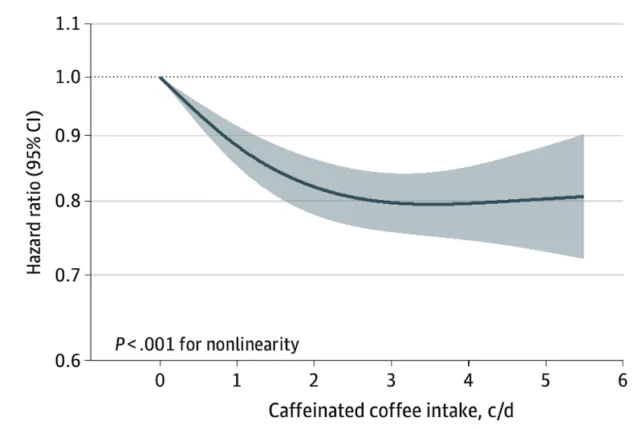
Dose-Response: A nonlinear relationship was observed between the intake of caffeinated coffee and tea and the risk of dementia and subjective cognitive decline. The benefits appeared to plateau, with the most significant associations noted at specific consumption levels.
Optimal Intake: The cognitive benefits were most pronounced in individuals consuming two to three cups of caffeinated coffee daily or one to two cups of caffeinated tea daily.
Decaffeinated Coffee: No association was found between the consumption of decaffeinated coffee and a lower risk of dementia or improved cognitive performance.
Cognitive Decline: Caffeinated coffee drinkers also exhibited a lower prevalence of subjective cognitive decline and, in some cases, performed better on objective cognitive tests compared to those who consumed little to no caffeine.
Risk Reduction: Participants with the highest intake of caffeinated coffee and tea demonstrated an 18% lower risk of dementia compared to those who reported minimal or no consumption of these beverages.
Caffeinated Beverages and Cognitive Health
The study's comparison of caffeinated versus decaffeinated coffee is particularly noteworthy. Participants who favored caffeinated options reported less cognitive decline and showed better results on cognitive tests. This suggests that the presence of caffeine, rather than other compounds in coffee or tea, may be a primary driver of the observed benefits.
Read More: Rob James Claims Hair Loss Reversed With Daily Routine, Others Use Minoxidil
Decaffeinated Coffee's Role
While caffeinated beverages showed a positive association with cognitive health, decaffeinated coffee did not yield similar results. This observation further emphasizes the potential impact of caffeine itself. However, it's important to note that coffee and tea contain various other compounds, such as antioxidants, which might also contribute to brain health, although their specific roles in this context require further elucidation.

Blood Pressure Considerations
A nuanced aspect of the research acknowledges that caffeine can affect blood pressure in some individuals. Given that elevated blood pressure is a known risk factor for dementia, this presents a complex interaction. While moderate caffeine intake may offer protective benefits, its impact on blood pressure could, in certain cases, counteract these advantages. This highlights the need for personalized considerations regarding caffeine consumption.
Study Limitations and Future Directions
The study is observational, meaning it identifies associations but cannot definitively prove cause and effect. Researchers are investigating the specific mechanisms through which caffeine and other compounds in coffee and tea might influence brain health, including their potential anti-inflammatory or antioxidant properties. Further research may explore how these beverages interact with other lifestyle factors to impact cognitive longevity.
Read More: HKUST Scientists Discover How DICER Enzyme Cuts RNA With High Precision in 2024
Expert Analysis
"The research offers what the authors believe to be the longest-term data to date on the relationship between caffeine consumption and cognition." (Nature)
"For decades, scientists have debated whether caffeine is a fleeting stimulant or a genuine health ally. The impact of caffeine on the brain still isn’t fully understood." (ZME Science)
"Compared with people who didn’t drink coffee or tea, those who had two to three cups of caffeinated coffee or one to two cups of tea per day had the lowest dementia risk." (NBC News)
Conclusion
The analysis strongly associates moderate consumption of caffeinated coffee and tea with a reduced risk of dementia, slower cognitive decline, and better cognitive function. The findings suggest an optimal intake of two to three cups of caffeinated coffee or one to two cups of caffeinated tea per day. However, the benefits were not observed with decaffeinated coffee. The study underscores the potential of these popular beverages as part of a brain-healthy lifestyle, while also acknowledging the need for continued research into the intricate biological pathways involved.
Sources:
Harvard Gazette: https://news.harvard.edu/gazette/story/2026/02/drinking-2-3-cups-of-coffee-a-day-tied-to-lower-dementia-risk/
Published 2 days ago. Reports on a new study linking moderate coffee/tea consumption to lower dementia risk, citing Harvard affiliation.
NBC News: https://www.nbcnews.com/health/health-news/coffee-benefits-dementia-risk-lower-tea-benefits-two-three-cups-rcna257853
Published recently. Discusses a new study suggesting caffeine in coffee and tea may lower dementia risk, noting prior inconclusive research.
The Guardian: https://www.theguardian.com/science/2026/feb/09/tea-coffee-could-lower-dementia-risk-scientists-say
Published 2 days ago. Reports that daily tea or coffee intake is linked to lower dementia risk and better cognitive performance, noting the effect plateaus.
Published 3 days ago. Abstract of the study investigating coffee and tea intake associations with dementia risk and cognitive function, highlighting findings on caffeinated vs. decaffeinated beverages.
Mass General Brigham: https://www.massgeneralbrigham.org/en/about/newsroom/press-releases/consuming-coffee-associated-with-lower-dementia-risk
Seen on Brave. Reports on a study by Mass General Brigham researchers finding a link between coffee consumption and lower dementia risk and better cognitive function.
Science News: https://www.sciencenews.org/article/daily-coffee-tea-lower-dementia-risk
Published 3 days ago. Summarizes a long-term observational study linking moderate daily tea or caffeinated coffee consumption to a lower dementia risk.
Alzheimer's Research UK: https://www.alzheimersresearchuk.org/news/could-tea-or-coffee-reduce-dementia-risk-heres-what-you-need-to-know/
Published 3 days ago. Analysis suggesting moderate caffeinated coffee or tea intake is linked with lower dementia risk, with a focus on practical brain health.
CBS News: https://www.cbsnews.com/news/coffee-tea-caffeine-dementia-risk-study/
Published 2 days ago. Explains a new study showing people who drink caffeinated coffee and tea have a lower dementia risk, though not proving causation.
Dexerto: https://www.dexerto.com/food/study-says-2-3-cups-of-coffee-a-day-lowers-risk-of-dementia-3317408/
Published 12 hours ago. Reports on a study finding that 2-3 cups of coffee or 1-2 cups of tea daily are associated with reduced dementia risk and slower cognitive decline.
WBUR: https://www.wbur.org/news/2026/02/09/coffee-tea-caffeine-intake-dementia-risk-mass-general-study
Published 3 days ago. Highlights research from Mass General Brigham suggesting moderate coffee and tea intake may lower dementia risk, referencing the Nurses' Health Study and Health Professionals Follow-Up Study.
Published 3 days ago. Discusses a study of over 130,000 people linking moderate caffeine intake (2-3 cups coffee or 1-2 cups tea) to reduced dementia risk and slower cognitive decline.
ZME Science: https://www.zmescience.com/medicine/coffee-tea-lower-dementia-risk-study/
Published 2 days ago. Reports on a large Harvard-affiliated study finding that coffee and tea significantly lower dementia risk, touching on caffeine's potential role.
Euronews: https://www.euronews.com/health/2026/02/10/drinking-coffee-and-tea-may-protect-the-brain-against-dementia-study-finds
Published 2 days ago. Covers a study in JAMA indicating moderate caffeine consumption is associated with lower dementia risk and slower cognitive decline.
Medical News Today: https://www.medicalnewstoday.org/articles/1-3-cups-caffeinated-tea-coffee-a-day-may-help-reduce-dementia-risk
Published 2 days ago. Reports on a new study analyzing health data from over 131,000 participants, linking moderate caffeinated coffee or tea to reduced dementia risk and better cognitive function.
NDTV: https://www.ndtv.com/lifestyle/drinking-2-3-cups-of-coffee-a-day-can-cut-dementia-risk-but-theres-a-catch-10979338
Published 2 days ago. States that 2-3 cups of coffee a day can cut dementia risk but notes benefits do not apply to decaf and may plateau.
ScienceAlert: https://www.sciencealert.com/daily-caffeine-could-reduce-your-risk-of-developing-dementia-study-shows
Published 3 days ago. A large, long-term study finds moderate caffeine intake linked to reduced dementia risk and slower cognitive decline, with no negative effects from higher intake observed.





.jpg)