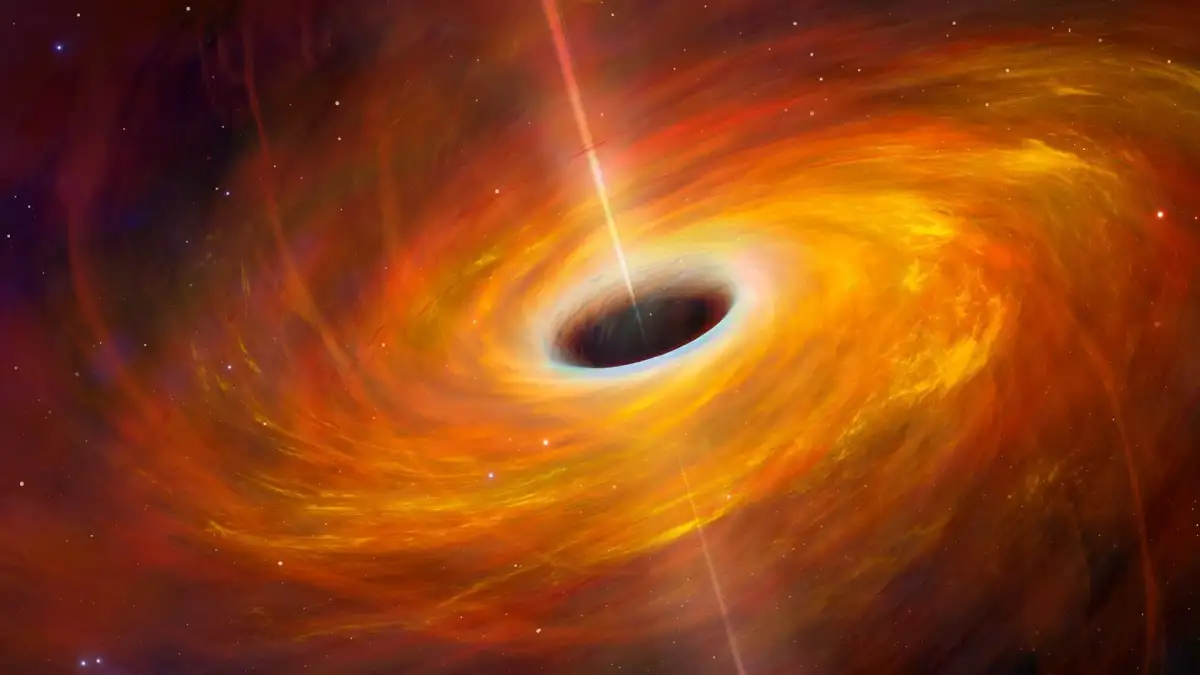
Astronomers are grappling with a cosmic puzzle: how did supermassive black holes become so enormous so quickly in the early universe? These celestial giants, found at the heart of most large galaxies, possess masses millions or even billions of times that of our Sun. The challenge lies in understanding their rapid development shortly after the Big Bang, a timeline that appears to defy established physical limits. Recent studies suggest a "feeding frenzy" and a series of mergers might hold the key to these cosmic titans' astonishing size, challenging previous assumptions about their growth.
The vastness of supermassive black holes presents a significant scientific enigma. Observational evidence confirms their presence in nearly all large galaxies, yet their immense size so early in the universe’s history raises profound questions. Traditional models struggle to account for such rapid accretion of matter or mergers within the limited timeframe available. This discrepancy prompts a re-evaluation of the processes that govern black hole formation and evolution.
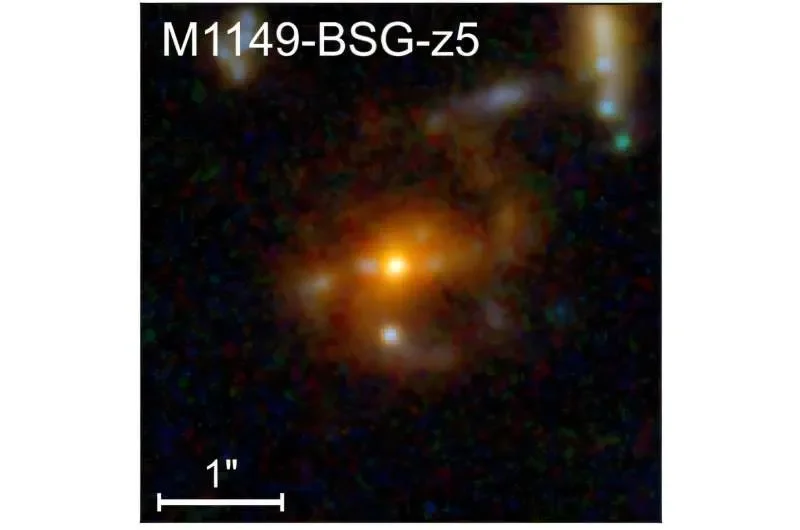
Read More: JWST Finds Oldest Barred Spiral Galaxy M1149-BSG-z5
How do supermassive black holes get so big, so fast, so early after the Big Bang?Are existing models sufficient to explain their rapid formation?What new theories are emerging to address this cosmic puzzle?
Key Mechanisms for Black Hole Growth
Supermassive black holes are understood to grow through two primary pathways:
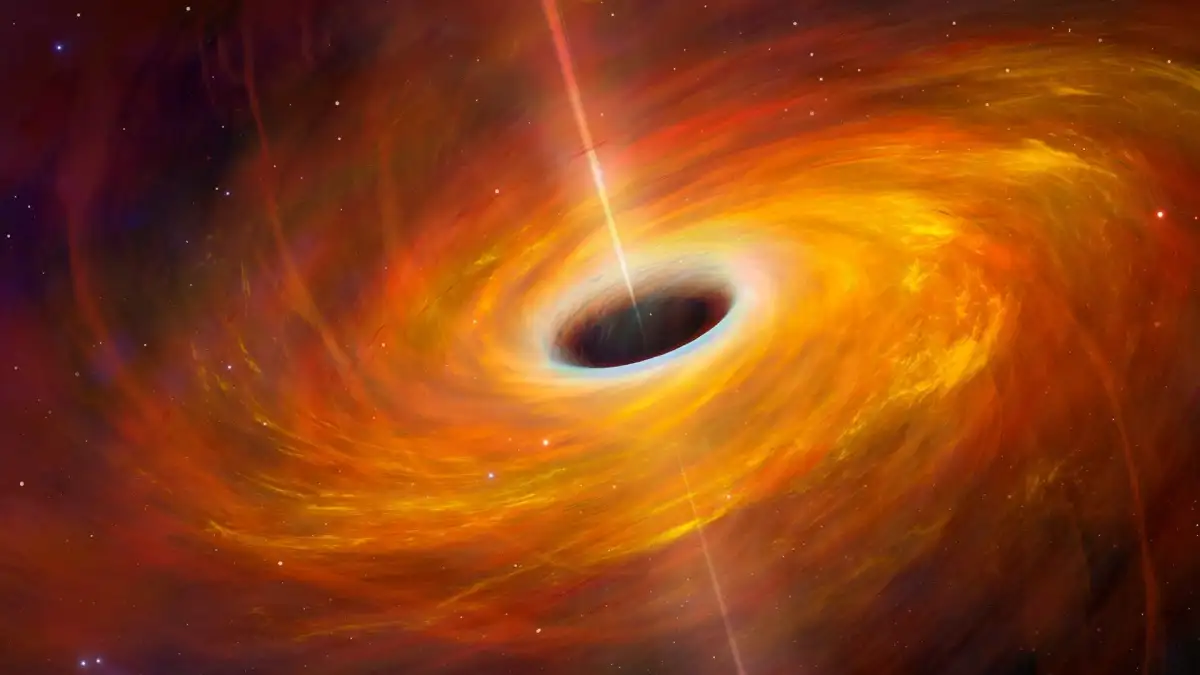
Accretion: They consume cold gas from their host galaxies. This process, where matter is drawn into the black hole, is a fundamental aspect of their development. The gas often forms a swirling structure known as an accretion disk around the black hole.
Mergers: When galaxies collide, their central supermassive black holes can merge. This offers a more rapid method of increasing a black hole's mass.
Emerging Theories on Early Growth
Recent research points towards novel explanations for the rapid ascent of early supermassive black holes:
Swarming Stars and Accelerated Feeding
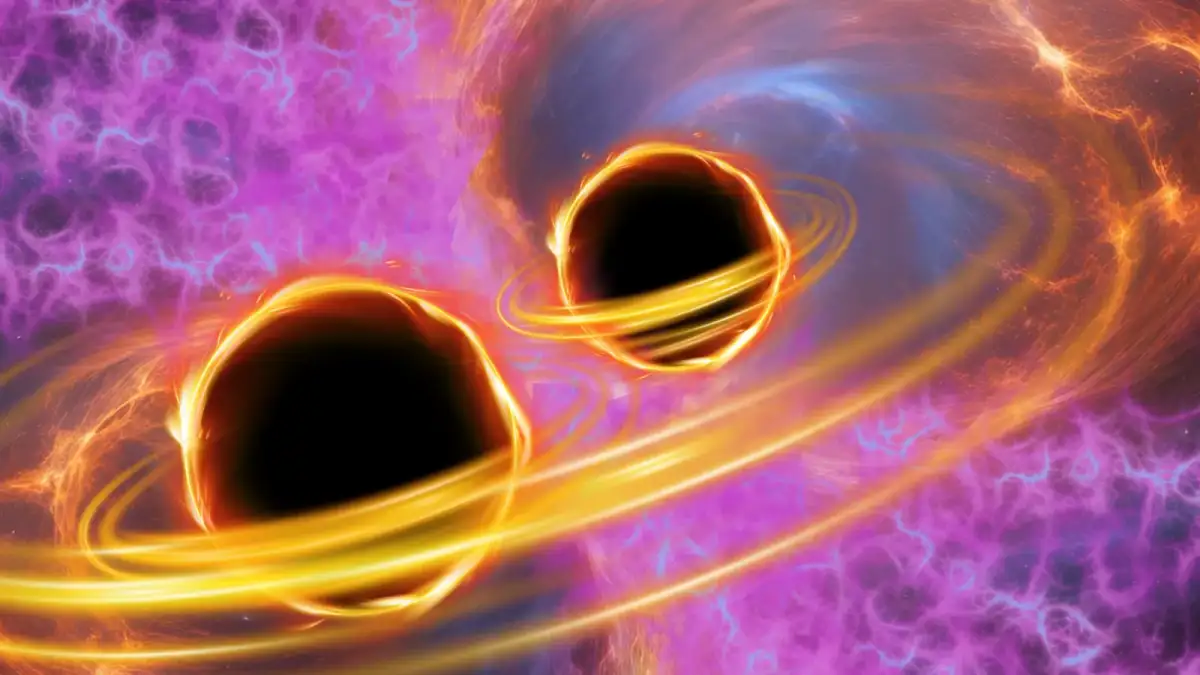
One hypothesis proposes that swarms of stars could have played a role in accelerating black hole growth. In the dense environments of the early universe, runaway black hole mergers might have occurred more frequently. This "feeding frenzy" of merging black holes, potentially fueled by abundant stellar material, could explain how they reached supermassive status surprisingly early.
The idea is that dense clusters of stars could have aided the growth of central black holes.
This scenario suggests a period of intense activity, where mergers were a primary driver of mass accumulation.
Filamentary Gas Channels
Another line of inquiry focuses on gas filaments that may channel interstellar material into galaxies and their central black holes. These filaments could deliver matter more efficiently than the well-studied accretion disks.
Researchers have analyzed the hot (X-ray emitting) and warm (optical emitting) phases of these filaments.
The presence of these filaments near galaxy centers, which host supermassive black holes, suggests a direct pathway for gas supply.
Late-Stage Growth vs. Early Bursts
While some research indicates that our own galaxy's black hole likely grew relatively late in cosmic time, this contrasts with the observation of massive black holes present much earlier in the universe's history.
Read More: US Space Force Victus Haze Mission Successfully Tests Orbital Intercepts
This suggests that different growth patterns may have occurred in different cosmic epochs or under varying conditions.
The late-stage growth of some black holes does not negate the possibility of rapid, early growth for others.
Diverse Black Hole Types
Understanding supermassive black holes also involves distinguishing them from other cosmic masses:
| Black Hole Type | Mass Range | Formation Mechanism (Typical) |
|---|---|---|
| Stellar-mass | ~5 to 100 solar masses | Collapse of massive stars |
| Intermediate-mass | ~100 to 10,000 solar masses | Not fully understood; mergers likely involved |
| Supermassive (SMBH) | Hundreds of thousands to billions of solar masses | Accretion, mergers, and potentially others |
| Primordial (Hypothesized) | Varies greatly | Formed in the first moments after the Big Bang |
Supermassive black holes possess masses far exceeding those of stellar-mass black holes.
Primordial black holes are theoretical entities that may have formed in the universe's earliest moments.
Expert Analysis
Astronomers are actively investigating the mechanisms behind supermassive black hole growth. The rapid appearance of these massive objects in the early universe is a key area of focus.
"Astronomers have long wondered how these supermassive black holes could have grown so hefty in such little time." - Ars Technica
"Our results indicate that our Galaxy's black hole most likely grew relatively late in cosmic time." - ScienceDaily/Chandra Press Room
The current scientific consensus acknowledges that both accretion of gas and mergers of black holes are significant growth drivers. However, the rapid timeline observed for early supermassive black holes suggests that either these processes were far more efficient in the young universe, or additional, perhaps yet-undiscovered, mechanisms were at play.
Conclusion and Implications
The rapid growth of supermassive black holes in the early universe remains a complex scientific challenge. While accretion and mergers are established pathways for black hole growth, their observed speed so early in cosmic history prompts new theories.
Read More: Astronomers' discoveries about comets and cosmic background radiation explained
Key Findings:
Supermassive black holes grow through consuming gas (accretion) and merging with other black holes.
The presence of very large black holes early in the universe is difficult to explain with current models.
New theories propose runaway mergers and efficient gas channeling via filaments as potential explanations.
Implications:
These findings necessitate a refinement of our understanding of early cosmic evolution and black hole physics.
The study of these objects can shed light on galaxy formation and the overall structure of the universe.
Next Steps:
Further observations, particularly with advanced telescopes like NASA’s Chandra X-ray Observatory and the European Space Agency’s XMM-Newton, are crucial.
Theoretical models need to incorporate the proposed mechanisms to better simulate and explain early black hole growth.
Sources
Ars Technica: "Runaway black hole mergers may have built supermassive black holes" - Published: Nov 10, 2025. https://arstechnica.com/science/2025/11/runaway-black-hole-mergers-may-have-built-supermassive-black-holes/
ScienceDaily: "How do supermassive black holes get super massive?" - Published: Jun 11, 2024. https://www.sciencedaily.com/releases/2024/06/240611171513.htm
Chandra Press Room: "How do Supermassive Black Holes Get Super Massive?" - Published: Jun 11, 2024. https://chandra.harvard.edu/press/24releases/press061124.html
Advanced Science News: "Gas filaments could help explain how supermassive black holes get so big" - Published: Feb 13, 2025. https://www.advancedsciencenews.com/gas-filaments-could-help-explain-how-supermassive-black-holes-get-so-big/
Universe Today: "How Did Supermassive Black Holes Get So Big, So Early? They Might Have Had a Head Start" - Published: Nov 11, 2024. https://www.universetoday.com/articles/how-did-supermassive-black-holes-get-so-big-so-early-they-might-have-had-a-head-start
Space.com: "How did supermassive black holes get so big so fast just after the Big Bang?" - Published: Aug 17, 2023. https://www.space.com/supermassive-black-hole-growth-after-big-bang
NASA Space News: "How Supermassive Black Holes Formed in the Early Universe: A New Study Reveals" - Published: Feb 4, 2024. https://nasaspacenews.com/2024/02/how-supermassive-black-holes-formed-in-the-early-universe-a-new-study-reveals/