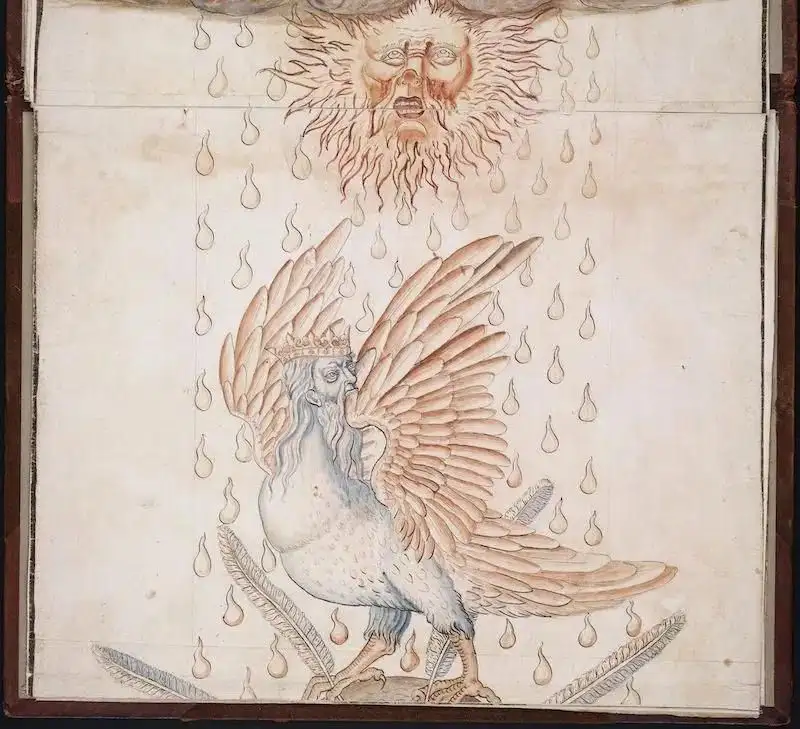
Yale University's Beinecke Rare Book & Manuscript Library has made a significant portion of its collection of medieval manuscripts, which explore the confluence of early science, philosophy, and what was then perceived as magic, available online. This move democratizes access to a trove of once-guarded knowledge, allowing anyone to delve into handwritten works on alchemy, astrology, early chemistry, and natural philosophy.
A recent book, titled "The Magic Books: A History of Enchantment in 20 Medieval Manuscripts," by Anne Lawrence-Mathers, serves as a companion piece to this historical archive. The publication delves into these manuscripts, illustrating how practices often labeled as magic were, in fact, deeply interwoven with the intellectual and cultural fabric of the medieval learned and courtly classes. It highlights that magic was not a fringe activity but a serious pursuit for those in positions of power and influence.
Read More: St. Augustine's ideas on justice help explain US politics
Exploring the Medieval Mindset
The collection encompasses a diverse range of subjects, offering glimpses into the medieval worldview. These include:
Studies on astral magic, exemplified by texts from the court of Alfonso X.
The role of magic among monks in Anglo-Saxon England.
Astrological considerations in the French court, featuring figures like Christine de Pizan.
The nature of ritual magic for scholars, as seen in the "Ars Notoria."
Visionary astrology, with examples like the work of Georgius Zotorus Fendulus presented as a gift to royalty.
A Window into "Hidden Knowledge"
Critics and scholars have lauded Lawrence-Mathers' work for its ability to bring a complex subject to life. The book is described as an authoritative and accessible exploration, charting the evolution, power, and perceived dangers of medieval magic through detailed manuscript studies. It emphasizes that these texts were not merely relics of superstition but central concerns for the era's educated elite. The manuscripts themselves are noted for their intricate illustrations, further enhancing their value as historical artifacts.
Background: The Beinecke Library and "The Magic Books"
The Beinecke Library, with its distinctive marble architecture, houses a vast collection of rare books and manuscripts. The digitization project is a significant step in making these historical documents more accessible to a global audience.
"The Magic Books: A History of Enchantment in 20 Medieval Manuscripts" itself has garnered attention. Published by Yale University Press, it features approximately 66 color illustrations and spans 368 pages. The book has been reviewed in various publications, including the Financial Times, Kirkus Reviews, and BBC History, with commentary highlighting its depth, readability, and insight into a subject often misunderstood.
Read More: Google Learn About AI Tool Released April 2026 For Simple Learning