

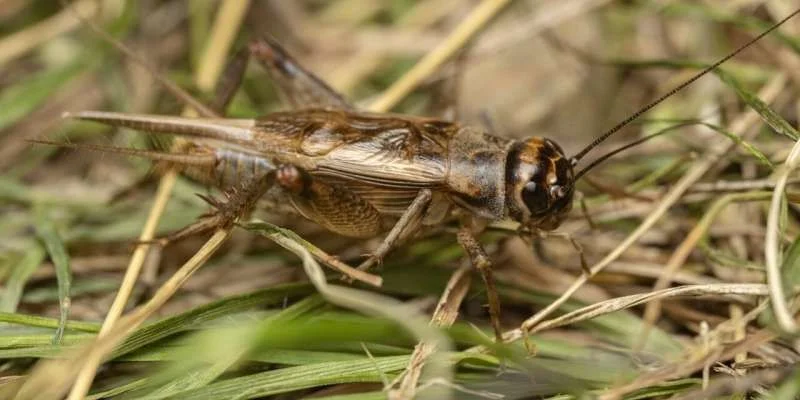
PAIN QUESTIONED IN BILLIONS OF CRICKETS
The sheer scale of cricket farming, with an estimated 370 billion harvested annually, is now complicated by new findings suggesting these insects might experience pain. Researchers have observed crickets exhibiting behaviors that go beyond simple reflexes when subjected to harm. This challenges the long-held view of insects as purely automated organisms and raises ethical questions about their widespread use in food, feed, and research.
A recent study, published in 'Proceedings of the Royal Society B: Biological Sciences', detailed experiments where house crickets demonstrated flexible, directed self-protection. This type of response is a key indicator many scientists and philosophers use when inferring pain in other species. The observations add to existing knowledge about crickets:
They possess damage receptors.
They exhibit learning to avoid harmful situations.
Their response to injury is lessened under morphine.
These points, when taken together, build a case for a more complex internal experience in crickets than previously acknowledged.
Read More: Spencer Pratt Claims Dog Abuse in Los Angeles Skid Row
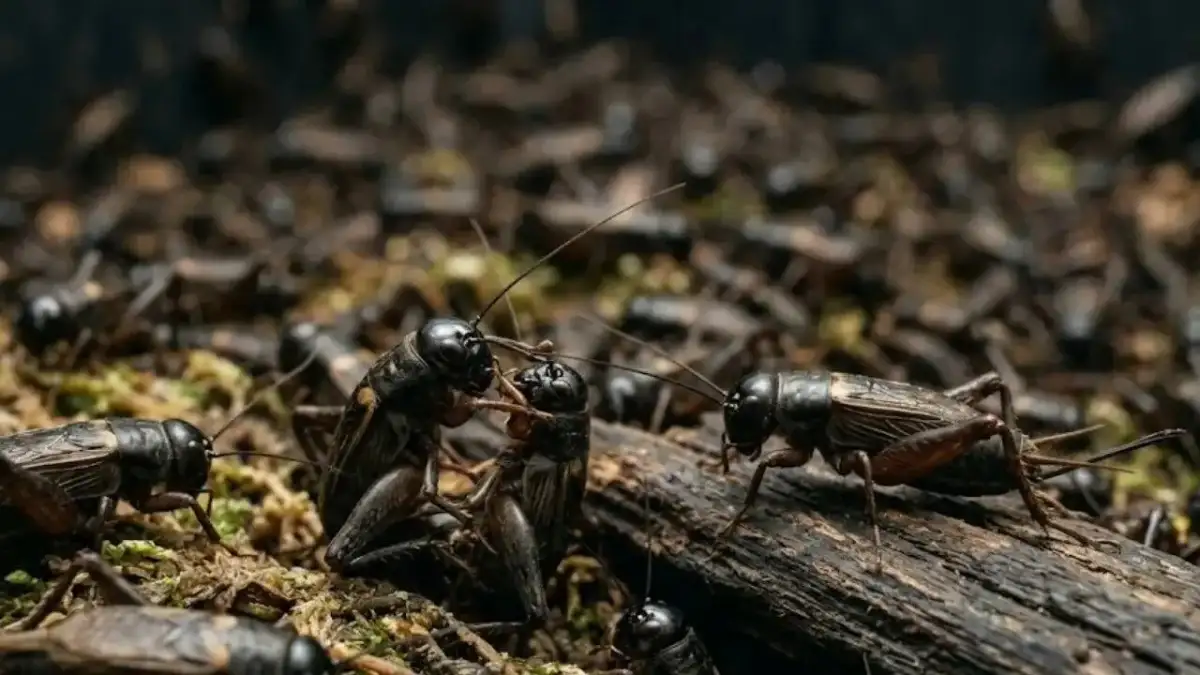
ETHICAL CONSIDERATIONS FOR INSECT AGRICULTURE
The implications of this research extend directly to the burgeoning insect farming industry. Crickets are a popular choice, lauded for their efficiency in converting feed to protein. They are used in direct human consumption, as animal feed, and in scientific study.
The findings prompt a reconsideration of how these creatures are handled. Scientists involved in the study suggest that efforts should be made to reduce harm during insect farming, handling, and experimentation. This comes at a time when high-density farming conditions themselves are known to induce stress responses in crickets, sometimes leading to cannibalism.
"We searched for behavioral signs of pain in house crickets, one of the most widely farmed insects."
"But we have shown crickets respond to harm in a way that satisfies a key criterion many scientists and philosophers use to infer pain: flexible, directed self-protection."
The economic models driving insect agriculture often overlook these biological realities, focusing instead on yield and scalability. The 'brutal math' of the boom, as some have termed it, may need to account for the potential sentience of the farmed billions.
Read More: US Public Tired of Processed Foods; New Laws and Lawsuits Coming
BACKGROUND
Insect farming has seen significant growth, fueled by a demand for sustainable protein sources. Crickets, in particular, are highlighted for their minimal land and water requirements compared to traditional livestock. Their rapid reproduction cycle and efficient feed conversion rates have made them an attractive commodity. This boom, however, operates largely on the assumption of simple biological machinery, an assumption now under direct challenge.


