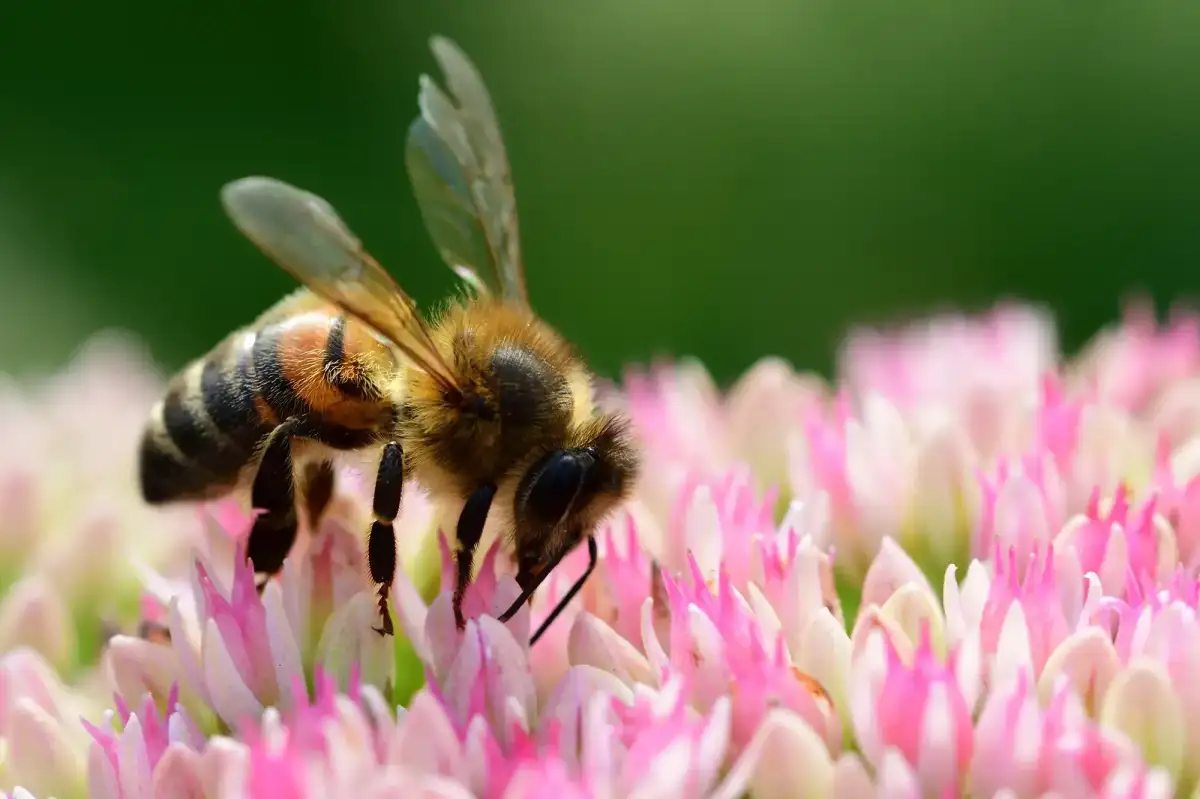
Research into biological systems and animal behavior is changing how we understand "survival of the fittest." For a long time, many people thought evolution was only about individual animals fighting to win. New studies and reviews of past experiments show that nature often chooses groups that work well together rather than just the strongest individuals. This shift in thinking suggests that "fitness" is as much about team dynamics as it is about personal strength.
The History of Multi-Level Selection
The idea that evolution works on several levels at once is not new, but it has gained more proof recently.
1859: Charles Darwin publishes On the Origin of Species, focusing on how traits help individuals survive.
Mid-20th Century: The focus stays mostly on individual genes and "selfish" behavior.
Recent Decades: Scientists at places like Binghamton University have reviewed data showing that groups can be the unit of selection.
Present Day: Breeding programs for plants and animals now use "group-level selection" as a standard way to improve results.
"Fitness is not a contest of brutality… survival does not belong to the strongest." — Science News Today report on Darwin’s original intent.
Evidence from Breeding Experiments
The most direct evidence for group evolution comes from studies on poultry and farming. When breeders only look at the individual, they often see negative results.
| Selection Method | Focus | Resulting Behavior | Outcome |
|---|---|---|---|
| Within-Group | Selecting the most productive individual hen. | Increased aggression and competition. | Cannibalism and lower total egg production. |
| Group-Level | Selecting the most productive group/cage of hens. | Lower aggression and better cooperation. | Higher survival and more eggs for the whole group. |
The data shows that when the "best" individual is chosen, that individual often succeeds by harming others. However, when the "best group" is chosen, the entire team survives better.
Read More: Indigenous Data Rights Now Key in Conservation Genomics
Investigating the Mechanics of Cooperation
1. The Conflict of Individual vs. Group
In the hen experiment, selecting for individual success led to "cannibalism of eggs" in smaller groups. This happens because the "top" individual is often the most aggressive. If nature only selected for these individuals, the species might eventually hurt its own chances of survival. Does this suggest that extreme competition is a flaw rather than a strength in long-term evolution?
2. Game Theory and Social Balance
Using "Game Theory," scientists look at the "Hawk versus Dove" model.

The Hawk: Fights for every resource.
The Dove: Shares or retreats to avoid injury.
While a Hawk might win a single fight, constant fighting costs a lot of energy and causes injuries. Groups that find ways to cooperate—or "act like Doves"—often keep more energy for raising young.
3. Modern Human Application
Workplace experts are now using these biological lessons to change how companies run. Instead of making employees compete for a single "top spot," which can create a toxic environment, they encourage pooling resources.
Read More: Nations Championship rugby starts 7 April 2026 with new point system
Shared Knowledge: When one person learns something, the whole team gets better.
Inclusive Environments: This mimics "mutual proliferation" where the group's success helps every member.
Expert Analysis of Biological Teams
Scientific observers note that evolution seeks patterns that help life spread. Binghamton University researchers point out that group-level selection has become a standard tool in animal and plant breeding because it works better than individual selection.
Analysis by the Skeptic research group suggests that nature "seeks" cooperation because it is more efficient. If every cell in a body fought every other cell, the animal would die. Evolution thrives because cells, and then animals, found ways to work as a single unit.
Findings on the Future of Selection
The investigation into group evolution leads to several clear points:
Aggression has a limit: While competition exists, it often leads to "cannibalism" or system failure if not balanced by group needs.
Group selection is practical: It is already used successfully in farming to create healthier, more productive animal populations.
Darwin was misunderstood: His work was meant to describe how nature changes, not to say that being mean or brutal is the only way to survive.
The next step for researchers is to see how these "team" rules apply to even larger systems, such as entire ecosystems or human global networks. The evidence points to a future where "fitness" is defined by how well an individual fits into their team.
Read More: New Room Temperature Photon Source for Quantum Tech in Korea

Sources Used
Binghamton University News: Review of scientific studies on multi-level selection.
https://www.binghamton.edu/news/story/6067/review-of-scientific-studies-shows-that-natural-selection-operates-on-multiple-levels
Mirage News: Report on group-level selection in animal breeding and hen productivity.
https://www.miragenews.com/beyond-survival-of-fittest-evolution-works-in-1621175/
Oreateai Blog: Analysis of Game Theory and the "Hawk versus Dove" model in biology.
https://www.oreateai.com/blog/beyond-survival-of-the-fittest-how-game-theory-unlocks-the-secrets-of-biological-cooperation/bb132c8374c6d952f96c9feb0de5f712
Stanedin Blog: Discussion on applying Darwinian principles to modern workplace team dynamics.
https://www.stanedin.com/blog/darwin-and-modern-team-dynamics
Skeptic: Article on how evolution thrives on cooperation and mutual proliferation.
https://www.skeptic.com/article/evolution-thrives-on-cooperation/
Science News Today: Re-evaluating Darwin's original definitions of fitness and compassion.
https://www.sciencenewstoday.org/survival-of-the-fittest-what-darwin-really-meant