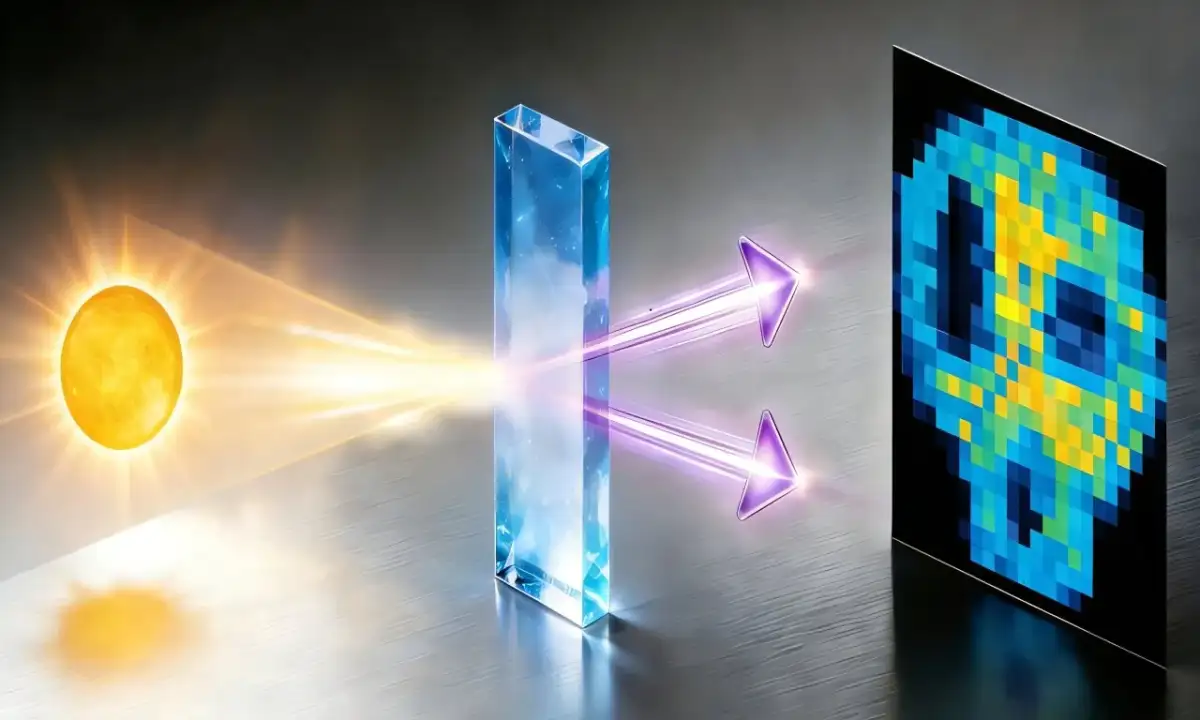
Researchers have recently demonstrated a novel method for producing pairs of correlated photons, a vital element for quantum technologies, directly using sunlight. This breakthrough sidesteps the typical requirement for stable, laser-driven systems, potentially paving a more accessible path for quantum applications.
The process, detailed by the SPIE—International Society for Optics and Photonics, utilizes solar radiation as the energy source to initiate the generation of these quantum-paired photons. Traditionally, such photon pairs are generated through 'spontaneous parametric down-conversion' (SPDC), a process demanding a controlled, coherent laser to excite a specific crystal.
This new approach offers a significant departure from established protocols. While the specifics of the solar-driven mechanism remain under scrutiny, the implication is a move towards more sustainable and potentially less resource-intensive quantum experimentation.
The development arrives amidst a landscape where pairs of correlated or entangled photons are considered fundamental building blocks in the burgeoning field of 'quantum optics'. Their ability to be linked, even across distances, is central to advancements in areas such as quantum computing, secure communication, and advanced sensing.
Read More: Tropical Rivers Lose Oxygen Due to Warmer Water
This work, published recently, marks a potentially significant step. The SPIE, an international society focused on optics and photonics, is a recognized entity in this scientific domain. Further examination is needed to fully grasp the technical nuances and the extent to which this sunlight-powered method can be scaled and integrated into existing or future quantum frameworks.