Recent forecasts point towards a potentially unprecedented 'Super' El Niño event, a climate pattern that fundamentally redistributes global heat. The intensity of this impending event is generating significant concern, with predictions suggesting it could rank among the strongest, if not the strongest, on record. Such a development carries the distinct possibility of ushering in a period of exceptionally extreme weather across the planet.
The core concern revolves around the potential for amplified global temperatures, with some projections indicating a rise that could exceed critical thresholds for long-term climate impacts. Climatologists are closely watching the sea surface temperatures, which are central to predicting the ensuing weather patterns. El Niño events, characterized by distinct warming and cooling cycles in the Pacific Ocean, typically occur every two to seven years and can persist for nine to twelve months.
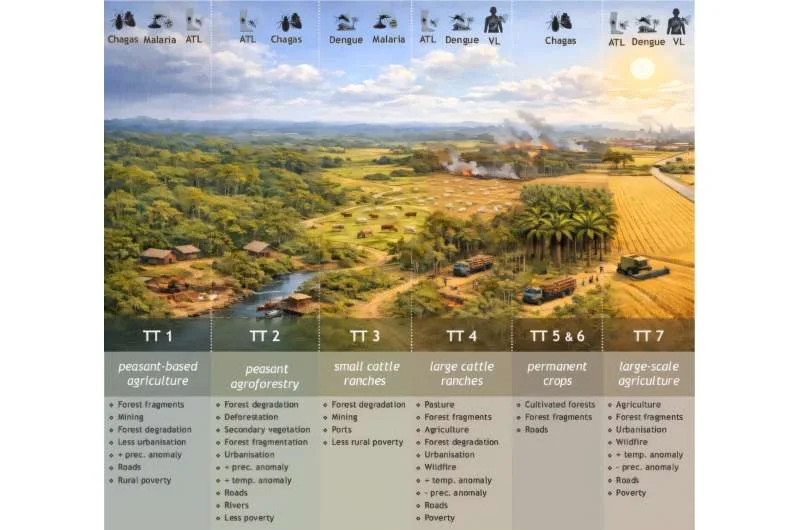
Read More: Amazon Land Use Changes Cause Disease Clusters in Brazil
Amplified Weather Extremes
A 'Super' El Niño is defined by sea surface temperature anomalies exceeding 2 degrees Celsius above the average. While rare, such intense events are linked to a substantial uptick in the frequency and severity of weather-related disasters.
Drought and Wildfire Risk: Already parched regions, including the Northwest and Great Plains of the United States, face an amplified risk of drought and wildfire.
Heat Waves: The occurrence of heat waves, both domestically and internationally, is strongly associated with significant El Niño phases.
Global Disruptions: El Niño events alter global temperature and rainfall patterns, impacting regions worldwide and influencing preparedness for changing conditions.
Temperature Thresholds and Long-Term Concerns
There are warnings that even a moderately strong El Niño could push the average global temperature 1.7 degrees Celsius (3 degrees Fahrenheit) above preindustrial levels. This figure approaches, and potentially breaches, the 1.5 degrees Celsius warming threshold considered a critical turning point for catastrophic climate impacts. Lingering doubts exist about the possibility of global temperatures significantly cooling back down below this threshold once the El Niño dissipates.
Understanding El Niño
El Niño is a climate pattern marked by a significant warming of the central and eastern tropical Pacific Ocean. This oceanic temperature shift is not an isolated phenomenon but rather a redistribution of heat across the Earth's systems. The resulting atmospheric upset influences weather events on a global scale. While La Niña represents the cooler phase of this cyclical climate pattern, El Niño is currently the focus due to its amplified potential.
Read More: Nations Championship rugby starts 7 April 2026 with new point system
Frequency: El Niño events typically occur every two to seven years.
Duration: These events generally last between nine and twelve months.
Impact: El Niño's influence extends to precipitation, drought, heat, and broader climate disaster scenarios.