Experts indicate a significant El Niño event is developing, with the potential to elevate UK temperatures to record highs this summer. The pattern, sometimes termed a 'super El Niño', is characterized by a substantial rise in sea surface temperatures in the central and eastern Pacific Ocean. Such an intensified event is described by some as the "strongest so far this century," with forecasts suggesting temperature anomalies exceeding 2°C.

While El Niño's precise impact on the UK remains less predictable than in other global regions, indications suggest a heightened probability of warmer and drier conditions during the summer months. Some analyses note that El Niño events, even those centered in the Pacific, can disrupt global weather systems, potentially amplifying temperature spikes worldwide.
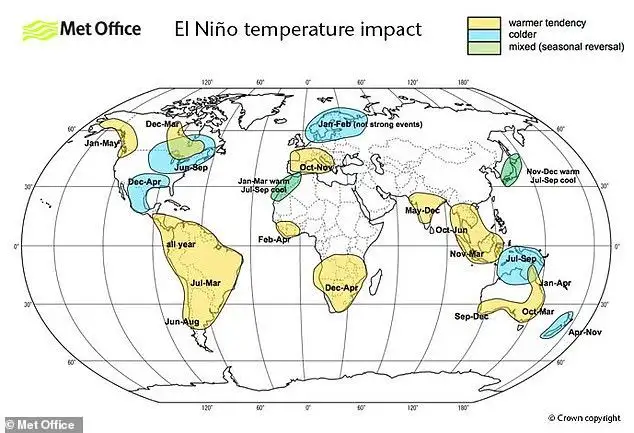
El Niño's Intensity and UK Projections
The term 'super El Niño' denotes an unusually potent iteration of the El Niño-Southern Oscillation (ENSO) cycle, a naturally occurring climate pattern involving warm and cool phases in the tropical Pacific. An intensified El Niño is understood to be capable of supercharging extreme weather events and contributing to rising global temperatures.
Read More: Mumbai Red Alert July 2026 Causes School Closures and Train Delays

"While it is not yet certain, this is a very strong sign that a powerful El Niño weather pattern is brewing. It's likely to be the strongest El Nino event so far this century."
The American National Oceanic and Atmospheric Administration (NOAA) has put forth a one in four chance of a 'very strong' El Niño, defined by temperature anomalies above 2°C.

Broader Climate Context
El Niño events, by definition, involve sea surface temperature variations ranging from 1°C to 3°C. These oceanic shifts can precipitate widespread effects on precipitation, drought patterns, heatwaves, and other climate-related disasters across various geographical areas. Forecasters monitor these oceanic conditions closely to refine predictions for global weather patterns.
While the UK might not experience the most immediate or extreme effects of a potential super El Niño, its influence on global temperatures is a considered factor. There is also speculation that El Niño could contribute to colder winters in the UK, though this outcome is not a certainty. The effects of El Niño on regions distant from its origin point often manifest with a time lag.
Read More: Nations Championship rugby starts 7 April 2026 with new point system
Defining El Niño Events
A standard El Niño is officially declared when ocean temperatures register 0.5°C above average. A 'super El Niño', however, signifies a more extreme deviation, with temperatures exceeding 2°C above normal, potentially accelerating global warming trends. Such amplified warming in the Pacific can lead to significant disruptions in weather systems globally, including potential triggers for wildfires and droughts in some areas, and heavy rainfall and flooding in others.