Global fire outbreaks are escalating, reaching unprecedented levels, with scientists pointing to extreme heat events, intensified by climate change, as a primary driver. Recent data indicates a significant increase in both the frequency and destructiveness of fires across the planet, impacting larger areas and posing broader economic and societal challenges.

The last 11 years stand out as the hottest on record. Data compiled by international climate monitoring teams, including NOAA and NASA, alongside the European climate service Copernicus, reveals that recent years have consistently exceeded historical temperature averages. In fact, the past three years, when averaged, have surpassed the 1.5-degree Celsius warming threshold above pre-industrial levels. Experts anticipate that the next El Niño cycle, expected within a couple of years, will likely contribute to another record-breaking annual temperature.

Amplifying Heat Extremes
These elevated global temperatures are directly linked to more frequent and intense heatwaves. What were once considered unthinkable extreme heat events are now occurring with alarming regularity, often exceeding average temperatures by multiple standard deviations. This phenomenon, described as 'record-shattering' extreme heat, has been observed across various regions. Recent reports highlight that parts of North America, Europe, and China have experienced heatwaves that broke numerous local temperature records. The Southern Hemisphere, in particular, has seen a surge in record heat and raging wildfires at the start of 2026, with scientists forecasting the possibility of yet another global annual high.
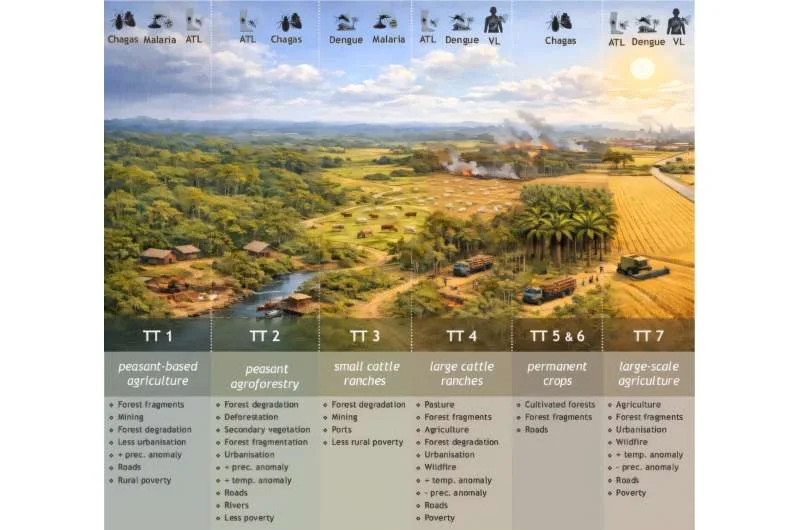
Read More: Amazon Land Use Changes Cause Disease Clusters in Brazil

Climate Change as a Fire Catalyst
Scientific consensus links the worsening fire situation to climate change. Warming temperatures create drier conditions, making vegetation more susceptible to ignition and exacerbating fire behavior. This means that even with moderate global warming, extreme weather events such as wildfires, droughts, and storms are becoming more likely and more severe. Research suggests that dangerous weather events typically associated with extreme global warming could become more common even if global heating is limited to 3.6 degrees Fahrenheit (2 degrees Celsius) above pre-industrial levels. This indicates a significant degree of uncertainty, with a wide range of possible outcomes, some more extreme than previously anticipated.

Regional Impacts and Emissions
Specific regions have seen particularly harsh fire seasons. Europe, for instance, experienced record wildfire emissions in 2025, driven by extreme weather conditions. Spain, the UK, the Netherlands, Germany, and Cyprus all registered new records for fire emissions. The Americas also faced a challenging year in 2024, with significant fire activity noted. Monitoring systems like Copernicus's Global Fire Assimilation System (GFAS) track wildfire emissions globally, using satellite observations to estimate carbon compounds and other atmospheric pollutants. NASA's Fire Information for Resource Management System (FIRMS) provides near-real-time data on active fires and burned areas.
Read More: Nations Championship rugby starts 7 April 2026 with new point system
Long-Term Implications
The escalating frequency and intensity of wildfires, coupled with prolonged heatwaves and droughts, are contributing to a 'crash in biodiversity'. These extreme events can stunt plant and animal growth, encourage the spread of invasive species and pests, and alter ecosystems. Experts are urging nations to significantly cut emissions and adapt to a hotter, more fire-prone world, emphasizing that some degree of future wildfire increase is already locked in due to past warming. The overall cost of fire globally, particularly in regions like Australia, remains a significant concern.
Read More: Kanyakumari Atomic Mining Permit Extended for 1144 Hectares in 2026