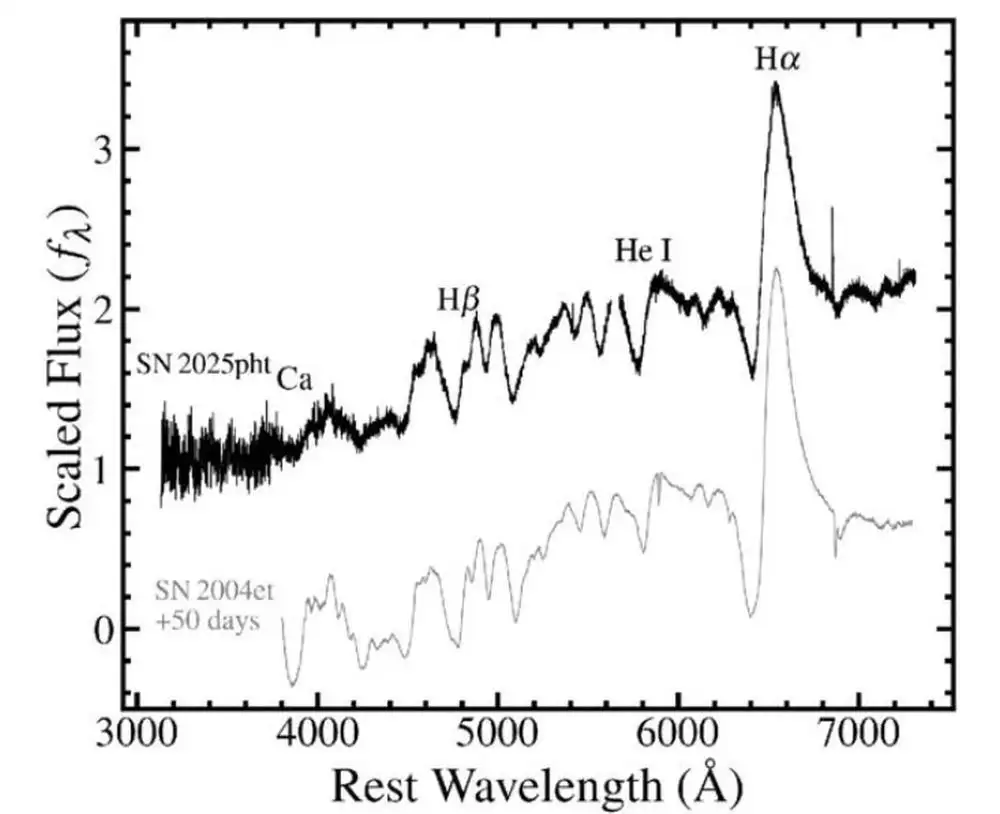
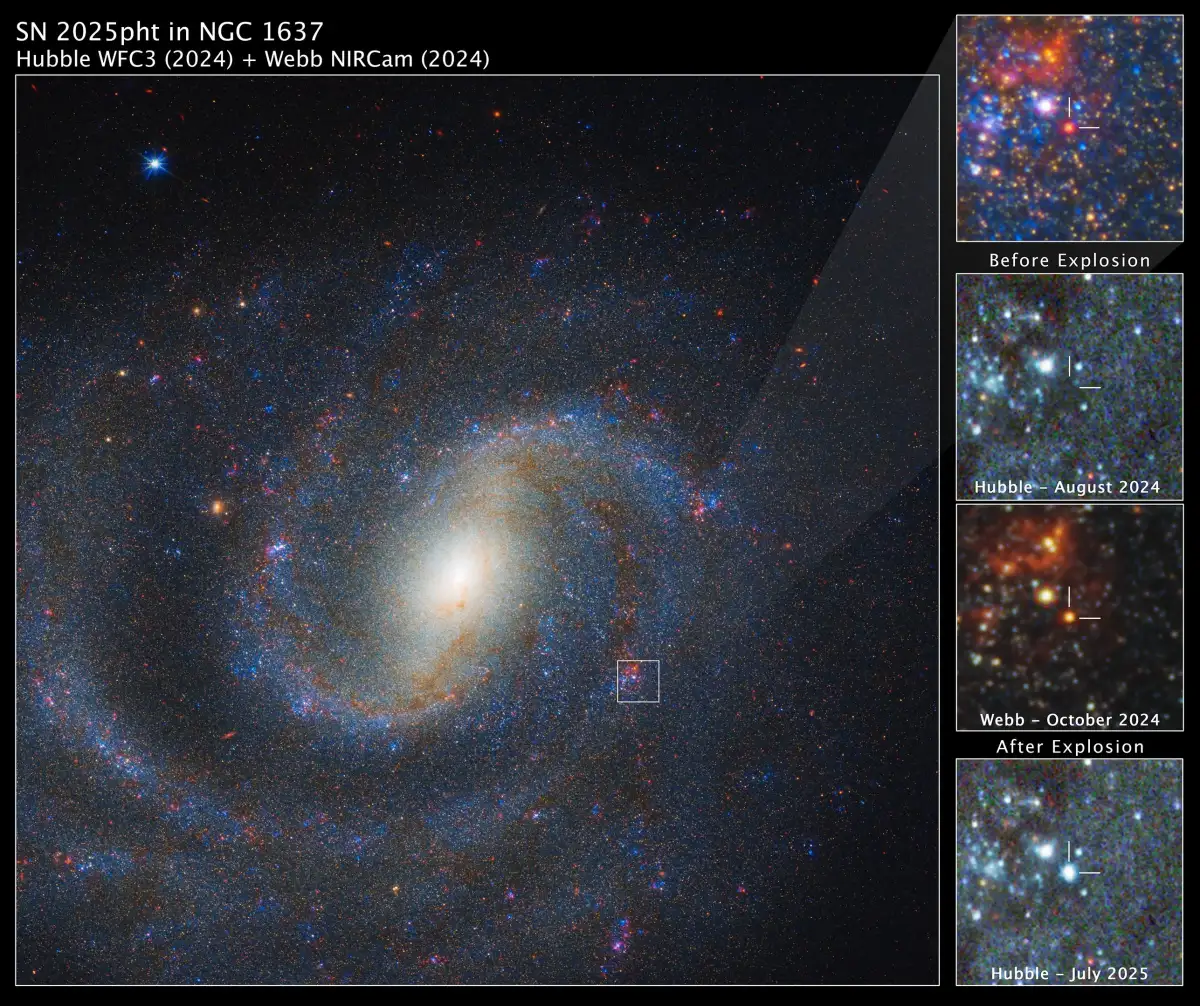
Astronomers, armed with data from the James Webb Space Telescope (JWST) and the Hubble Space Telescope, have pinpointed a red supergiant star prior to its explosive demise as a supernova. This observation, centered on SN 2025pht in NGC 1637, offers a tangible explanation for a long-standing astronomical quandary: the apparent scarcity of exploding red supergiants. The star's surrounding dust, surprisingly rich in carbon rather than the expected oxygen-rich silicates, is seen as a key factor in its obscuration.
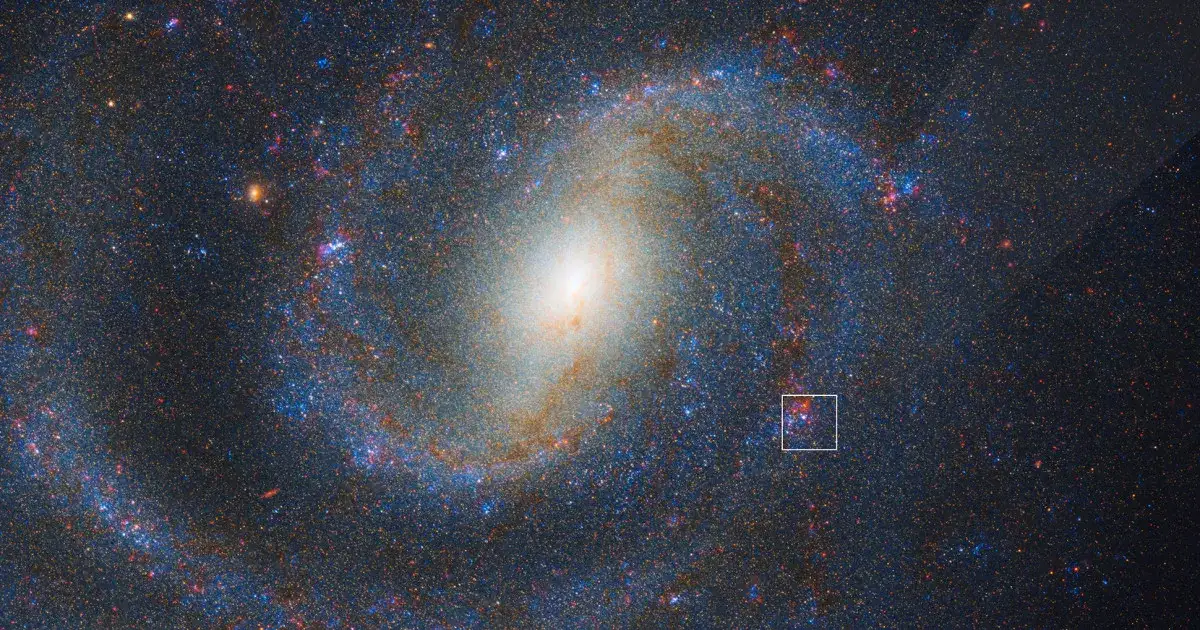
The discovery, published in The Astrophysical Journal Letters, directly addresses the "red supergiant problem." Modern astrophysical models strongly suggest that massive stars should frequently end their lives as red supergiants before exploding. However, direct observations of these predicted supernovae have been remarkably infrequent. The identification of SN 2025pht provides the first direct observation of such a progenitor star, supporting the hypothesis that these stars are frequently hidden from view by thick dust shrouds.
Read More: JWST Finds Oldest Barred Spiral Galaxy M1149-BSG-z5
Unexpected Dust Composition
A critical detail emerging from the JWST observations is the composition of the dust cloud surrounding the star. While red supergiants are typically associated with the production of oxygen-rich silicate dust, the dust found around SN 2025pht was predominantly carbon-rich. This unexpected finding has led to speculation that these stars, in their final moments, might dredge up material from their cores, altering the chemistry of their immediate surroundings. This enrichment could explain why they are so effective at cloaking themselves.
A Solution to the Missing Progenitor Puzzle
The prevailing theory now posits that the dust envelopes of massive red supergiants can become so dense that they render these stars nearly invisible to telescopes relying on visible light. The JWST's capability to observe in infrared wavelengths allows it to penetrate these dusty veils, revealing stars that would otherwise remain undetected.
Read More: US Space Force Victus Haze Mission Successfully Tests Orbital Intercepts
"This discovery may help solve the decades-old mystery of why massive red supergiants rarely explode," state researchers.
The research team, led by Charlie Kilpatrick of Northwestern University, is now actively searching for other red supergiants on the verge of explosion. The goal is to confirm whether this carbon-rich dust phenomenon is common among these stellar giants, thereby solidifying the explanation for their apparent absence in astronomical surveys.
Background on Red Supergiants and Supernovae
Red supergiants represent a late stage in the life cycle of massive stars. These stars, among the largest in the universe, are characterized by their expanded atmospheres and immense size. When their cores collapse, they are predicted to explode as Type II supernovae, leaving behind either a neutron star or a black hole. The challenge for astronomers has been to observe these events correlating directly with their identified red supergiant progenitors, a gap now potentially bridged by the JWST's detailed observations of SN 2025pht.
Read More: Astronomers' discoveries about comets and cosmic background radiation explained