Today, 18 May 2026, observers looking toward the western horizon shortly after sunset are tracking a specific alignment involving the Moon, Venus, and Jupiter. As the Moon advances eastward along its orbital path, its illumination increases daily due to the shifting angle relative to the Sun.
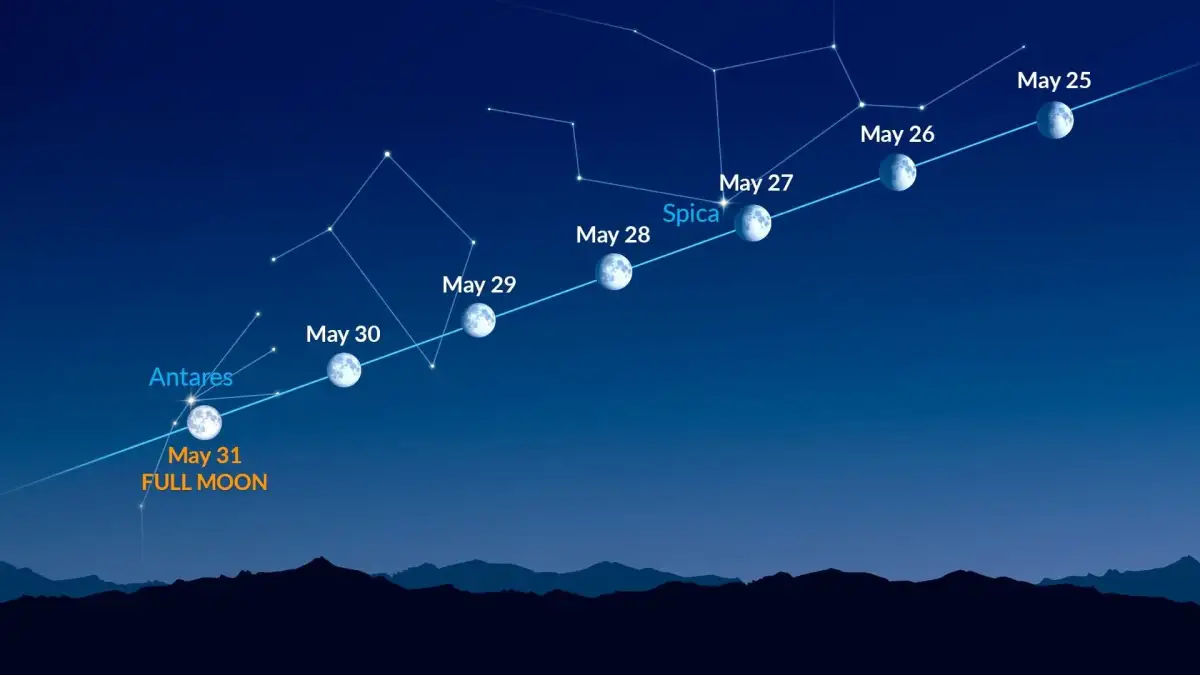
The Moon is currently transiting past Venus and migrating toward the position of Jupiter, providing a visible demonstration of orbital motion against the western twilight sky.
Observation Data: 18 May 2026
Timeframe: Post-sunset (reference point: 22:00, London).
Coordinates: Western sky.
Planetary Positioning: Venus remains highly luminous; Jupiter is situated at a higher elevation but exhibits a lower visual intensity compared to its companion.
Lunar Phase: Young crescent.
| Celestial Body | Relative Visibility |
|---|---|
| Venus | High intensity |
| Jupiter | Dimmer, elevated |
| Moon | Increasing illumination |
Context and Patterns
The current arrangement is part of a recurring cycle of celestial mechanics. Throughout 2026, observers have noted various iterations of these planetary gatherings. In mid-April, a similar configuration involved the background constellations of Taurus and Gemini, whereas previous observations in August 2025 placed these bodies in a pre-dawn eastern orientation.
These alignments rely on the observer's horizon clarity. Because the Moon moves at a relatively rapid pace across the sky compared to the outer planets, the specific geometry of this gathering shifts every 24 hours. The prominence of these objects is dictated by the Sun's position, as the twilight veil thins to allow for observation of the inner solar system planets and the lunar crescent.
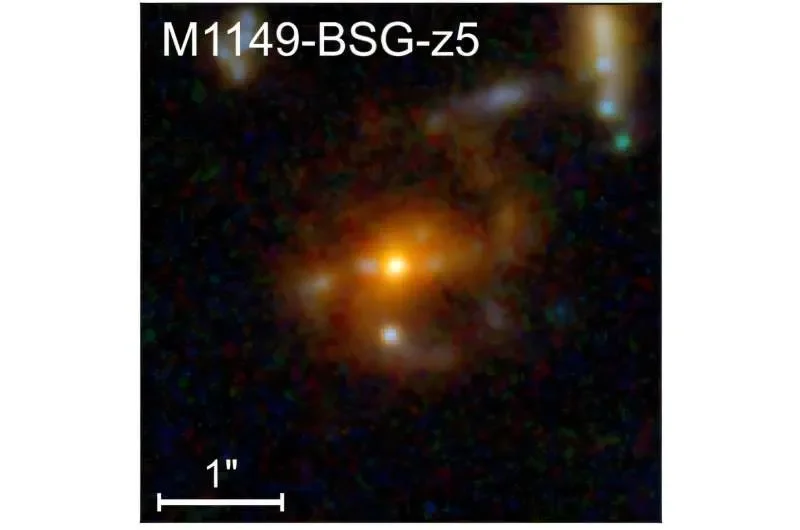
Read More: JWST Finds Oldest Barred Spiral Galaxy M1149-BSG-z5