Zebrafish Embryos' Delicate Dance Between Speed and Accuracy Revealed
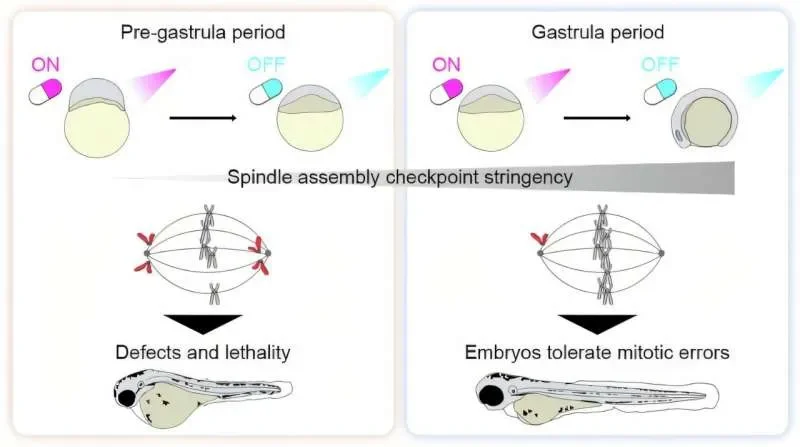
New research offers a stark illumination of early embryonic development, pinpointing a critical window where disruptions to cell division are particularly perilous. The period just before an embryo transitions from a single cell layer to a complex, multi-layered structure, known as the gastrula stage, proves to be the most sensitive. During this pre-gastrula phase, interfering with the normal processes of mitosis, the mechanism by which cells divide, leads to significantly higher mortality rates in zebrafish embryos.
This finding challenges a previously held notion of early embryos operating with a more forgiving cell cycle. Instead, it suggests a precarious balance: cells must divide with remarkable speed to fuel rapid growth, yet this haste introduces an inherent risk of errors. When the activity of a protein called CENP-E, crucial for chromosome alignment during cell division, was inhibited, embryos in this early stage showed a profound inability to cope. Sustained disruption, especially across multiple cell cycles, proved especially detrimental.
Read More: Indigenous Data Rights Now Key in Conservation Genomics
Resilience Found in Later Stages
In contrast, once the embryo reaches the gastrula stage, its capacity to withstand such disruptions dramatically increases. Embryos at this later developmental point were observed to survive even prolonged periods of CENP-E inhibition, tolerating several hours without significant ill effect. This suggests that the developing organism gains a form of cellular resilience as it progresses through its initial formation.
A New Lens on Developmental Biology
The study employed a light-activated protein to precisely control CENP-E inhibition, offering an optochemical method for observing these cellular processes. This technique allows researchers to selectively turn off the protein's function using light, providing a refined way to investigate the consequences of mitotic errors. This approach represents a significant advancement in understanding the intricacies of developmental biology, with potential implications for fields such as cancer research, where errors in cell division are a hallmark.
Read More: Hagfish Lost Eyes But Gained Other Senses, Fossils Show
Background: Illuminating Proteins and Cell Cycles
The research builds upon a broader understanding of light-activated proteins, such as the AsLOV2 protein found in oats. These proteins possess light-oxygen-voltage (LOV) domains that, upon activation by blue light, undergo conformational changes to transmit signals within the cell. In this context, a light-activated protein served as a trigger to modulate CENP-E activity, enabling researchers to study its role in the context of embryonic cell division. The precise control afforded by these optochemical tools is key to unraveling the complex trade-offs inherent in early embryogenesis.