WASHINGTON/TEHRAN - US Secretary of State Marco Rubio reported "significant progress" in ongoing negotiations between the United States and Iran, mediated by Pakistan, aimed at ending the protracted conflict. The purported breakthrough, however, remains clouded by uncertainty, with President Donald Trump indicating that any agreement is "not fully negotiated" but would be "good and proper" if finalized.
Details of the proposed accord, as reported across various outlets, suggest a multi-faceted approach to de-escalation. Key elements include:
A ceasefire in the ongoing hostilities.
The reopening of the strategically vital ' Strait of Hormuz '.
The thawing of frozen Iranian assets held in foreign banks, reportedly amounting to $100 billion.
A potential lifting of the naval blockade imposed by the US on Iranian ports, alongside an Iranian blockade initiated at the conflict's outset.
While these points signal a potential shift, significant hurdles remain. The ' nuclear question ' and the ' conflict in Lebanon ' are explicitly stated as unresolved issues. The ' Hezbollah ' chief has voiced hopes that any agreement would encompass Lebanon, indicating a broader regional implication.
International Reactions and Internal Dynamics
The ' Israeli government ' is reportedly seeking assurances from the US President regarding the inclusion of the nuclear dossier. Meanwhile, ' Israel ', though currently absent from direct negotiations, is described as concerned about its diplomatic isolation.
Read More: AFP Reviews War Crime Claims Against Australian in Gaza
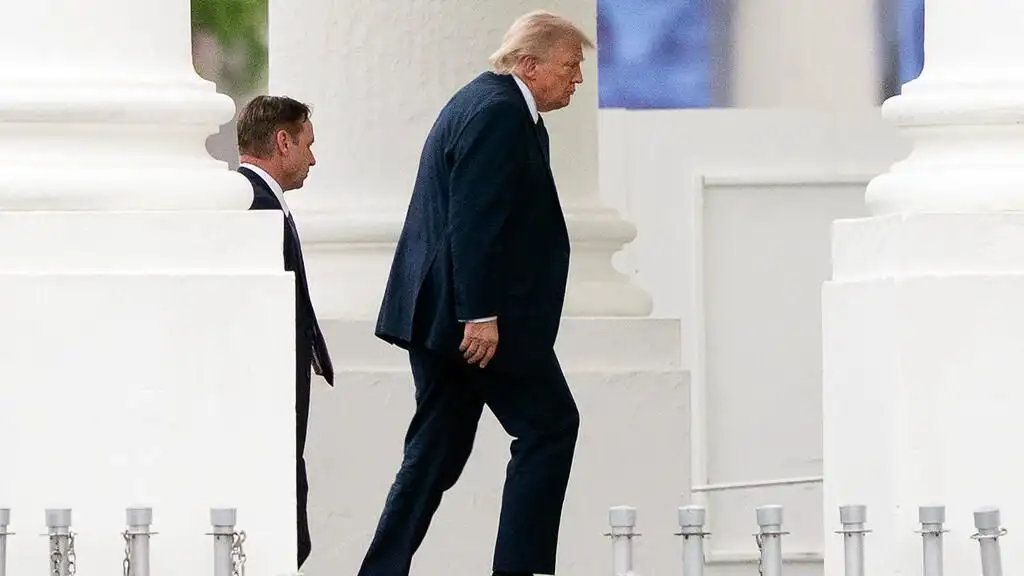
Internal political dynamics also appear to be at play. Reports suggest ' US military preparations ' for renewed military action are ongoing, though President Trump has not yet made a final decision. His cancellation of weekend plans, including a golf club visit and his son's wedding, hints at intense deliberation. Public opinion in the US is noted as increasingly opposed to further military escalation.
Context and Escalation
The conflict, which appears to have been initiated by the United States and Israel on ' February 28th ', has seen Iran claim to have "rebuilt" its forces during a ceasefire period and issue threats of widespread retaliation against the US. The nation has also been implicated in cyberattacks on US gas stations and has been suspected of espionage, including the defection of a former US operative.
Read More: Gulf Oil Exports Rise in June but Still Below Pre-War Levels
Simultaneously, ' Israel ' has continued its airstrikes in Lebanon, with reports of an Israeli strike in Gaza resulting in civilian casualties. The ' United Arab Emirates ' has also been targeted by drone strikes near a nuclear power plant, with Iran being a suspect. The ' Pakistani army chief ' has been engaged in discussions in Iran, and reports suggest Pakistan may have allowed Iranian aircraft to use its bases for protection against the US.
The ongoing ' information warfare ' includes Iran's ' propaganda videos ' and mocking of President Trump, alongside accusations from Iran that media outlets are misrepresenting figures. The situation is fluid, with diplomatic efforts and military posturing continuing in parallel.