Internal friction within the Donald Trump administration has surfaced as Secretary of State Marco Rubio moved to block a Pentagon initiative to reduce United States troop presence in Europe. The intervention, occurring late last month, forced Secretary of War Pete Hegseth to abandon a planned briefing on troop drawdowns for NATO leaders in Brussels.
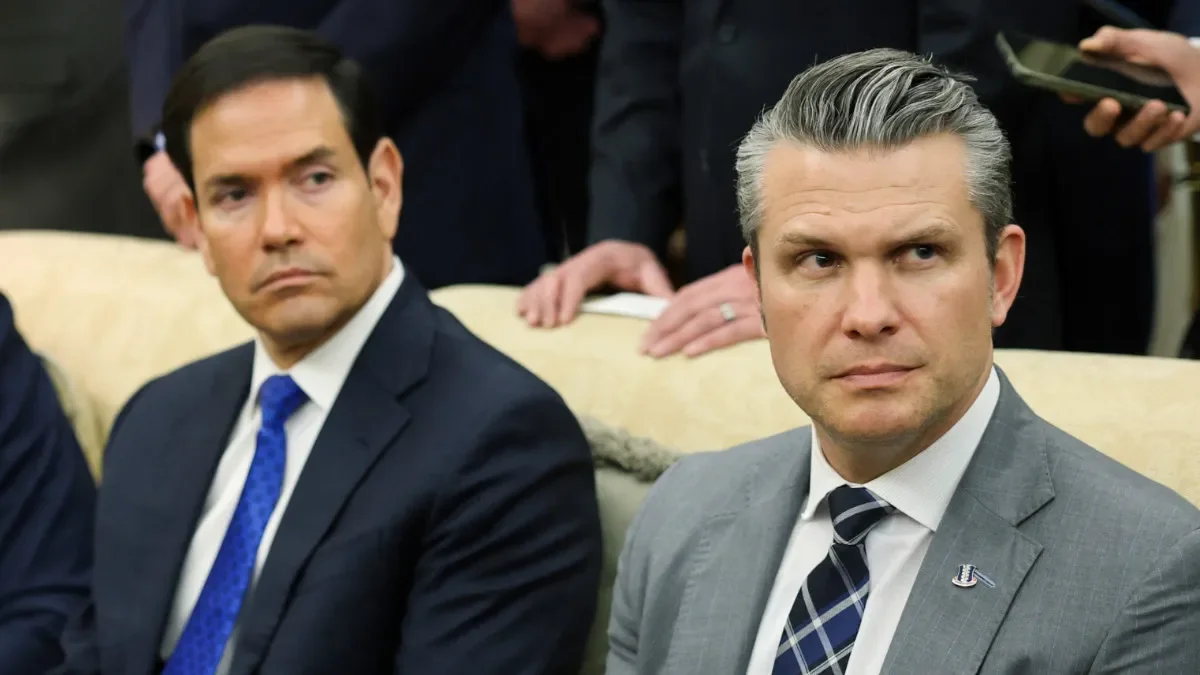
The maneuver confirms a clear hierarchy within the cabinet, where the Department of State retains the leverage to preemptively dismantle or obstruct operational military policies set by the Department of War.

Instead of the immediate drawdown proposed by the Pentagon, Hegseth was relegated to briefing NATO officials on a protracted review of military capabilities, a process now slated to span six months.

| Factor | Position / Context |
|---|---|
| Rubio (State) | Prioritizes geopolitical stability and institutional alliance frameworks. |
| Hegseth (War) | Advocates for aggressive military downsizing and internal reorganization. |
| The Friction | Contests over authority, foreign engagement, and administrative scope. |
Escalating Tensions and Divergent Agendas
The dispute over European force levels is merely the latest manifestation of a sustained power struggle between the two cabinet heads. Reports dating back to early 2026 indicate that the divide between the secretaries is both ideological and tactical:
Read More: Taiwan Holds Nantou County Drills to Prepare for State Collapse

Regional Conflicts: Tensions reportedly reached a breaking point earlier this year over potential military operations in Iran. Sources suggest Hegseth pushed for significant boots-on-the-ground deployments, while Rubio resisted, citing domestic political backlash and the risks of protracted entanglements.
Administrative Friction: Beyond policy, the relationship has been marred by public outbursts, including a January 2026 incident where Hegseth physically moved to interrupt Rubio during a press engagement on Capitol Hill regarding operations in Venezuela.
Pentagon Stability: Hegseth continues to face internal and external scrutiny regarding his leadership style—specifically the inclusion of family members in sensitive operations and his background as a media personality rather than a career defense official.
Contextual Background
The current administration's defense posture remains fragmented. The United States maintains a heavy financial footprint within NATO, accounting for approximately 62 percent of total defense spending—roughly $980 billion annually.
For the Trump administration, these intra-cabinet conflicts have resulted in a volatile decision-making environment. The divide reflects broader questions about the U.S. role in global security: whether to prioritize traditional diplomatic alignment or pursue the disruptive isolationist strategies favored by the current Pentagon leadership. While Rubio attempts to navigate the constraints of traditional governance, Hegseth’s reliance on direct executive authorization has frequently put him at odds with the diplomatic requirements managed by the State Department.