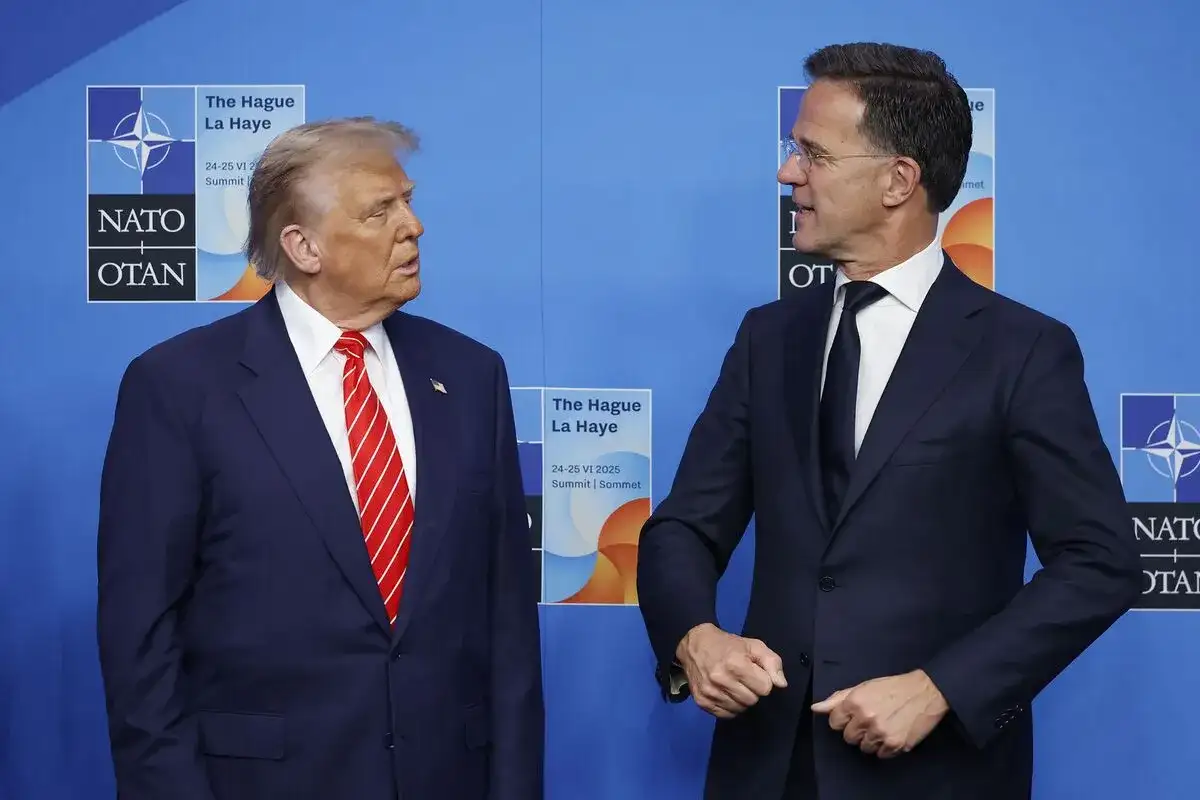
President Donald Trump has openly criticized the North Atlantic Treaty Organization (NATO), asserting the alliance "failed" during the recent Iran war. This condemnation comes on the heels of a meeting between Trump and NATO Secretary-General Mark Rutte. White House Press Secretary Karoline Leavitt stated that Trump believes the alliance "was tested and they failed," though she offered no specifics on the alleged shortcomings.
The core of Trump's grievance appears to stem from a perceived lack of support from NATO members during the Iran war, specifically regarding disruptions to the Strait of Hormuz which impacted global energy prices.
Rutte, speaking after the closed-door session, acknowledged Trump's clear disappointment with US allies' refusal to join the Iran war. Trump has also voiced displeasure over NATO's stance on Greenland, a territory he previously sought U.S. control over.
Read More: Trump Administration Plans to Label Far-Left Groups as Terrorists in September 2026
Trump's public pronouncements on social media platform Truth Social echoed his sentiments. He wrote, "REMEMBER GREENLAND, THAT BIG, POORLY RUN, PIECE OF ICE!!!” and declared, "NATO WASN’T THERE WHEN WE NEEDED THEM, AND THEY WON’T BE THERE IF WE NEED THEM AGAIN." These statements suggest a deep-seated skepticism about the alliance's utility and commitment to U.S. interests.
The friction extends to logistical support, with reports indicating that Spain and France restricted or forbade the use of their airspace and military facilities for U.S. operations during the Iran war. This has added another layer of tension to an already strained relationship between Trump and NATO, a military alliance primarily focused on North America and Europe, raising questions about the specific role Trump envisioned for NATO in the Middle East conflict.
Read More: Israel Strikes Lebanon, Iran Threatens Ceasefire Response
The administration has also discussed the possibility of the U.S. withdrawing from NATO, a sentiment Trump has previously expressed during his first term. His ongoing criticisms and threats to leave the alliance have been a persistent theme, often linked to his demands for increased defense spending by member nations. The situation highlights a growing divide within the trans-Atlantic alliance, particularly concerning U.S. foreign policy objectives and NATO's strategic scope.