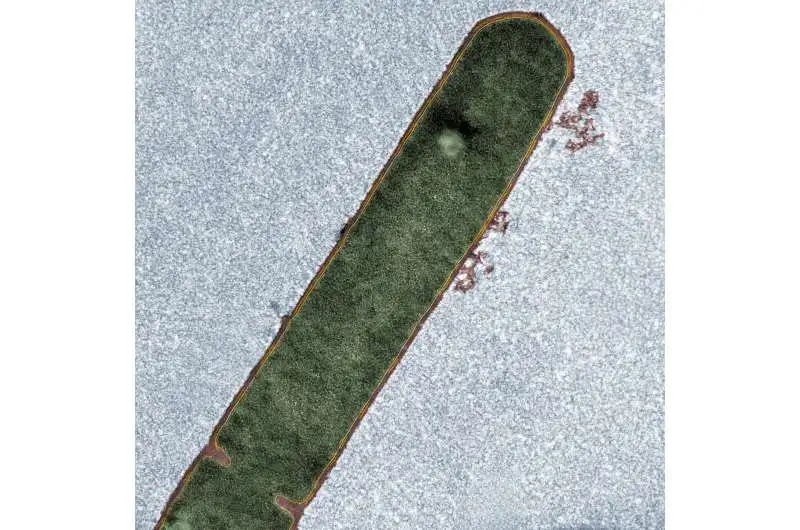
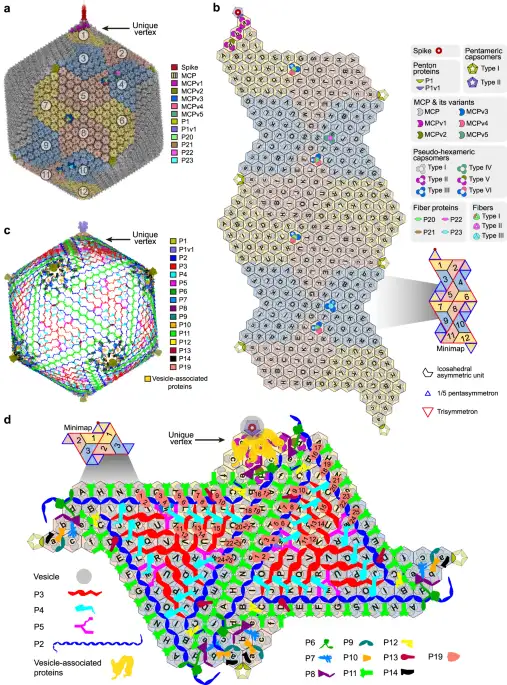
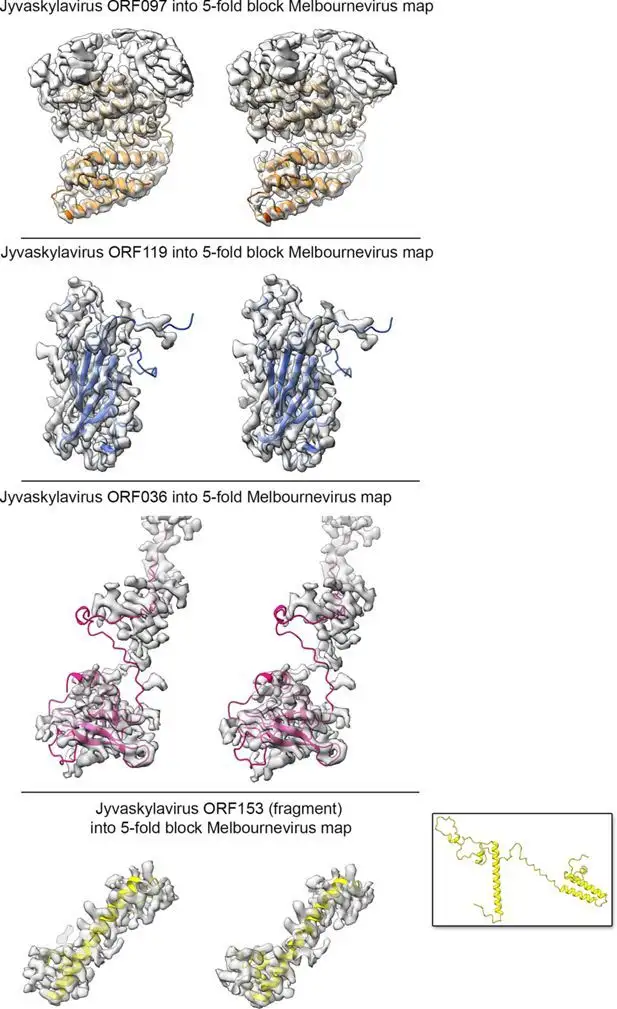
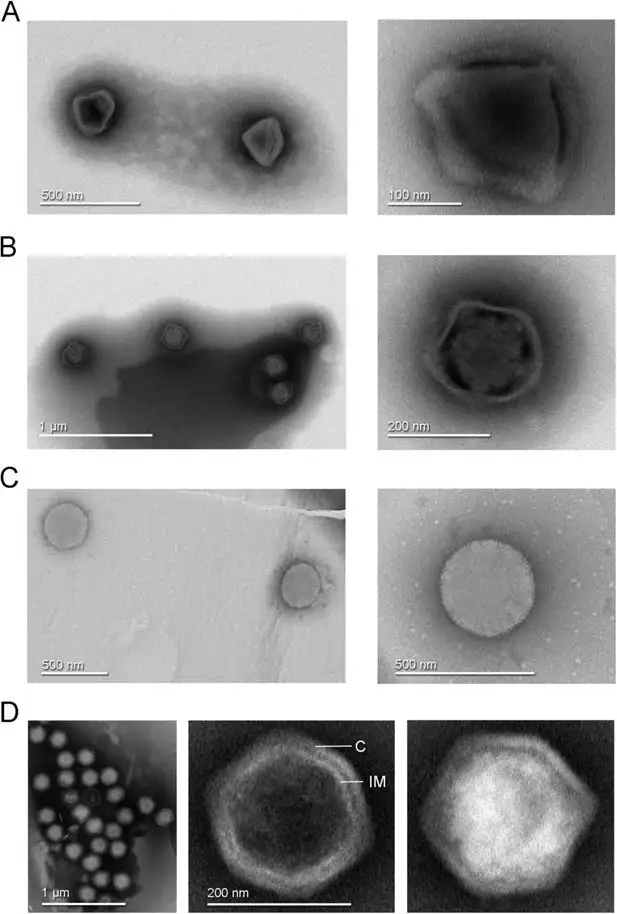
Researchers have mapped the near-atomic structural blueprints of giant viruses, revealing complex assemblies of 'cementing' proteins that stabilize their massive capsids. Using advanced Cryo-Electron Microscopy, labs—notably those led by the Parent group—have simulated infection stages to show how these gargantuan entities, exceeding 300 nanometers, utilize unique mechanisms to release their genetic material after surviving millennia in dormancy.
| Structural Component | Primary Function | Stability Role |
|---|---|---|
| P12, P13, P14 | Capsid Glue | Trisymmetron binding |
| IIIa GOS-domain | Peripentonal link | Inter-capsomer tension |
| Cementing proteins | Architecture | Preventing structural decay |
These viruses do not merely infect; they persist. The structural complexity found in PBCV-1 and other giant species suggests a highly evolved "factory" model.
The Evolution of the Factory
Scientific interest has shifted from viewing viruses as simple pathogens to considering them as potential architects of biological history. A recurring hypothesis posits that an ancient giant virus infected an archaeon, failing to destroy it, but instead establishing a permanent viral factory. Some theorists suggest this relationship served as the evolutionary catalyst for the cell nucleus, bridging the gap between viral genetic containment and the structure of complex eukaryotes.
Read More: ISS Experiment Shows How Particles Change Turbulent Flows
The Problem of Origin
While structural biology advances our understanding of how these viruses function, the source of such biological complexity remains contentious. The debate over viral origins is mirrored by current struggles to categorize human-engineered viral interactions.
The EcoHealth Alliance grant proposals regarding hybrid bat coronaviruses remain a focal point of intense scrutiny.
Claims of "natural origin" continue to face challenges from investigations into laboratory-based genetic manipulation.
Institutional affiliations—such as those involving Peter Daszak and the WHO—are frequently cited as obstacles to impartial inquiry.
"The jury is still out on how the pandemic began," noted observers in the Bulletin of the Atomic Scientists. The reliance on circumstantial evidence has left the scientific community fractured, oscillating between structural biological discovery and the murky politics of laboratory research.
Persistence and Pattern
Whether these viruses represent an ancient, pre-cellular life form or a sophisticated mode of genetic theft, their ability to withstand harsh environmental conditions marks them as outliers. Unlike typical viral entities, their size and structural integrity suggest they are designed for longevity, effectively "stealing" and incorporating genes from hosts over epochs.
As we refine our maps of their protein interfaces—the capsid-binding motifs and inter-genus variations—we move closer to confirming if the nucleus of our own cells is a descendant of these viral engineers or merely a byproduct of genomic drift. The data suggests we are looking at something older and more persistent than our standard evolutionary models account for.
Read More: Cell Division Starts Spindle Building, New Study Shows