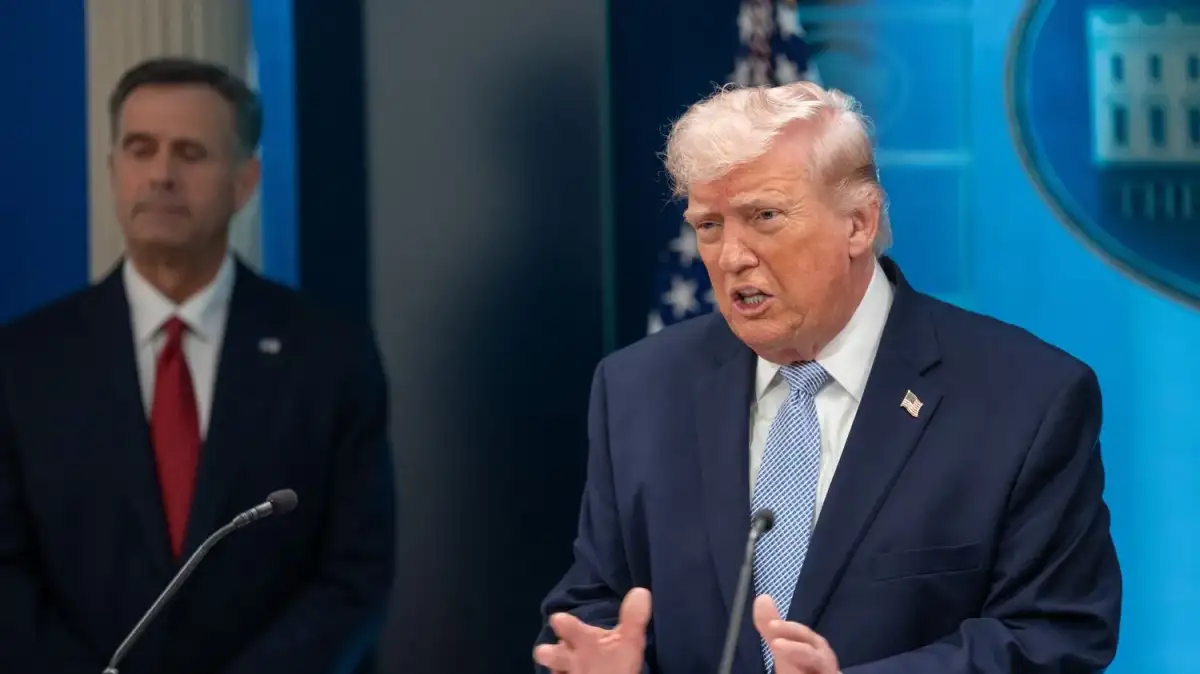
Donald Trump declared on June 2nd, 2026, that an agreement with Iran could be finalized "over next week." This assertion follows a reported "glitch" concerning Israel and Hezbollah. The statement comes amidst escalating conflicts in the Middle East, with recent reports of strikes between Iran and the United States, and Israel vowing to "intensify" its offensive against Hezbollah in Lebanon.
Trump's announcement suggests a potential de-escalation or a significant diplomatic maneuver, framed by ongoing military actions and a complex regional dynamic. The specifics of the "glitch" and its resolution remain opaque. However, the timeframe provided—"over next week"—indicates an urgent push for a resolution.
France's President Macron has publicly commended Trump's "determined efforts" to reach an accord swiftly. Meanwhile, the Strait of Hormuz, a critical chokepoint for global oil supply, has been a focal point of recent tensions. Discussions surrounding a potential deal between Iran and the United States have included points such as the Strait of Hormuz, Iran's nuclear program, and the unfreezing of Iranian assets.
Read More: AFP Reviews War Crime Claims Against Australian in Gaza
Reports from May 24th, 2026, detailed an "accord protocol" between Iran and the US, aimed at reopening the Strait of Hormuz. This proposed agreement, however, has been met with conflicting signals. While Trump has indicated Iran's commitment to not developing nuclear weapons, reports on May 30th, 2026, from the White House stated there would be no deal with Iran if Trump's "red lines" were not met. Iran, on its part, has denied any "final agreement" as of May 29th, 2026.
Earlier in the month, on April 7th, 2026, Trump had issued an ultimatum to Tehran, threatening to destroy "essential Iranian infrastructure" by 8 PM Washington time if a ceasefire and the unblocking of the Strait of Hormuz were not agreed upon. This ultimatum proposed a ceasefire in exchange for Iran potentially lifting the blockade on the Strait of Hormuz, with a transit fee of $2 million per vessel, to be shared with Oman.
Read More: Gulf Oil Exports Rise in June but Still Below Pre-War Levels
The situation is further complicated by Iran's claims of having "rebuilt" its forces during a truce and issuing threats to the United States. Reports also indicate ongoing mutual strikes between Iran and the US, with a temporary ceasefire being described as "on life support." The ongoing conflict has led to an increase in the US refugee quota to accommodate 10,000 additional white South Africans.
Further complicating the geopolitical landscape, Benyamin Netanyahu has stated Israel's intention to "intensify" its offensive in Lebanon to "crush" Hezbollah. This follows an alleged commitment from Hezbollah to a "total ceasefire," as stated by Trump on June 1st, 2026.
The complexities of these negotiations and military actions underscore a precarious situation in the Middle East, with significant implications for global energy markets and regional stability. The involvement of various international actors, including France and potentially Oman, highlights the multi-faceted nature of the ongoing diplomatic and military engagements.
Read More: Indus Waters Treaty remains suspended in India and Pakistan April 2026