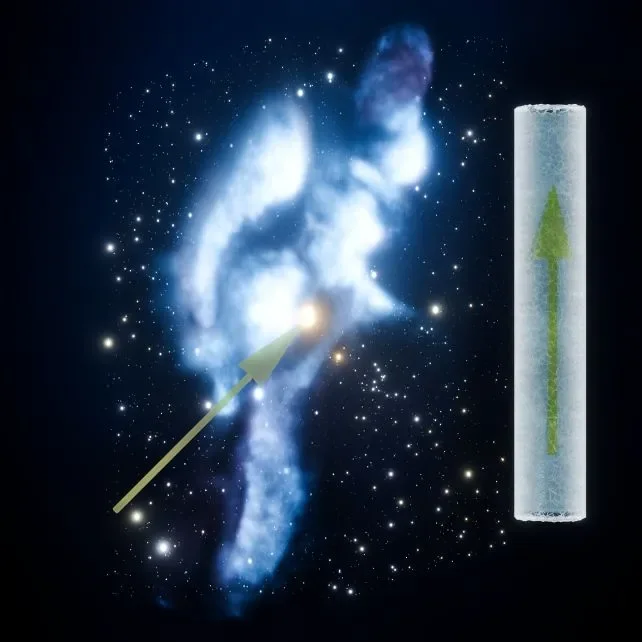
Researchers have confirmed the presence of Iron-60—a radioactive isotope generated exclusively by dying stars—within Antarctic ice cores. Analysis reveals that Earth is currently traversing the Local Interstellar Cloud, a region of diffuse gas and dust, and has been accumulating this cosmic material for at least the past 80,000 years.
| Metric | Detail |
|---|---|
| Material Detected | Iron-60 (Supernova debris) |
| Source | Local Interstellar Cloud |
| Timeframe Analyzed | 40,000 to 80,000 years ago |
| Primary Method | Extraction from Antarctic ice cores |
The signal of Iron-60 fluctuates across short geological timescales, indicating that our solar system passes through regions of varying dust density within the cloud. Current findings demonstrate that the amount of stardust reaching Earth today is greater than the quantity deposited between 40,000 and 80,000 years ago, suggesting the solar system moved into a denser sector of the cloud more recently.
Technical Limitations and Ongoing Investigation
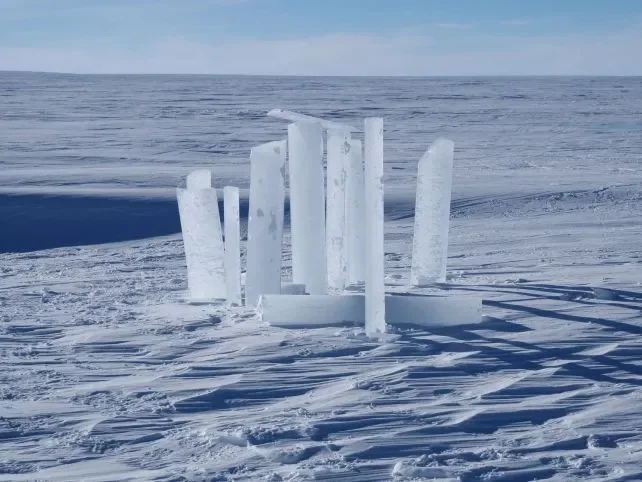
Current efforts, including those by the Beyond EPICA project, seek to extract ice samples dating back beyond the solar system’s entry into the Local Interstellar Cloud. Scientists maintain that because Iron-60 cannot occur naturally via terrestrial processes, the ice acts as a reliable filter for interstellar matter.
Read More: Indigenous Data Rights Now Key in Conservation Genomics
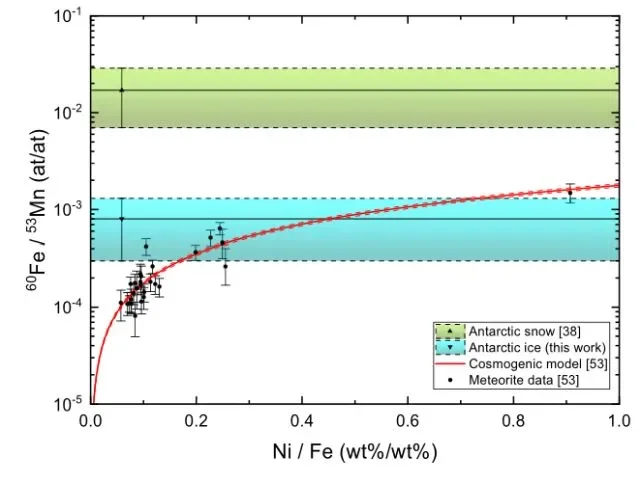
"The Iron-60 signal thus changes over just a few tens of thousands of years—remarkably fast on cosmic timescales."
The Research serves as a temporal map. By comparing contemporary surface snow with deep-core sediment, the team differentiates between current accumulation and ancient deposits. The objective remains to locate "pre-entry" ice—material deposited before the solar system intersected this interstellar structure—to establish a clear baseline for cosmic background radiation versus the current "dusting" of stellar debris.
Context of the Passage
The solar system entered this region of the galaxy several tens of thousands of years ago. Given the speed of our trajectory, current Astrophysical projections suggest we will exit the cloud within the next few thousand years. The reliance on ice as a capture medium highlights a convergence between Geology and Cosmology, providing a record of Earth's physical movement through the Interstellar Medium.
Read More: Antarctic Sea Ice Changes Due to Ocean Waves