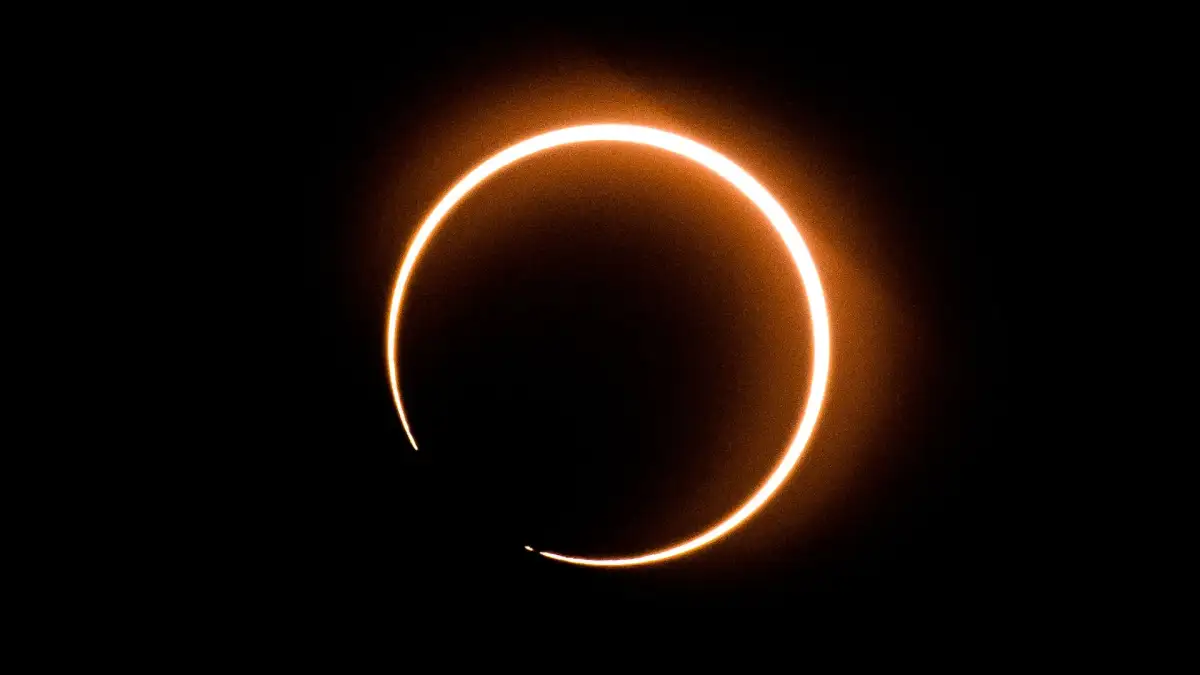
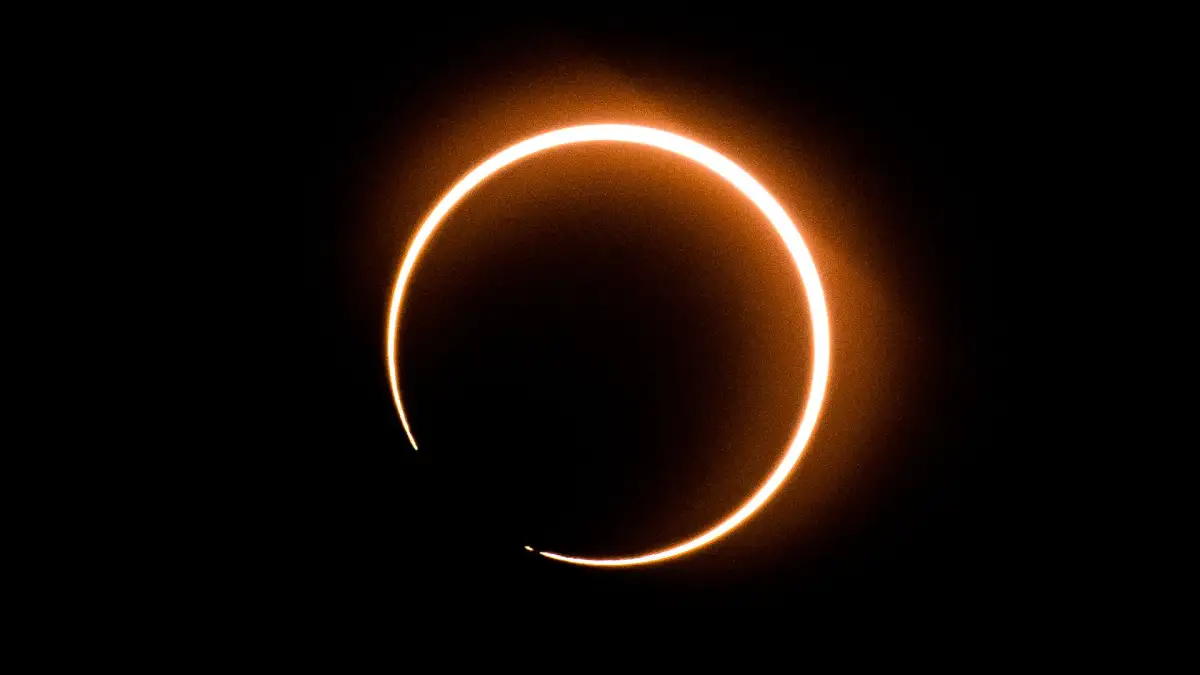
A rare "ring of fire" annular solar eclipse is scheduled to occur on February 17, 2026. This celestial event, where the Moon passes directly between the Sun and Earth, will result in the Moon appearing smaller than the Sun. This alignment will leave a bright halo, or "ring of fire," visible around the Moon's silhouette. While a partial solar eclipse will be observable from southeastern Africa, the most spectacular views of the annular phase are anticipated in Antarctica.
Celestial Mechanics and Visibility
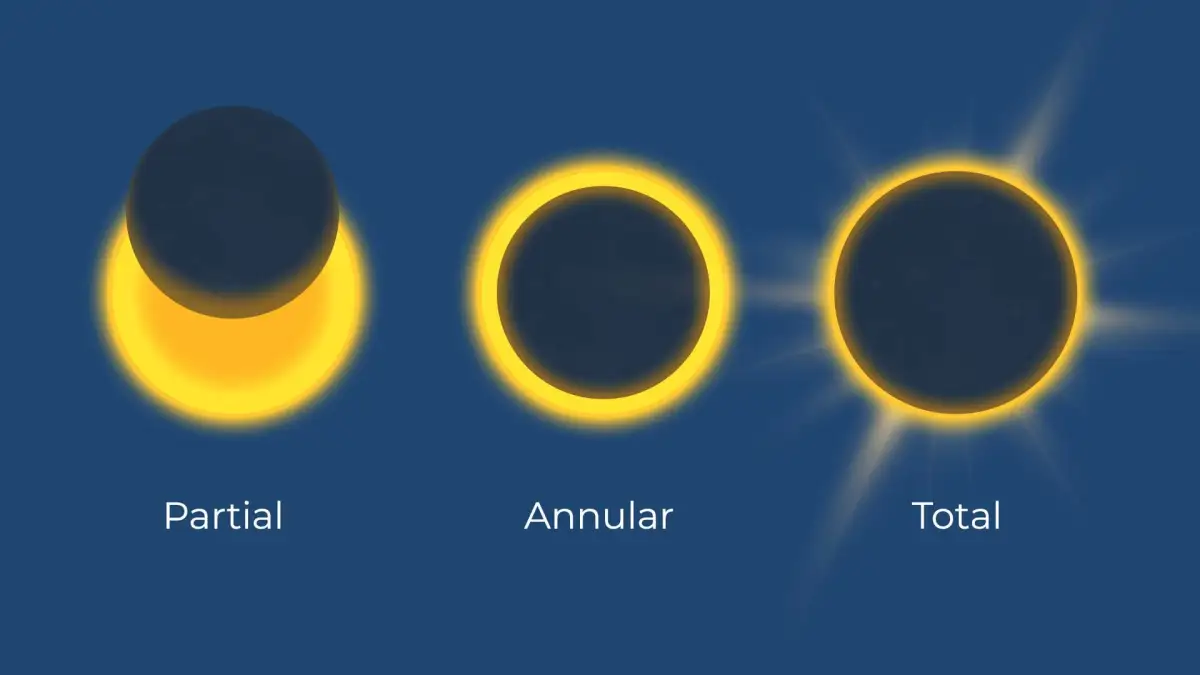
A solar eclipse transpires when the Moon positions itself between the Sun and Earth, thereby obscuring the Sun's light. An annular solar eclipse, distinct from a total eclipse where the Sun is fully covered, occurs when the Moon is farther from Earth in its orbit. This greater distance means the Moon's apparent size is insufficient to completely block the Sun's disc, creating the characteristic "ring of fire" effect. The phenomenon will involve the Moon blocking approximately 96% of the Sun's center.
Read More: JWST Finds Oldest Barred Spiral Galaxy M1149-BSG-z5
Annular Eclipse: The Moon appears smaller than the Sun, leaving a visible ring of sunlight.
Total Eclipse: The Moon completely obscures the Sun.
Visibility: The primary location for observing the "ring of fire" will be Antarctica. A partial eclipse will be visible in southeastern Africa.
Eclipse Timeline and Phases
The eclipse will unfold over several hours, with specific timings for each phase based on Greenwich Mean Time (GMT). The precise local timings for any given location will depend on its geographical coordinates.
| Phase | GMT Time |
|---|---|
| Partial eclipse begins | 09:56 |
| Annularity begins | 11:42 |
| Maximum eclipse | 12:12 |
| Annularity ends | 12:41 |
| Partial eclipse ends | 14:27 |
The annularity phase, where the "ring of fire" is visible, is set to commence at 11:42 GMT and conclude at 12:41 GMT.
The period of maximum eclipse, when the ring is most pronounced, is slated for 12:12 GMT.
Antarctica as the Prime Viewing Location
The eclipse is expected to rise over mainland Antarctica and extend to the Davis Sea coast of the Southern Ocean. This remote positioning makes it one of the more challenging eclipses to witness. The proximity of Antarctica to the eclipse's path will offer the most complete view of the annular phenomenon. The presence of penguins in Antarctica has been noted in reports concerning this eclipse, underscoring the region's unique wildlife encounters during celestial events.
Understanding Solar Eclipses
Solar eclipses are a consequence of precise astronomical alignments. During an annular solar eclipse, the Moon casts a shadow upon Earth, capable of partially or completely blocking the Sun's light. Safety precautions, such as using indirect viewing methods, are crucial when observing any solar eclipse to prevent eye damage from the Sun's intense radiation.
Read More: Antarctic Sea Ice Changes Due to Ocean Waves
The phenomenon occurs during the new moon phase.
The Moon's shadow falls on Earth.
Indirect viewing methods are recommended for safe observation.
Expert Insights
Astronomers classify this event as belonging to Saros 121, a recurring series of eclipses. The distinction between an annular and a total solar eclipse is a fundamental aspect of understanding these events. An annular eclipse is characterized by the Moon's apparent size being less than the Sun's, a direct result of its orbital distance from Earth at the time of the eclipse.
Conclusion and Implications
The February 17, 2026, annular solar eclipse presents a significant astronomical event, primarily visible from the unique vantage point of Antarctica. The limited visibility from populated landmasses, save for a partial view in southeastern Africa, underscores its rarity and the specific geographical conditions required for its observation. The eclipse serves as a reminder of the dynamic celestial mechanics governing our solar system and offers a unique opportunity for astronomical observation and study in remote regions.
Read More: Astronomers' discoveries about comets and cosmic background radiation explained
Sources:
The Economic Times: https://economictimes.indiatimes.com/news/international/us/ring-of-fire-solar-eclipse-set-for-february-17-why-penguins-get-the-front-row-seat/articleshow/128302792.cms
Space.com (Article 1): https://www.space.com/stargazing/solar-eclipses/heres-what-will-happen-during-each-phase-of-the-feb-17-ring-of-fire-annular-solar-eclipse
Starwalk.space: https://starwalk.space/en/news/annular-solar-eclipse-february-17-2026
AP News: https://apnews.com/article/ring-of-fire-solar-eclipse-february-0d15bb4cd43a8b7eccf6daf7748c5a4a
EarthSky: https://earthsky.org/astronomy-essentials/annular-solar-eclipse-february-17-2026/
Gulf News: https://gulfnews.com/world/rare-ring-of-fire-solar-eclipse-to-light-up-skies-on-february-17-1.500435255
Space.com (Article 2): https://www.space.com/stargazing/solar-eclipses/annular-solar-eclipse-2026-everything-you-need-to-know-about-the-ring-of-fire